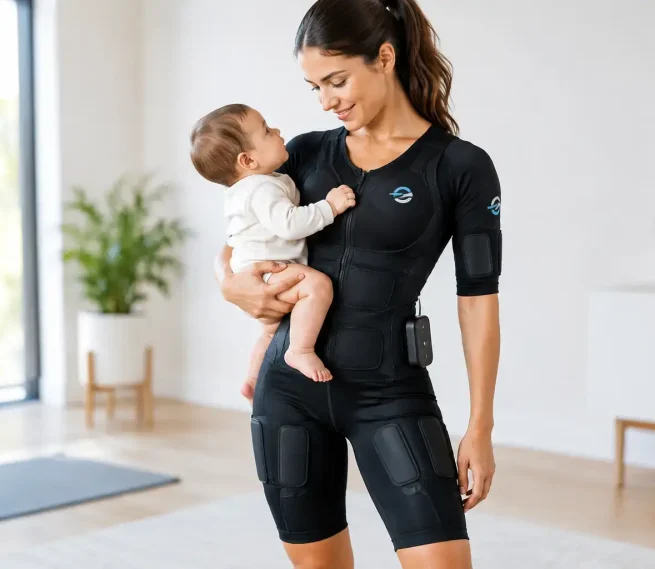
A new baby can change your body, your routine and your idea of spare time overnight. So, is EMS safe after childbirth? For many women, a carefully adapted, coach-led return to exercise can be appropriate – but the right answer depends on your recovery, delivery, symptoms and medical history. This is not a time to push through discomfort for a faster result.
EMS can be an efficient way to rebuild strength when time is limited, but postnatal training needs a different starting point. Before thinking about intensity, fat loss or getting back to pre-pregnancy fitness, the priorities are healing, pelvic-floor function, core control, sleep, energy and confidence in movement.
Is EMS Safe After Childbirth?
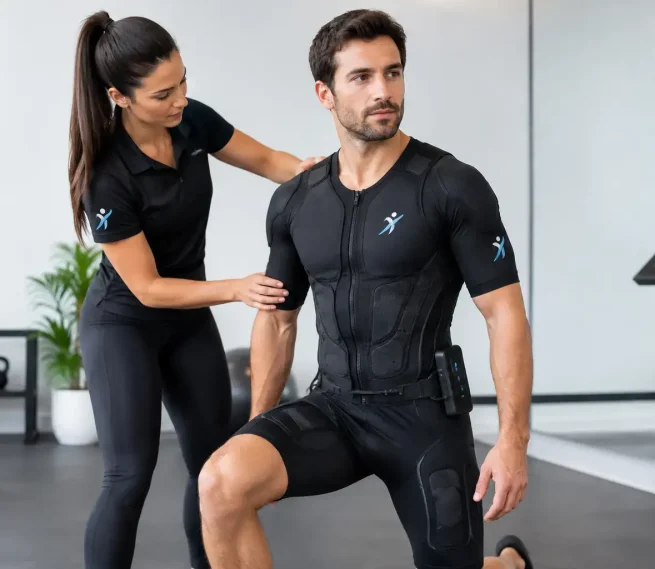
EMS, or electrical muscle stimulation, uses controlled impulses to encourage muscles to contract while you perform guided exercises. In a studio setting, this is very different from placing a home gadget on your stomach and hoping for a shortcut. The quality of coaching, exercise selection, intensity and progressions all matter.
After childbirth, EMS may be suitable when you have recovered appropriately and can train without warning symptoms. It should never be used to override pain, compensate for unresolved pelvic-floor issues or rush your return after a caesarean. The current must be introduced conservatively, with attention to how your body responds during the session and over the following 24 to 48 hours.
There is no universal calendar date that makes every woman ready. Some people feel comfortable building back gradually after a straightforward vaginal birth, while others need much longer after a caesarean, assisted delivery, tearing, significant blood loss or a difficult pregnancy. Your midwife, GP, obstetric team or pelvic health physiotherapist can help you make a decision that reflects your situation.
A postnatal check is a starting point, not a finish line
Many women have a routine postnatal check at around six to eight weeks, but being signed off from routine care is not the same as being ready for every type of training. It simply means the next step can be assessed more confidently.
A good return-to-exercise plan looks at function. Can you walk comfortably? Get up from the floor? Breathe and brace without holding tension in your shoulders? Perform a bodyweight squat or hinge without pelvic pressure, pain or leaking? These everyday markers often tell a coach more than a date on the calendar.
If you had a caesarean, your scar and surrounding tissues also need thoughtful consideration. Early tenderness, pulling, swelling or sensitivity can make a fitted EMS suit and loaded movements uncomfortable. Training around the area may be possible later, but only when it feels appropriate and your medical team has no concerns.
What Needs Checking Before Postnatal EMS
The first EMS session after childbirth should begin with a proper conversation, not a hard workout. Your trainer should ask about your delivery, recovery, current activity level, sleep, feeding demands, symptoms, medications and goals. Honest answers create a safer programme and better progress.
Pay particular attention to pelvic-floor symptoms. Leaking urine, heaviness or dragging in the vagina, pain during sex, persistent pelvic or lower-back pain, or a feeling that something is bulging are not signs to ignore or train through. They are good reasons to pause high-pressure or high-impact work and seek assessment from a qualified pelvic health physiotherapist.
Abdominal separation, often called diastasis recti, also deserves an individual approach. A gap by itself is not always a problem, and it is not something to diagnose by panic-scrolling or repeatedly poking your abdomen. What matters is how your abdominal wall functions under load. Doming or bulging along the midline, poor pressure control and pain are signs that your programme should be adjusted.
The same applies to bleeding and fatigue. Postnatal bleeding that becomes heavier again after activity, new pain, dizziness, breathlessness beyond normal exertion or extreme exhaustion are signals to reduce activity and speak to a health professional. A challenging session is not meant to leave you depleted when your body is already doing demanding recovery work.
How a Good EMS Return Should Feel
At E-Pulse Studio, the principle for any return after time away is simple: earn intensity through good movement. After childbirth, that means starting with technique, breathing and manageable resistance rather than chasing the strongest possible EMS setting.
Early sessions may focus on posture, glute strength, gentle leg work, upper-body mobility and controlled core exercises. The aim is to reconnect with muscles that may feel weaker or less coordinated after pregnancy, while keeping pressure through the abdomen and pelvic floor manageable. A short 30-minute coached session can be useful here because it is focused, adaptable and does not demand hours away from your baby or work.
The electrical stimulation should feel strong but controlled, never painful, alarming or impossible to move through. You should be able to maintain steady breathing and communicate with your trainer. If you find yourself bearing down, holding your breath, clenching everything or feeling pelvic pressure, the intensity or exercise is too much for that moment.
Progress is rarely linear in the first months. A poor night’s sleep, a growth spurt, feeding changes or the practical load of parenting can all affect recovery. Reducing intensity for a week is not losing progress. It is smart coaching.
Breastfeeding considerations
Breastfeeding does not automatically rule out EMS training, but it does make preparation more important. Feed or express beforehand if that is more comfortable, wear a supportive bra, bring water and avoid arriving under-fuelled. Breastfeeding increases energy and fluid demands, while training hard on very little sleep can leave you feeling flat rather than energised.
If you notice a drop in wellbeing, unusual fatigue or persistent soreness, look at the whole picture: food, hydration, sleep, session intensity and recovery. The answer is not always to stop training, but it may be to make the session shorter, lighter or less frequent for a period.
When EMS Should Wait
There are times when postponing EMS is the sensible choice. Wait for medical advice if you have ongoing heavy bleeding, an infection, wound-healing concerns, uncontrolled high blood pressure, a blood clotting concern, severe pain or complications that your care team is still monitoring.
You should also discuss EMS with a clinician if you have a pacemaker or implanted electrical device, epilepsy, significant heart conditions or other health issues that may affect your suitability for electrical stimulation. A reputable studio should screen for these before training begins, not after the suit is on.
Mental health matters too. Exercise can support mood and give you a valuable pocket of time for yourself, but it is not a substitute for support with postnatal depression, anxiety or intrusive thoughts. Tell someone you trust and seek professional help if you are struggling. Your training plan should support your life, not become another standard you feel pressured to meet.
The Results That Matter First
It is understandable to want your body to feel like your own again. But the best early results are often less visible than a number on a scale. Feeling stronger carrying a car seat, standing taller at your desk, walking without back discomfort, having more energy for the day and trusting your body in exercise are meaningful wins.
Body composition goals can come later, without punishing restriction or unrealistic timelines. The postnatal body has done something extraordinary, and it responds best to consistent training, enough nourishment and progression that respects recovery. EMS can support muscle strength and efficient full-body exercise, but it is not a replacement for sleep, food, physiotherapy where needed or medical care.
If you are considering postnatal EMS in Peterborough or Upminster, choose a coach who welcomes questions, adjusts the programme without ego and treats symptoms as useful feedback. The right session should leave you feeling capable, supported and more connected to your strength – not worried that you have done too much.
 7min