The scales can move for reasons that have very little to do with your actual progress. A hard session, a salty meal, poor sleep or normal hormonal changes can all affect body weight from one day to the next. That is why the best fitness metrics beyond body weight give you a more honest picture of what your training is achieving.
For busy professionals, parents and anyone returning to fitness after pain or a long break, this matters. You need proof that your time and effort are producing meaningful change, not a single number that can leave you frustrated. Better strength, less back discomfort, clothes fitting differently and walking up stairs without getting breathless are all progress. The key is measuring them properly.
Why body weight is only one part of the story
Your body weight combines muscle, body fat, water, bone, food and fluid levels. It cannot tell you whether you have built lean muscle, lost fat or simply retained water after a tough workout. It also says nothing about how well your body moves, how much energy you have or whether you are becoming more capable in everyday life.
A client can stay at the same weight while becoming visibly leaner, stronger and more confident. This is particularly common when a well-structured programme combines resistance training, nutrition support and consistent coaching. Recomposition takes time, but it is often the result people are actually looking for: a firmer shape, better posture and a body that performs better.
Weight still has a place, especially if fat loss is a health goal. Just treat it as one data point, taken under consistent conditions, rather than the weekly verdict on your effort.
The best fitness metrics beyond body weight
Body composition and circumference measurements
Body composition looks at the proportion of fat mass and lean mass in your body. It is far more useful than total weight when your goal is to tone up, build strength or reduce body fat without becoming smaller everywhere.
Regular 3D body scans can show changes in shape, body measurements and symmetry that a bathroom scale cannot see. Waist, hip, chest, thigh and arm measurements are also valuable when taken consistently. For many people, a reduced waist measurement or improved waist-to-height ratio is a much more meaningful marker than losing a few pounds.
Do not chase perfection from one scan. Hydration, meal timing and menstrual cycle changes can influence readings. Look for the trend over several weeks and pair the data with photographs, how your clothes feel and your performance in sessions.
Strength and functional performance
Strength is one of the clearest signs that your body is adapting. It makes daily life easier, supports joint health and can help you stay active as you get older. You do not need to test a maximal lift to measure it, either.
Your coach can track the resistance, control and quality of movement you achieve in exercises such as squats, rows, presses, hinges and core work. A deeper squat with stable knees, more controlled lunges or the ability to complete more repetitions with excellent form are genuine wins.
Functional tests can be especially motivating if you are rebuilding after injury, dealing with stiffness or starting from a low fitness base. Standing from a chair more easily, carrying shopping without discomfort or getting off the floor with confidence are not small changes. They are the kind that improve your independence and quality of life.
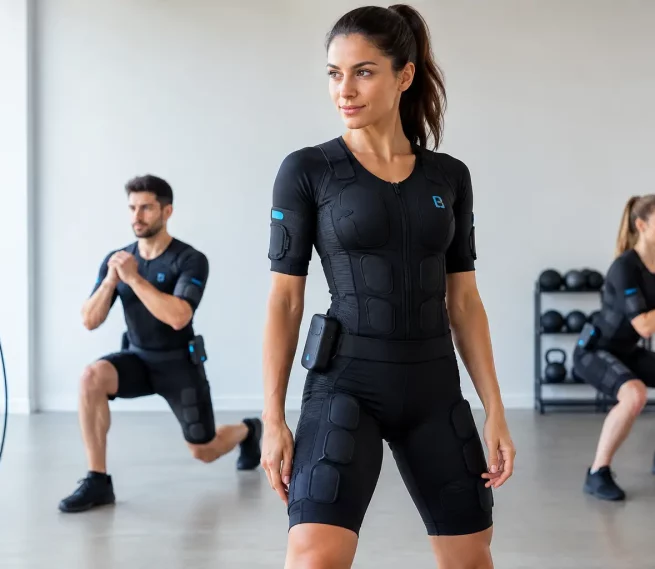
With EMS personal training, progression is not just about turning up the intensity. It is about improving how effectively you recruit and control your muscles while moving well. The right progression is individual, particularly when pain, rehabilitation or mobility limitations are part of the picture.
Mobility, posture and pain levels
If your goal is to move without stiffness or reduce recurring aches, your mobility markers deserve centre stage. Better range of motion in your hips, shoulders, ankles and spine can transform both training and everyday comfort.
Simple assessments can track whether you can reach overhead more freely, rotate more comfortably, hinge at the hips with better control or sit and stand with less restriction. Posture photographs and movement screens can also reveal changes that are hard to notice when you see yourself every day.
Pain should be tracked carefully and honestly. A simple 0 to 10 score, along with notes on when discomfort appears, can show whether your programme is helping you tolerate more activity. Pain is not a metric to push through. Sharp, worsening or unexplained pain needs appropriate clinical advice. But gradual improvements in comfort, confidence and movement quality are powerful signs that your training plan is working.
Cardiovascular fitness and recovery
Getting fitter is not only about looking different. It is about recovering faster after effort, having more energy for your day and feeling less winded doing things that used to challenge you.
Heart rate recovery is a practical marker. After a set period of exercise, track how quickly your heart rate comes down in the following minute or two. Over time, a quicker recovery can suggest improved cardiovascular conditioning, although medication, stress, caffeine and heat can all affect the result.
VO₂max estimates, walking tests, cycling intervals and repeatable cardio sessions can all help monitor stamina. The best choice depends on your starting point. A runner may use pace and heart rate, while someone returning from a sedentary routine may measure how long they can walk briskly without stopping or how easily they manage stairs.
Also pay attention to your recovery between sessions. Better sleep, less lingering soreness and more consistent energy often mean your training load is well matched to your current capacity. If you are constantly exhausted, your programme may need adjusting rather than simply adding more intensity.
Consistency and lifestyle markers
The most impressive programme on paper cannot deliver results if it does not fit your life. For people balancing work, family and a full diary, consistency is a serious performance metric.
Track completed sessions, daily step count, protein intake, sleep duration and water intake if these support your goal. You do not need to monitor everything forever. Choose two or three behaviours that make the biggest difference, then aim to improve them steadily.
For example, completing two coached sessions each week for 12 weeks may be more valuable than an occasional all-out gym phase followed by a month of doing nothing. E-Pulse Studio is built around this principle: focused sessions, clear measurement and trainer-led accountability for people who want results without spending hours in the gym.
How to build a progress scorecard that keeps you motivated
The most useful scorecard is simple enough to use. Start with one body composition measure, one performance measure, one mobility or comfort measure and one lifestyle habit. That might be waist measurement, squat quality, shoulder mobility and sessions completed each week.
Record your baseline before you start, then review progress every four to six weeks. Daily checking usually creates noise and anxiety. Your body needs time to adapt, particularly if you are building muscle, improving movement patterns or recovering from a period of inactivity.
Keep the context beside the numbers. Note if you slept badly, had a demanding week at work, travelled, were unwell or changed your nutrition. Numbers are more useful when they are interpreted by a coach who understands your history, goals and current capacity.
When the scale is worth watching
There are times when body weight is relevant. If you have a medically advised weight-management target, compete in a weight-class sport or are monitoring a substantial fat-loss phase, regular weigh-ins can help. The aim is not to ignore the scale. It is to stop giving it more authority than it deserves.
Weigh at the same time of day, under similar conditions, and use a weekly average rather than reacting to one reading. Then compare that trend with your measurements, strength, energy and recovery. If weight is stable but your waist is reducing and your strength is climbing, you are moving in the right direction.
The most rewarding progress is not always the progress that shows up first on the scales. It is the moment you feel stronger in your body, move with less hesitation and realise that the things which once felt difficult have become normal. Measure that, celebrate it, and let it drive your next session.
 7min
7min