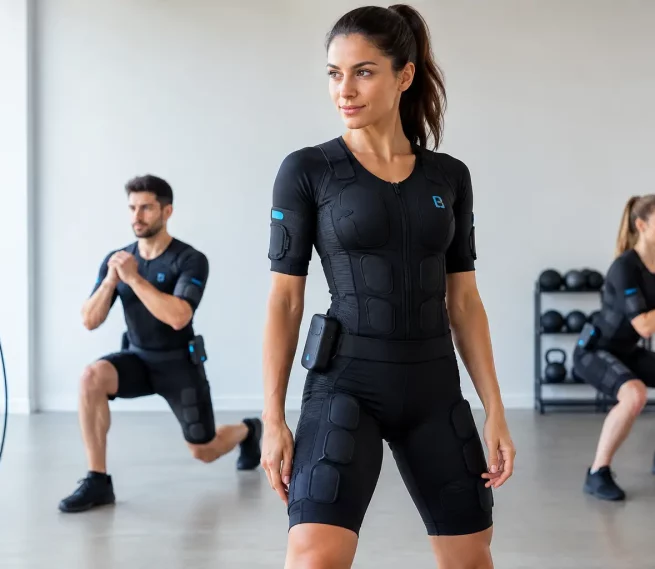
You can make the wrong fitness decision in under five minutes. A flashy offer, a cheap trial, a promise of fast results – and suddenly you are locked into a programme that looks impressive online but does not actually fit your body, your goals or your schedule. If you are wondering how to choose EMS personal training, the real question is not simply who offers EMS. It is who can deliver it safely, personally and with results you can measure.
That matters because EMS personal training is not a generic gym class. Done well, it is targeted, coached and efficient. Done badly, it becomes little more than a novelty workout in a suit. The difference sits in the coaching, the assessment process and how carefully the sessions are built around you.
Why choosing the right EMS studio matters
EMS training is designed to help you get more from less time. For busy professionals, parents and anyone struggling to stay consistent with long gym sessions, that can be a game changer. But high efficiency only works if the training is properly programmed.
A strong EMS session should feel purposeful. Your trainer should know what muscles they are targeting, why the intensity changes, and how the session supports your wider goal, whether that is fat loss, strength, posture, mobility or recovery from recurring aches and pains. If a provider treats every client the same, you are not getting personal training. You are just getting electricity with branding.
How to choose EMS personal training for your goals
Start with your reason for looking in the first place. Some people want visible body composition changes. Others want support with back pain, low stamina or returning to exercise after years of stop-start routines. Some already train and want an extra edge in performance without adding more hours to their week.
The right EMS provider will ask about all of this before talking packages. If the first conversation jumps straight to price, discounts or membership length, be careful. A proper studio should want to know your current fitness level, injury history, confidence with exercise and what success actually looks like for you.
That first conversation often tells you a lot. Good coaches ask precise questions. Great coaches also explain where EMS fits – and where it does not. For example, if your goal is elite endurance performance, EMS may be part of the picture, but not the whole answer. If your goal is strength, tone and consistency with limited time, it may be an excellent fit. Honest guidance is a far better sign than blanket promises.
Look for coaching, not just equipment
The kit matters, but the person controlling it matters more.
One of the biggest mistakes people make when choosing EMS personal training is assuming all studios deliver the same experience because the concept looks similar. They do not. The quality of the trainer changes everything. EMS is highly individual. Intensity, movement choice, posture, pacing and progression all need active coaching.
A strong trainer will watch how you move, correct your form and adjust the session as you go. They will know when to push and when to pull back. That is especially important if you are new to exercise, managing pain, rebuilding after injury or feeling nervous about trying something unfamiliar.
You should also expect a clear explanation of what the session involves. If it feels vague, rushed or overhyped, trust your instincts. Good coaching builds confidence because it replaces mystery with clarity.
Safety should be obvious, not hidden away
Any studio worth your time should have a clear screening process. That includes questions about medical history, injuries, current activity levels and any conditions that might affect suitability for EMS training.
This is not red tape. It is part of professional delivery. A quality provider should also explain how they manage intensity and progression, especially in your first few sessions. More is not always better. With EMS, smart progression beats going full blast on day one.
If you are dealing with back pain, reduced mobility or postural issues, that conversation becomes even more important. A capable trainer should be able to explain how the sessions may support your situation while staying realistic about outcomes. Confidence is good. Careless overpromising is not.
Ask how progress is measured
If you cannot track it, you cannot really judge whether it is working.
That does not mean every result needs to be reduced to a spreadsheet, but there should be a method. Depending on your goals, that could include body measurements, strength markers, movement quality, pain reduction, posture changes, stamina improvements or body scanning.
This is where premium coaching-led studios stand apart from basic fitness offerings. They do not rely on you guessing whether things are improving. They show you. That might be through regular reviews, body composition analysis or visible changes in how you move and perform. For clients who are short on time, that accountability is a major advantage. It keeps effort focused and momentum high.
A good studio will also help you interpret progress properly. Fat loss may not happen in a straight line. Strength may improve before the mirror shows it. Pain may reduce because movement patterns improve, not because one session worked magic. Nuance matters, and serious coaches understand that.
Pay attention to how personal the programme really is
Plenty of services use the word personal. Fewer actually earn it.
When deciding how to choose EMS personal training, ask yourself whether the programme is built around you or simply delivered to you. There is a difference. A personalised programme should take into account your schedule, recovery capacity, motivation levels and the realities of your week.
For a business owner under pressure, that may mean short, focused sessions with clear progression and accountability. For a parent juggling school runs and work, it may mean realistic targets and support with consistency rather than perfection. For an experienced gym-goer, it may mean using EMS to complement sport, strength work or rehab.
If every client is being funnelled through the same script, you are unlikely to get the best from the method.
The studio experience should support consistency
Results are not built by one impressive session. They come from showing up regularly enough for the training to compound.
That is why the overall studio experience matters more than people think. Is booking simple? Are sessions run on time? Do you feel looked after without feeling crowded? Is the environment professional but welcoming? These things influence whether training becomes part of your routine or another short-lived attempt.
For many clients, especially those who have struggled with conventional gyms, the right environment is what finally makes consistency possible. A coached studio setting removes decision fatigue. You are not wandering around wondering what to do. You arrive, train with purpose and leave knowing the session counted.
Cheap is not always good value
Price matters, of course. But value matters more.
EMS personal training is a premium service when it is delivered properly. You are paying for coaching, technology, individual attention and time efficiency. A cheaper option may look attractive at first, but if the sessions are rushed, weakly coached or poorly tracked, the real cost is wasted effort.
That does not mean the most expensive option is automatically best either. What you want is clear value. You should understand what is included, how often you will train, what support you receive outside the session and how your progress will be reviewed.
A good provider will be able to explain this plainly, without hiding behind jargon.
Questions worth asking before you commit
Before you sign up, ask who will coach you, how your starting point is assessed, how progress is measured and what happens if your goals change. Ask how beginners are introduced, how they adapt sessions for pain or mobility issues, and what a realistic timeline looks like.
You are not being difficult. You are checking whether the service is actually built around outcomes.
If you are comparing local options in Peterborough or Upminster, this is where one studio often starts to stand out quickly. The best ones do not just sell sessions. They build a structured path from where you are now to where you want to be.
Trust the evidence, but also trust the fit
Testimonials, transformations and success stories can be useful. They show whether a studio has helped people with goals similar to yours. If you are a busy professional trying to lose body fat and regain strength, seeing that someone in the same situation achieved it is reassuring. If you are training around pain or limited mobility, relevant client results matter even more.
Still, fit matters too. You need to feel that the coach understands your goal, respects your starting point and can challenge you without turning every session into a punishment. The best EMS personal training feels supportive and serious at the same time.
That is often what people remember after a great first session. Not just the technology, but the feeling that someone finally has a plan.
If you choose carefully, EMS can become the training solution that actually fits your life instead of competing with it. Look for expertise, personalisation and proof you can measure, then give yourself permission to back the option that feels both professional and sustainable.
 7min
7min