A 30-minute EMS session should never feel like a one-size-fits-all workout. That is precisely how trainers adapt EMS programmes: by adjusting the stimulus, movements, pace and coaching around the person in front of them. Your goal might be to feel confident in your clothes again, run stronger, manage recurring back stiffness or simply train consistently around a packed working week. The programme needs to reflect that.
At E-Pulse Studio, EMS is not treated as a shortcut that replaces good coaching. It is a powerful training method that makes expert decisions matter even more. The electrical stimulation adds intensity, so the right dose, the right exercise and the right progression are what turn 30 focused minutes into meaningful progress.
The programme starts with the person, not the machine
Before training intensity is discussed, a good trainer needs context. Your current activity level, previous injuries, movement confidence, work demands, sleep, stress and available training time all affect what you can recover from and what will be sustainable.
A busy parent who has not exercised for a year does not need the same first session as a recreational runner preparing for a half marathon. Equally, an experienced gym-goer may have strength already but lack consistency, mobility or a clear plan for body composition. The EMS suit may be the same, but the programme should not be.
This is why an initial consultation and health screening matter. Trainers establish your aims, discuss medical history and identify anything that requires a more cautious approach or clearance from an appropriate healthcare professional. EMS is not suitable for everyone, and honest screening is part of responsible coaching, not a barrier to results.
Baseline measures also give the programme a starting point. A 3D body scan can help track body composition and circumference changes over time, while posture, mobility and basic movement observations reveal where coaching should begin. Numbers are useful, but they need to be read alongside how you feel, move and recover.
How trainers adapt EMS programmes session by session
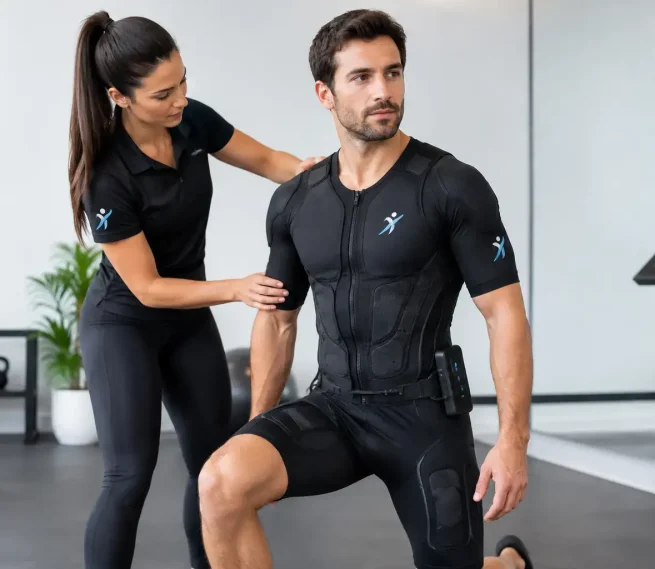
Personalisation is not limited to the first appointment. Your trainer should be watching your movement and responding throughout every session. A programme on paper may say squat, hinge, press and row. The live coaching determines the range, load, tempo, stimulation level and variation that make those patterns productive for you.
Adjusting intensity without chasing discomfort
EMS intensity is individual. One client may tolerate a higher sensation through the legs than through the core; another may need time to get accustomed to the contractions. Trainers increase output gradually and check in regularly, aiming for strong, controlled muscular work rather than a session that feels punishing for the sake of it.
More stimulation is not automatically better. If output is too high, technique can deteriorate, breathing becomes shallow and recovery can suffer. The better target is an intensity that challenges the intended muscles while allowing you to move well and maintain quality effort across the session.
That distinction is particularly valuable for people returning after a break. The first few sessions are often about learning the sensation, building trust in the movements and establishing a recovery response. Progress comes from stacking well-executed sessions, not trying to prove everything in week one.
Changing exercises to suit movement and confidence
A trainer may adapt a squat into a box squat for someone who needs support and a clear depth target. A split squat may become a supported variation if balance is the limiting factor. A client with shoulder discomfort might perform a different press angle, use a reduced range or focus more heavily on pulling, trunk control and mobility work.
These are not watered-down sessions. They are intelligent choices that allow the right muscles to work without asking the body to force a pattern it cannot yet own. As movement improves, exercises can progress through greater range, more control, changed stance, added resistance or a more demanding tempo.
For clients rebuilding after pain or time away from exercise, the goal is often capability first. Better hip control, improved posture, stronger glutes and a more stable trunk can make everyday tasks feel easier before dramatic visual changes appear. Those early wins matter because they make consistency more likely.
Matching the pace to the goal
The same EMS technology can support very different training outcomes. For body recomposition, sessions may focus on full-body strength patterns, progressive challenge and habits that support nutrition and recovery. For a runner, the programme may prioritise single-leg strength, posterior-chain work, ankle and hip control, plus conditioning that complements rather than exhausts run training.
Golfers may need rotational control, posture and mobility. Combat athletes may require power, work capacity and resilience through multiple movement planes. Someone who spends long hours at a desk may benefit from a programme that builds upper-back strength, hip mobility and trunk endurance alongside fat-loss goals.
It depends on the priority for that training block. Trying to chase maximum strength, high-volume conditioning, advanced mobility and aggressive fat loss all at once can dilute progress. A skilled trainer helps you choose the lead goal, while maintaining the qualities that support it.
Progression is earned, measured and adjusted
The strongest EMS programmes are not static. Once a client is moving confidently and recovering well, the trainer can progress the challenge. That may mean a modest rise in stimulation, a more demanding exercise variation, slower eccentric work, extra resistance, tighter rest periods or greater technical complexity.
However, progression is not a straight line. A difficult week at work, poor sleep, travel, illness or a demanding sports event can all change what is sensible on a given day. Reducing intensity temporarily is not lost progress. It is how training stays consistent enough to deliver results over months rather than a burst of effort followed by a setback.
This is also where tracking earns its place. Regular body scans can show changes that scales miss, such as shifts in shape or lean mass trends. Performance markers can be equally motivating: a deeper squat with control, fewer breaks during conditioning, reduced stiffness after sitting, or the confidence to return to an activity you had avoided.
The best evidence is a combination of data and real life. If your measurements are moving in the right direction but you are exhausted and dreading each session, the programme needs attention. If the scale has barely changed but your clothes fit differently, your posture has improved and you are stronger, that is progress worth recognising.
Recovery is built into the plan
Because EMS creates a demanding muscular stimulus, recovery is not an afterthought. Trainers consider session frequency, hydration, protein intake, sleep, stress and the rest of your weekly activity. For many clients, one or two well-coached EMS sessions alongside walking, mobility work or sport is more realistic and effective than attempting an unsustainable daily routine.
Recovery needs vary. Someone training for an event may use EMS to complement a structured training calendar. Someone managing a busy household and business may need sessions spaced to leave them energised rather than depleted. Organic supplementation can support a wider wellbeing routine where appropriate, but it does not replace food quality, rest or sensible programming.
Your feedback is essential here. A trainer can see your technique, but only you know how your body feels between appointments. Sharing soreness, fatigue, sleep disruption, pain or a new health concern allows the next session to be adapted before a minor issue becomes a bigger interruption.
What personalised coaching looks like in practice
For a beginner, it may mean a calm first month of simple movements, manageable stimulation and frequent technique cues. For a professional with little spare time, it may mean two structured 30-minute sessions that cover the essentials with no wasted gym-floor wandering. For an experienced athlete, it may mean a focused block addressing a weak link that conventional training has not resolved.
The common thread is attention. You should not be left to guess whether you are doing enough, doing too much or moving well. A trainer-led EMS programme gives you a clear session purpose, real-time coaching and a measurable way to see whether the plan is working.
If you want results that fit your life rather than consume it, start with an honest conversation about where you are now. The right programme does not ask you to become somebody else before you begin. It gives you a smart, supported route to become stronger from exactly where you are.
 7min