Your core is working long before you attempt a sit-up. It helps you get out of the car without stiffness, carry shopping, climb stairs, sit taller at your desk and move with more control when life gets busy. That is why core stability training for beginners should start with learning to control your body, not chasing exhausting ab workouts.
For many people, the problem is not a lack of effort. It is a lack of structure. They try random exercises online, feel their lower back taking over, then decide core training is not for them. With the right coaching, a few well-chosen movements can create a stronger foundation for fat loss, strength training, better posture and pain-free everyday movement.
What core stability actually means
Your core is more than the muscles you can see at the front of your stomach. It includes the deep abdominal muscles, muscles around the spine, pelvic floor, diaphragm, hips and glutes. Together, they create support and transfer force between your upper and lower body.
Core stability is your ability to keep your trunk controlled while your arms, legs or body move. Think of reaching for a suitcase without twisting, holding your posture as you walk, or staying balanced during a squat. A strong core is useful because it helps you resist unwanted movement, not because it guarantees visible abs.
This distinction matters for beginners. Hundreds of fast crunches may make your stomach burn, but they do not automatically teach you how to brace, breathe and maintain good alignment. If you have back discomfort, a history of injury or spend long hours sitting, control should come before intensity.
Why beginners benefit from core stability training
A better-trained core can make other exercise feel safer and more effective. When you can hold a steady position, you are more likely to squat with control, push without collapsing through your lower back and lift with confidence. It can also improve how you feel between workouts, particularly if desk work has left you feeling tight, weak or unstable.
The benefits are practical. You may notice that your posture is easier to maintain, your balance improves and everyday tasks require less effort. Runners often benefit from greater control through the pelvis and trunk, while golfers can use it to create a more stable base for rotation. For busy professionals and parents, it is often about moving without that familiar feeling of being constantly stiff or vulnerable.
There is a trade-off: core work is not a magic fix for every ache or injury. Persistent, severe or worsening pain needs assessment from an appropriate healthcare professional. Good training can support rehabilitation and build capacity, but the programme must match the person in front of the coach.
The first skill: breathing and bracing
Before adding challenging exercises, learn to create tension without holding your breath. Lie on your back with knees bent and feet on the floor. Place your hands around the lower part of your ribs. Breathe in quietly through your nose, allowing your ribcage and abdomen to expand naturally.
As you breathe out, gently tighten your midsection as though preparing for someone to tap you in the stomach. Your aim is not to suck your belly in or squeeze as hard as possible. It is to create a firm, steady cylinder around your trunk while still being able to breathe.
Keep your shoulders relaxed and avoid flattening your back aggressively into the floor. Everyone’s natural spinal shape is slightly different. The goal is control, not forcing yourself into a position that feels unnatural.
Core stability training for beginners: four smart starting moves
Start with two sessions each week, allowing at least a day between them. Quality matters far more than duration. Ten focused minutes done consistently will serve you better than a long session performed with poor technique.
Dead bug
Lie on your back with hips and knees bent to roughly 90 degrees, arms reaching towards the ceiling. Brace gently, then slowly lower one heel towards the floor while reaching the opposite arm behind you. Return with control and change sides.
Only lower as far as you can without your back arching, ribs flaring or hips shifting. If that means moving the heel a few inches, that is a successful repetition. Aim for six to eight controlled reps per side.
Bird dog
Start on hands and knees, with hands under shoulders and knees beneath hips. Set your brace, then extend one leg behind you. If you can keep your torso still, add the opposite arm reaching forwards.
Imagine balancing a glass of water on your lower back. Avoid twisting your hips open or lifting the leg so high that your back arches. Complete six controlled reps per side, pausing briefly at full reach.
Side plank from knees
Lie on your side with your forearm on the floor and knees bent. Lift your hips until your body forms a straight line from shoulders to knees. Keep your neck long and your ribs stacked over your pelvis.
This exercise challenges the side of the trunk, an area that plays a major role in pelvic control and balance. Start with 10 to 20-second holds on each side. If you feel it only in your shoulder, reduce the hold or ask a trainer to check your position.
Glute bridge with a pause
Lie on your back with knees bent and feet hip-width apart. Brace gently, press through your feet and lift your hips until your body is roughly in line from shoulders to knees. Pause for two seconds, then lower slowly.
You should feel your glutes working, with your ribs staying down rather than your lower back doing all the work. Try eight to 12 repetitions. This is not purely an abdominal movement, but strong glutes and stable hips are a major part of a well-functioning core.
Build a routine you will actually keep
You do not need an hour on a gym mat. Start by adding the four movements to the end of a walk, strength session or short home workout. One or two rounds is enough initially. Leave a rep or two in reserve rather than pushing until your form collapses.
As your control improves, progress one variable at a time. You could add a few seconds to a hold, increase the range of movement, slow the lowering phase or move from a knee side plank to a full side plank. Changing everything at once makes it harder to know whether you are genuinely ready.
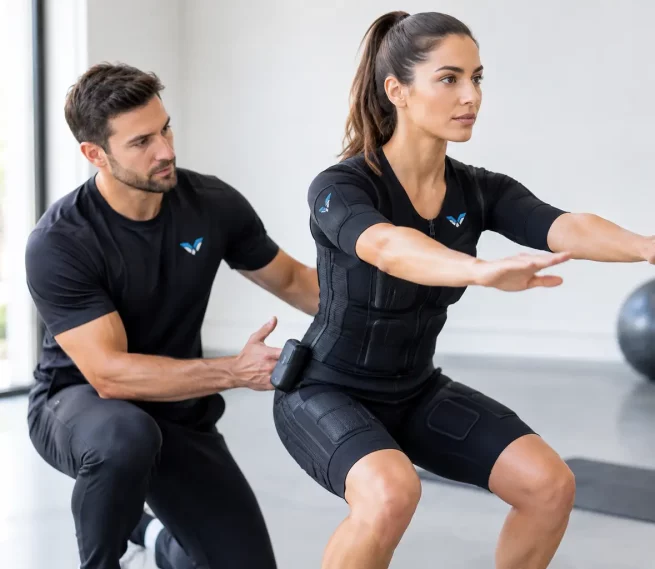
For clients who are short on time, guided EMS training can also be a useful setting for developing full-body strength and core control. At E-Pulse Studio, sessions are coach-led, so exercises can be adapted around your movement quality, goals and any limitations. EMS is not a replacement for good technique – it works best when you are learning how to brace, breathe and move well under expert supervision.
Common mistakes that slow progress
The most common mistake is turning every exercise into a test of endurance. Shaking and sweating are not always signs of productive training. If you are holding your breath, gripping your neck, arching your lower back or rushing every rep, make the movement easier and regain control.
Another mistake is training only the front of the body. Your core needs to work in different directions: resisting extension, rotation and side-bending, while the hips and glutes contribute to stability. A balanced beginner programme includes movement on your back, front, side and hands-and-knees positions.
Finally, do not wait for motivation. Put two short sessions in your diary and treat them like any other appointment. Consistency creates the changes that make you feel stronger when lifting, walking, training and getting through a demanding week.
When to get coaching support
A coach is particularly valuable if you are unsure whether you are bracing correctly, returning to exercise after injury, dealing with recurring back discomfort or finding that home workouts never become a habit. A personalised assessment can identify whether you need more mobility, strength, confidence or simply a clearer plan.
The best beginner programme should make you feel capable, not intimidated. Start with controlled reps, build your strength steadily and pay attention to the small wins: standing taller, moving more freely and trusting your body again. Those changes are a powerful place to begin.
 8min
8min