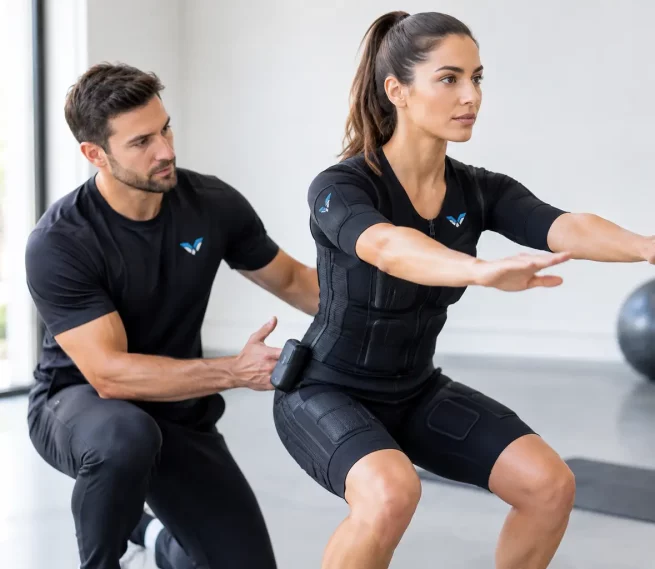
A packed diary should not force you to choose between looking after your body and keeping up with work, family and everything else. EMS training Peterborough gives you a coached, focused route to strength, shape and better movement in a 30-minute session – without wandering around a gym wondering what to do next.
This is not a shortcut that asks nothing of you. You still train, sweat and work with intent. The difference is that electro muscle stimulation adds a controlled stimulus to your movements while a trainer keeps every exercise specific to your goal, ability and body.
What EMS training actually involves
EMS uses a wearable suit with electrodes positioned across major muscle groups. During a session, the equipment sends carefully managed electrical impulses that encourage muscles to contract while you perform guided exercises such as squats, lunges, presses, rows and core work.
At E-Pulse Studio, this happens in a private, coach-led setting rather than on a busy gym floor. Your trainer adjusts the intensity for each area of the body, watches your technique and progresses the session as you become stronger. You are never left to guess whether the settings are right or whether an exercise is helping your particular goal.
The sensation is unusual at first. Most clients describe it as a firm, rhythmic muscle contraction rather than pain. You can speak throughout the session, and the intensity should feel challenging but manageable. Good coaching matters here: more stimulation is not automatically better. The right level is the one that lets you move well, work hard and recover properly.
Why 30 minutes can be enough
Traditional training often includes travelling to the gym, finding equipment, deciding on a programme and fitting in a meaningful workout. For busy professionals, parents and business owners, that can turn a one-hour session into a two-hour commitment.
A 30-minute EMS session is designed to be purposeful from the first movement. Multiple muscle groups are engaged at once, with the suit working alongside controlled functional exercises. That makes it a practical option for people who need high-quality training without giving up several evenings each week.
It is not a replacement for every form of activity. Walking, running, cycling, sport and general movement all have their own benefits for heart health, enjoyment and everyday fitness. EMS works especially well as the structured strength and body-composition element of a wider routine. For someone who currently does very little, it can also be a realistic starting point because every session is supervised and scaled to their level.
Consistency is where the value builds. One hard session followed by three weeks away will not transform your body. Regular training, sensible food choices, sleep and recovery create the visible change people want – whether that is a firmer shape, better posture, greater strength or more confidence in their clothes.
EMS training in Peterborough for different goals
The best programme depends on what you want your body to do, not simply what you want the scales to say. Your trainer should ask about your schedule, training background, injuries, mobility and the outcome that matters most to you.
Fat loss and body transformation
If your target is fat loss, EMS gives you an efficient resistance-training stimulus that can help preserve and build lean muscle while you reduce body fat. That matters because muscle supports a stronger, more defined look. But no studio can out-train an eating pattern that consistently works against your goal.
This is why progress works best when training is paired with realistic nutrition support, not extreme restrictions. A 3D body scan can track changes in body composition and measurements beyond body weight alone. The scales may stay similar while your waist, shape and muscle tone change – useful reassurance when effort is being rewarded in more than one way.
Strength, stamina and performance
For runners, golfers, combat athletes and regular gym-goers, EMS can support strength, trunk stability and muscular endurance without adding long training sessions to an already full week. It can be particularly useful during a busy period when your normal strength work has slipped.
The trade-off is specificity. If you are training for a race, you still need to run. If your sport demands a particular skill, you need to practise that skill. EMS can strengthen the physical foundation, but it does not replace sport-specific conditioning or technical coaching.
Posture, mobility and recurring aches
Many people arrive after months of desk work, reduced activity or an old niggle that has made exercise feel daunting. Guided strength work can help improve body awareness, support better posture and build capacity around areas that feel weak or stiff.
Sessions should be adapted rather than pushed through blindly. A trainer may use smaller ranges of movement, reduce stimulation in a sensitive area or focus on glutes, core control and upper-back strength before progressing further. Clients often value this approach because they are not trying to copy a class of 20 people with entirely different needs.
EMS is not a diagnosis or a cure for injury. If you have acute pain, a recent operation, unexplained symptoms or a medical condition, seek appropriate medical advice first. Certain conditions, including having a pacemaker or being pregnant, may mean EMS is unsuitable. A proper pre-session consultation is there to protect you, not slow you down.
What your first session should feel like
A strong first session is about learning, not proving how tough you are. You should expect a conversation about your aims and health history, an explanation of the suit and stimulation, and a simple assessment of how you move. From there, your trainer will introduce exercises at an appropriate pace.
You may work harder than the clock suggests. Because the session is concentrated, people often feel their muscles have been properly challenged despite spending less time training. Mild muscle soreness can happen afterwards, particularly when you are new to resistance exercise. Hydration, normal movement and enough recovery will help.
You should not leave feeling broken. The aim is to build a routine you can sustain. Progress might mean increasing an intensity setting, moving with better control, completing more quality repetitions, reducing discomfort in everyday tasks or seeing a change on your body scan. Those are all meaningful signs that the programme is moving forward.
How often should you train?
For many people, one EMS session per week is a sensible starting frequency because it gives the body time to recover from a full-body stimulus. Your ideal plan depends on your experience, lifestyle, recovery, other exercise and goal. Someone returning after a long break needs a different approach from an athlete adding strength work around several weekly sessions.
The rest of the week matters. Walking more, including gentle mobility work and eating enough protein can all support your results. If fat loss is your priority, daily habits are especially influential. If mobility and pain reduction are your focus, the programme may include simple movements to practise between sessions so that progress carries into normal life.
How to judge whether it is working
Avoid judging your training only by how exhausted you feel. A better question is whether you are becoming more capable and more consistent. Are stairs easier? Is your back less stiff after a working day? Are you lifting more confidently, moving better or fitting into clothes differently?
Objective tracking gives the process structure. Regular 3D scans, strength markers, mobility checks and progress photos can show change that a mirror or scale misses from week to week. Equally, an honest review can show when something needs adjusting – perhaps nutrition needs more attention, recovery is poor or the programme needs a new challenge.
The strongest results usually come from clients who treat coaching as a partnership. Tell your trainer when life is stressful, sleep has been poor or an exercise does not feel right. The plan can then meet you where you are while still moving you forward.
If your current routine is built on good intentions and missed gym sessions, a focused 30 minutes may be the change that makes training finally stick. Start with expert guidance, commit to the process and let measurable progress give you a reason to keep showing up.

 8min
8min