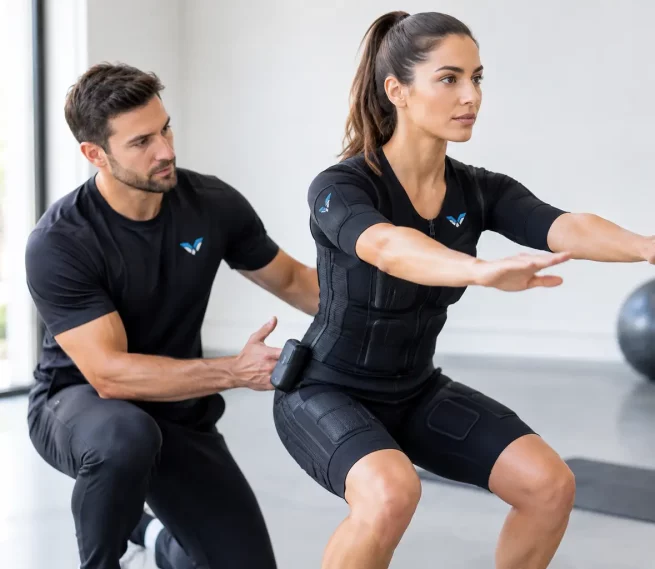
School run at 8, work calls by 9, dinner on by 6, and somehow you are still expected to fit in exercise. That is exactly why the best EMS workouts for busy parents are built around efficiency, not gym marathons. When time is tight, the right session needs to work hard, feel purposeful and deliver visible progress without asking for hours you simply do not have.
EMS training suits this reality well. A focused session can train multiple muscle groups at once, with a coach adjusting the intensity to your current fitness, recovery and goals. For parents, that matters. Some weeks you want fat loss and energy. Other weeks you just want to move well, reduce back tension and stop feeling wrecked by the end of the day.
What makes the best EMS workouts for busy parents?
The best sessions do not just chase sweat. They solve real parent-life problems. They improve strength for lifting children, posture for desk work and stamina for long days that start early and finish late. They also need to be realistic enough that you can repeat them consistently.
That last point is where many training plans fall apart. A perfect 90-minute gym routine is useless if you can only manage it once every two weeks. A well-structured EMS programme, on the other hand, can fit around nursery pickups, commutes and unpredictable schedules while still moving you forwards.
For most parents, the sweet spot is not one single style of workout. It is a combination. You need some strength work, some core and posture training, some mobility, and enough conditioning to improve energy without wiping you out.
The 7 best EMS workouts for busy parents
1. Full-body strength EMS
If you only have time for one style of session each week, make it full-body strength. This is the foundation workout for busy parents because it targets the big movement patterns that matter most – squatting, hinging, pushing, pulling and bracing through the core.
A strong full-body EMS session helps with everyday life as much as aesthetics. Getting children in and out of car seats, carrying shopping, climbing stairs with bags and keeping good posture at a laptop all become easier when your legs, glutes, back and trunk are stronger.
This style of workout is also one of the most time-efficient. Rather than splitting body parts across different days, you train the whole system in one focused block. For beginners or those returning after a long break, it is often the best starting point because it creates fast, measurable improvements without overcomplicating the process.
2. Core and posture EMS
Many parents think they need more cardio when what they really need first is a stronger middle and better alignment. If you spend hours sitting, feeding a baby, carrying a toddler on one hip or bending over buggies and cots, your posture takes a hit.
A core and posture-led EMS workout focuses on the abdominals, lower back, glutes and upper back. The result is not just a tighter midsection. It can mean standing taller, moving with less stiffness and reducing the nagging aches that make exercise feel harder than it should.
This is especially valuable if you have lost confidence after pregnancy, a long desk-based period, or recurring back discomfort. There is a trade-off, though. Posture sessions may not feel as dramatic as high-intensity training in the moment, but they often create the platform that makes every other workout safer and more effective.
3. Low-impact metabolic EMS
When parents say they want to get fitter, what they usually mean is they want more energy, better body composition and less puffing when life gets hectic. A low-impact metabolic EMS session is ideal here. It keeps the heart rate up through controlled movements while reducing the pounding associated with traditional classes or long runs.
Think of this as conditioning without chaos. You are working through sequences that challenge multiple muscle groups, improving stamina and calorie burn while protecting joints and avoiding unnecessary wear and tear.
For parents who are carrying extra weight, coming back from inactivity or managing tiredness, this is often more sustainable than jumping straight into high-impact training. You still get intensity, but it is coached and controlled rather than frantic.
4. Lower-body and glute EMS
Busy parents spend a lot of time on their feet, but that does not automatically mean their lower body is strong. In fact, weak glutes and undertrained legs are common, especially when most of the day is split between sitting, driving and rushing from task to task.
A lower-body EMS workout targets the glutes, quads, hamstrings and calves with purpose. It is excellent for building shape and strength, but the benefits go beyond appearance. Stronger legs support better posture, improve movement efficiency and help reduce the strain placed on the lower back.
This can be a smart emphasis if your goals include fat loss, toning or athletic improvement. It also works well for parents who feel unstable, sluggish or generally deconditioned. Strong legs give you a bigger engine for daily life.
5. Upper-body and postural chain EMS
Parents often notice upper-body fatigue before they notice weakness. Shoulders ache from carrying children, necks tighten from screen time, and arms feel tired after what seems like a normal day. An upper-body and postural chain session addresses that directly.
These workouts train the chest, back, shoulders and arms, but the real win is balance. Instead of overworking the front of the body and ignoring the muscles that support posture, a properly coached EMS session strengthens the entire upper frame.
If your goal is to feel stronger, more capable and less hunched by evening, this is a valuable piece of the puzzle. It is also popular with parents who want visible toning in the arms and shoulders but do not want to spend hours doing isolated gym work.
6. Mobility and recovery EMS
Not every effective session needs to leave you shattered. In fact, for busy parents, pushing hard every time can backfire. Poor sleep, stress and inconsistent recovery change what your body can handle. That is why mobility and recovery EMS deserves a place on this list.
This style of session combines lower-intensity stimulation with controlled mobility work to improve movement quality, loosen stiffness and support recovery. If you wake up tight, struggle with hip or back discomfort, or feel too run down for a hard workout, this is often the smarter choice.
There is no prize for forcing intensity when your system is waving a red flag. Consistent training comes from matching the session to the season you are in. Some weeks you need to build. Some weeks you need to restore so you can come back stronger.
7. Sport-style interval EMS for advanced parents
Some parents want more than general fitness. They want to feel sharp, athletic and challenged. If that sounds like you, a sport-style interval EMS session can be a strong fit once your base strength and movement quality are in place.
These sessions use short bursts of harder work with controlled recovery periods. They are excellent for improving conditioning, power and mental sharpness, especially if you used to play sport or enjoy performance-driven training.
The key word here is advanced. This is not the best entry point for someone exhausted, sleep-deprived and brand new to exercise. Done too early, it can feel punishing rather than productive. Done at the right stage, with proper coaching, it can be one of the most satisfying ways to train.
How to choose the right EMS workout for your schedule
The best plan is the one you will actually maintain. For many parents, that means starting with one or two sessions per week and building from there. One full-body strength session plus either posture, mobility or metabolic work is often enough to create real momentum.
If your main issue is aches, stiffness or low confidence, start with core, posture and recovery-focused work. If your priority is fat loss and body tone, combine full-body strength with metabolic or lower-body sessions. If you already have a training background and want performance, add intervals once your basics are solid.
This is where coaching matters. A good EMS trainer does not throw every parent into the same format. They look at your sleep, stress, training history, mobility and goals, then adjust the plan accordingly. That level of personalisation is what turns a quick workout into a smart one.
Studios that pair EMS training with progress tracking can make this even more motivating. Seeing changes in strength, posture or body composition helps parents stay committed because the effort feels measurable, not vague.
Why busy parents get strong results with EMS
The biggest advantage is not magic. It is compliance. Parents are far more likely to stick with a 20-minute coached session than a programme that demands five gym visits and endless willpower. When training feels manageable, consistency improves. When consistency improves, results follow.
That is why so many time-poor clients respond well to EMS. They are not lazy. They are overloaded. Give them a focused, personalised workout that respects their schedule, and they can finally train in a way that fits real life.
At a coaching-led studio such as E-Pulse Studio, that structure can make all the difference. You are not left guessing what to do or whether you are doing enough. You turn up, work with intent and leave knowing the session had a purpose.
If you are a parent trying to balance work, family and your own health, do not wait for the mythical free week when life becomes quiet. Pick the workout style that matches where you are now, keep it consistent, and let efficient training do what endless good intentions never could.
 8min
8min