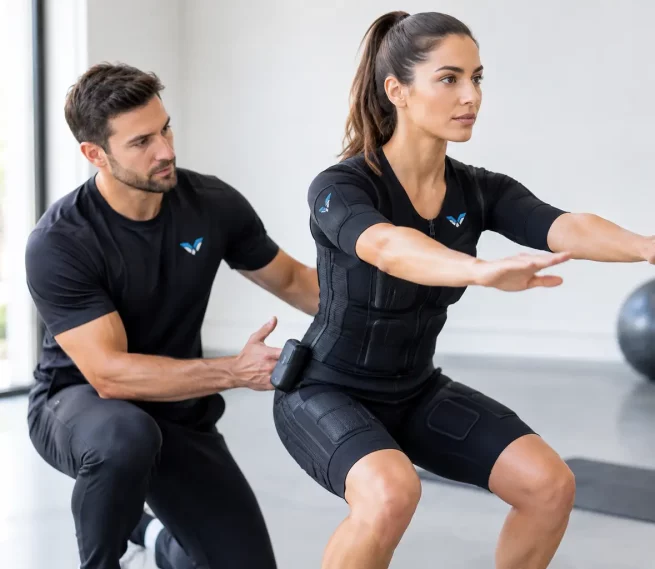
If your week is already full before Monday lunch, the idea of spending hours in the gym can feel unrealistic. That is exactly why so many people start looking into the top benefits of EMS fitness. It offers a different route – one built around short, coached sessions, targeted muscle activation and measurable progress without the usual time drain.
For busy professionals, parents, and anyone who has struggled to stay consistent with traditional training, that matters. The real appeal is not just that EMS feels modern. It is that, when used properly, it can help people train with purpose, improve how their body performs, and stay accountable to a plan that fits real life.
What makes the top benefits of EMS fitness stand out?
EMS stands for Electro Muscle Stimulation. During an EMS session, you wear specialist equipment that delivers controlled electrical impulses to your muscles while you perform guided movements. Those impulses intensify muscle recruitment, which means more fibres are engaged than in many conventional workouts.
That sounds technical, but the practical benefit is simple. You can get a highly efficient training stimulus in a much shorter session than most gym programmes require. For people who have been stuck in the cycle of stop-start exercise, that can be the difference between talking about getting fitter and actually doing it.
It saves serious time without turning fitness into a compromise
Time efficiency is usually the first reason people enquire about EMS, and rightly so. A coached EMS session is short, focused and demanding. You are not wandering between machines, waiting for equipment, or padding a workout with half-hearted cardio because you feel you should.
For a lot of clients, this is the breakthrough. They do not need more reminders to be disciplined. They need a format that respects the fact they are running a business, commuting, raising children, or juggling all three. When training becomes realistic, consistency improves. And consistency is still the foundation of results.
That said, short does not mean effortless. EMS training works best when sessions are structured properly and your coach adjusts the intensity to your level. It is efficient because it is targeted, not because it is easy.
It can improve strength quickly
One of the strongest reasons people stick with EMS is that they feel stronger fast. Because the technology stimulates deep and superficial muscle fibres at the same time, it can create a powerful training effect even in movements that look relatively simple.
This matters for beginners and experienced clients alike. If you are new to exercise, improved strength can make everyday life easier – lifting, carrying, climbing stairs, moving with more confidence. If you already train, EMS can complement your routine by pushing muscle activation in a different way.
The key here is progression. Better strength does not come from one intense session. It comes from repeated, well-managed sessions where your body adapts over time. With strong coaching, that process becomes much easier to track and maintain.
Body composition support is one of the top benefits of EMS fitness
Many people come to EMS because they want to feel leaner, firmer and more in control of their body shape. That is a valid goal, and EMS can play a useful role in supporting it. Increased muscle activation means the body is working hard during each session, and when training is paired with sensible nutrition, recovery and consistency, changes in body composition can follow.
This is where expectations need to stay honest. EMS is not a shortcut that overrides sleep, food choices or stress. Anyone promising that would be overselling it. But if you want an efficient training method that supports fat loss and muscle tone while fitting into a busy life, it is a strong option.
For clients who like evidence, body scanning and progress tracking can be especially motivating. Seeing changes in muscle mass, posture or body fat trends gives structure to the process. It turns vague effort into something measurable.
It helps with posture and movement quality
Poor posture rarely comes from one single issue. More often, it is the result of weak muscles, tight areas, sedentary work and years of compensation. If you spend long days at a desk, in the car, or constantly looking down at a screen, your body tends to adapt in all the wrong ways.
EMS can help by activating key muscle groups that support spinal alignment, core control and overall movement quality. With the right exercises and trainer input, clients often notice they stand taller, feel more stable and move with better control.
This is one of the most underrated benefits because it affects more than appearance. Better posture can reduce strain, improve exercise technique and help you feel less stiff through the day. It also tends to support confidence. When your body feels stronger and more upright, you carry yourself differently.
It can support back pain reduction and rehabilitation work
For people dealing with back pain, old injuries or mobility restrictions, normal gym training can feel intimidating. Heavy lifting may be inappropriate, and unsupervised exercise can make people nervous, especially if they have had flare-ups before.
In those cases, EMS can be a useful tool because sessions are coached closely and adapted to the individual. Muscles can be activated effectively without loading the body in the same way as traditional strength training. That can create a safer, more manageable route back into exercise.
Of course, context matters. Not every injury is suitable for EMS, and rehabilitation should always be guided appropriately. But for many people with weakness, deconditioning or recurring aches, it offers a practical middle ground between doing nothing and throwing themselves into a gym routine that their body is not ready for.
Stamina and athletic performance can improve too
EMS is often talked about for toning and time-saving, but performance benefits matter as well. When training improves muscular recruitment, strength and control, it can support better output in other activities. Runners may feel stronger through their stride. Golfers may notice better rotational stability. Combat athletes may benefit from improved power and endurance.
Some programmes also aim to support improvements in cardiovascular fitness markers such as VO₂max. That is particularly valuable for clients who want more than aesthetic change. They want to feel fitter, recover better between efforts and perform more effectively in sport or daily life.
It is worth saying that EMS should not replace every other form of training if you have specific sporting goals. If you are preparing for a half marathon, you still need to run. If you want to improve your golf swing, technical practice still matters. EMS works best as part of a broader strategy, not as a miracle fix for every objective.
Accountability changes everything
The technology is impressive, but the coaching is what turns EMS into a sustainable system. A premium studio model gives clients structure, progression and support. That matters because most people do not fail from lack of information. They fail because life gets busy, motivation dips, and nobody is there to keep them on track.
When sessions are booked, personalised and monitored, follow-through improves. You are not left guessing whether you are doing enough or whether your form is right. You have a trainer adjusting the session to your goals, energy levels and limitations.
That level of support is especially valuable for people who have lost confidence in conventional gyms. The environment feels more focused, more personal and less overwhelming. You are not just paying for equipment. You are investing in guidance.
It works for people who hate traditional gyms
Not everyone wants to spend their evenings on a gym floor surrounded by mirrors, headphones and queues for machines. Some people find that environment motivating. Others find it dull, intimidating or impossible to stick with.
EMS offers an alternative. The sessions are private or small-scale, coach-led and goal-specific. There is less wasted time and less noise around the process. For clients who want results without the gym culture, that can be a huge relief.
This is often where long-term adherence improves. Once someone finds a training style that suits their personality and routine, exercise stops feeling like punishment. It becomes something purposeful and manageable.
The results are easier to feel and easier to see
One reason EMS builds momentum is that clients often notice changes early. They may feel muscles working in places they normally struggle to engage. They may feel more upright, more energised or less stiff after a block of consistent sessions. Physical changes often follow that initial shift in body awareness.
Visible progress still depends on the bigger picture – training frequency, nutrition, recovery and goal alignment. But feeling the difference matters. It builds belief, and belief helps people keep going long enough to create real change.
For many clients, that is the biggest win of all. They stop chasing random workouts and start following a clear, coached plan that fits their life and delivers measurable outcomes.
If you have been putting off fitness because you think results require endless hours, EMS may be worth a closer look. The best training method is not the one that sounds hardest. It is the one you can do consistently, safely and with confidence – and for a lot of people, that changes everything.
 8min
8min