A scale can move for reasons that have nothing to do with progress. You might be retaining water after a hard week, carrying more muscle from consistent training, or simply weighing yourself at a different time of day. That is why personalised body composition coaching looks beyond one number. It gives you a clear plan for changing what your body is made of – reducing unwanted body fat, building or maintaining lean muscle, and improving the strength and energy you feel every day.
For busy professionals, parents and business owners, the real challenge is rarely knowing that exercise and nutrition matter. It is finding an approach that fits real life long enough to produce visible, measurable change. A coaching-led programme combines training, progress data and proper accountability, so every session has a purpose.
What personalised body composition coaching actually means
Body composition is the balance between fat mass, lean mass, muscle, water and other tissues in your body. Two people can weigh the same yet look, move and perform completely differently. One may have built more muscle and improved their posture while reducing body fat; the other may simply be chasing a lower scale weight through restrictive eating and inconsistent exercise.
Personalised coaching starts with your goal, your training history, your lifestyle and your starting point. Someone returning to exercise with back discomfort needs a different route from a runner wanting better endurance, or a time-poor parent aiming to feel more confident in their clothes. The programme should adapt to your capacity, not demand that you live like a full-time athlete.
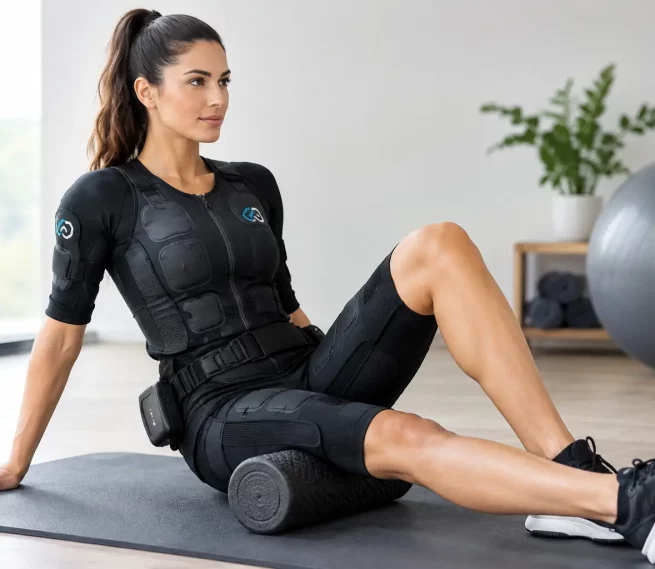
At E-Pulse Studio, this can include EMS personal training supported by 3D body scanning and trainer-led reviews. EMS uses controlled electrical stimulation alongside guided movement to recruit muscles efficiently during a short session. It is not a shortcut that removes the need for effort, nutrition or consistency. It is a highly time-efficient training tool when used with expert coaching and a sensible plan.
Why the scales are not enough
Scale weight is useful, but it is only one piece of evidence. If your goal is fat loss, a quick drop can sometimes reflect reduced glycogen or water rather than meaningful fat loss. Equally, if you are getting stronger, your weight may hold steady while your waist measurement, shape and clothing fit improve.
This is where 3D body scanning can bring clarity. Regular scans can track changes in body shape and circumference over time, helping you see progress that a weekly weigh-in might hide. When paired with photos, performance markers and how you feel day to day, the conversation becomes more useful: not “Why have I only lost half a kilo?” but “My waist has reduced, my posture is better and I can train without the knee pain that kept stopping me.”
Data should guide the programme, not create anxiety. Daily fluctuations are normal. A good coach looks for trends across several weeks, then adjusts training, recovery habits or nutrition support only when the evidence says it is needed.
The three parts of a plan that gets results
Training built around your real week
The best programme is not the most punishing one. It is the one you can repeat. For many people, one or two focused EMS sessions each week are more realistic than promising five gym visits and missing four of them. Short, coached sessions can provide a serious strength stimulus while protecting precious time for work, family and recovery.
Your trainer should progress the session as you become stronger and more confident. That could mean improving movement quality, increasing resistance, developing core control or adjusting the EMS intensity. For clients managing mobility restrictions or returning after injury, the focus may begin with stability, range of motion and confidence before higher-intensity work is introduced.
There are trade-offs. EMS is powerful, but it does not replace walking, sport-specific practice or general movement. A runner still benefits from running. Someone who sits at a desk all day still benefits from regular walks and mobility work. Coaching works best when your studio sessions are the anchor of a more active, better-supported week.
Nutrition that supports change without taking over your life
Body composition changes when your food intake supports the goal, but extreme rules rarely suit a busy life. A fat-loss phase usually requires a manageable calorie deficit, enough protein to protect lean mass, and meals that keep you satisfied. If muscle gain is the priority, you need sufficient energy and protein, alongside progressive training.
The practical details matter more than perfection. A coach may help you create reliable breakfasts, improve protein at lunch, plan around evening hunger or avoid the all-or-nothing pattern that turns one meal out into a lost weekend. Organic supplementation can have a place in supporting daily nutrition, recovery and wellbeing, but it should complement good food habits rather than cover for them.
Your plan also needs flexibility. Holidays, demanding work periods, family events and poor sleep happen. Progress is not ruined by one off-plan meal. It is slowed by abandoning the plan altogether because it was too rigid to begin with.
Accountability that turns intent into consistency
Motivation is useful, but it changes from week to week. Accountability is what keeps the process moving when motivation dips. A scheduled session, a trainer who knows your goal and a scan review that shows the trend can make a major difference to follow-through.
This does not mean being judged for a difficult week. The right coaching relationship is honest and supportive. If you have missed sessions, struggled with food choices or felt unusually tired, the answer may be to simplify the next seven days rather than add more pressure. Progress often comes from making the plan easier to execute, not more complicated.
What progress can look like beyond fat loss
The most satisfying transformations are rarely just about a smaller number on the scales. A client may notice that their work trousers fit differently, they no longer avoid photographs, or they can carry shopping and play with their children without aching afterwards. Someone training for golf may gain more control through their swing. A runner may feel stronger late in a race. A beginner may finally feel at home in a training environment rather than intimidated by it.
These outcomes matter because muscle, mobility and fitness support a more capable life. Building lean mass can improve strength and shape. Better posture and core control can make everyday movement feel easier. Improved cardiovascular fitness can help stairs, long days and sport feel less draining. Results vary according to your starting point, health, sleep, nutrition and consistency, but the right programme gives those results a clear direction.
How long does body recomposition take?
Most people want a straight answer, but the honest answer is that it depends. You may feel stronger, more energised and more structured within the first few weeks. Visible changes often begin to show over eight to twelve weeks of consistent training and supportive nutrition. Larger transformations take longer, particularly if the goal is to retain or build muscle while losing fat gradually.
Fast results are appealing, yet sustainable results are more valuable. Aggressive dieting can reduce scale weight quickly but may leave you flat, hungry and less able to train well. A measured approach gives you a better chance of preserving lean mass, maintaining your social life and keeping the outcome once you have achieved it.
Choosing coaching that is genuinely personal
Before committing, ask how progress will be measured, how the plan changes when results stall and who will guide you through it. You should know whether sessions are adapted for injuries, mobility concerns and different fitness levels. You should also feel that your coach is interested in more than a before-and-after photo.
The value of personalised body composition coaching is not simply that someone tells you to work harder. It is having a clear baseline, an efficient training method, expert adjustment and encouragement that is specific to you. When the plan respects your time and shows you meaningful evidence of change, consistency stops feeling like a constant battle and starts becoming part of how you live.
 7min
7min