If your week is already packed with work, family and a diary that never seems to slow down, the idea of getting strong, leaner and fitter in just 20 minutes probably sounds too good to be true. That is exactly why an ems workout gets so much attention. It promises serious training stimulus in a fraction of the time – but only when it is done properly, with the right coaching, the right intensity and a plan built around your body.
For many people, the real appeal is not novelty. It is efficiency. You want results you can feel and measure, without spending hours drifting around a gym floor. You want training that fits real life, not the other way round.
What an EMS workout actually does
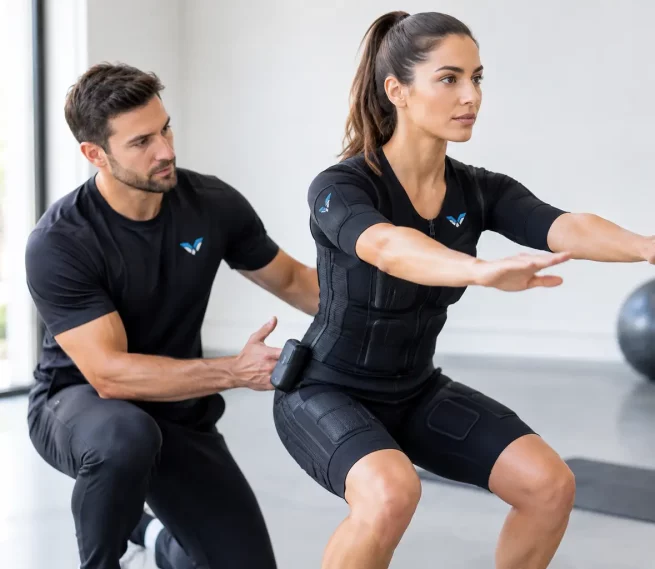
EMS stands for Electro Muscle Stimulation. During an ems workout, you wear a specialist suit or set of electrodes that send controlled electrical impulses to your muscles while you perform guided movements. Those impulses are designed to intensify muscle activation, so even simple exercises become far more demanding than they look.
That matters because a lot of conventional training time is lost in transition, waiting, poor technique or simply not working hard enough. EMS strips that back. In a coached session, the goal is to create a focused, full-body stimulus that trains multiple major muscle groups at once.
It is not passive. That is one of the biggest misconceptions. You are not lying down while a machine does the work for you. A proper session combines the electrical impulses with movement, posture control and trainer-led exercise selection. Done well, it feels challenging, precise and surprisingly intense.
Why people are replacing longer sessions with EMS
The biggest reason is time. A well-structured ems workout can fit into a lunch break, before the school run or between meetings. For busy professionals and parents, that changes the game. Consistency becomes far more realistic when training does not require a 90-minute block, travel included.
But time is only part of it. Coaching is the other half. Many people do not struggle because they lack motivation. They struggle because they lack structure. When every session is guided, personalised and monitored, there is less guesswork and more momentum.
That is often where the best results happen. Clients who have started and stopped traditional gym routines for years suddenly find a system they can stick with. Better adherence usually beats the perfect programme you never follow.
Can 20 minutes really be enough?
Yes, in the right context.
A 20-minute ems workout can be enough to improve strength, muscle tone, posture and general fitness, particularly if your previous training has been inconsistent or low quality. It can also be highly effective for people returning to exercise, rebuilding after injury, or balancing fitness around a demanding schedule.
That does not mean it replaces every type of exercise for every person. If you are training for a marathon, your running still matters. If your goal is elite powerlifting, you still need heavy lifting. If you want to improve mobility, movement quality and reduce pain, EMS may be part of the answer rather than the whole picture.
The honest view is this: EMS is powerful because it gives you a lot of training effect in a short time. It is not magic, and it is not a shortcut around discipline. Results still depend on frequency, effort, recovery, food choices and whether your programme suits your goal.
What results can you realistically expect from an EMS workout?
This depends on where you are starting from, but the early wins are often noticeable. Many people report feeling stronger, more switched on through the core and more upright in their posture within the first few weeks. For clients who spend long hours at a desk, that alone can make a huge difference.
Body composition changes can follow, especially when EMS training is paired with sensible nutrition and consistency. Some clients notice firmer muscle tone and reductions in body fat over time, while others value improvements in stamina, mobility or reduced back discomfort more than the scales.
There is also a performance angle. Because EMS can recruit muscle fibres intensely, it can support strength development and conditioning in a very efficient format. That is one reason it appeals not just to beginners but also to runners, golfers and combat athletes who want targeted support without adding excessive training time.
The key word is measurable. The best studios do not rely on guesswork. Progress should be tracked through coaching feedback, visible body changes, movement quality and, where available, body analysis tools that show whether the programme is actually moving you forward.
Who an EMS workout suits best
EMS works particularly well for people who want expert guidance and cannot afford to waste time. That includes office-based professionals, business owners, busy mums and dads, and anyone who is tired of paying for a gym membership they barely use.
It can also suit people dealing with low confidence around exercise. A private or semi-private coached setting feels very different from walking into a crowded gym and hoping for the best. You are shown what to do, corrected when needed and pushed safely to a level that matches your ability.
There is also strong value for those managing aches, posture issues or reduced mobility. In those cases, exercise selection and coaching matter enormously. The right programme can help strengthen weak areas and improve movement patterns. The wrong one can simply aggravate what is already there.
That said, EMS is not suitable for everyone. Certain medical conditions may mean it is not advised, and a proper pre-session screening is essential. Any reputable studio should take that seriously rather than treating everyone the same.
What a good EMS workout session feels like
Expect focused effort, not random exhaustion.
A strong session usually starts with a conversation about how you are feeling, what your goal is and how your body has responded since the previous session. The suit is fitted correctly, the intensity is adjusted to your level, and the exercises are chosen with purpose.
During the workout, the impulses come in waves while you perform controlled movements. You will likely feel your muscles working harder than they would in a standard bodyweight session. The sensation is unusual at first, but it should feel manageable and guided, not alarming.
Afterwards, many people feel worked from head to toe without the joint-heavy impact of a long gym session. That makes EMS attractive for those who want challenge without endless pounding or repetitive strain.
The trade-offs people should know
An ems workout is efficient, but it is not cheap compared with a standard budget gym membership. You are paying for specialist equipment, personal coaching and a premium training format. For many people, that is worth it because they actually attend, progress and get support. For others, price will be a real consideration.
It also requires recovery. Because the muscular stimulus can be intense, more is not always better. This is not something to stack recklessly every day. A professional programme should balance effort with recovery rather than chasing sweat for its own sake.
And while EMS can do a lot, it cannot cover every base alone. Walking, mobility work, sport-specific practice and good nutrition still matter. The strongest approach is usually to treat EMS as a high-value part of a bigger wellbeing strategy.
Why coaching makes or breaks the result
This is where the gap between a serious studio and a gimmick becomes obvious.
The machine is only a tool. The real difference comes from how the session is delivered, how your progress is tracked and whether the coach knows when to push, when to adapt and when to change the plan. Good trainers look at your posture, movement quality, injuries, confidence level and goals. They do not just clip you in and count reps.
That personalised support is often what helps clients stay consistent long enough to see visible change. It is also what makes the training feel safe and purposeful rather than intimidating. At E-Pulse Studio, that coaching-led approach is exactly what turns short sessions into meaningful progress.
Is an EMS workout worth trying?
If you want maximum value from minimal time, it is absolutely worth considering. Not because it is fashionable, but because it solves a problem that many adults face – the gap between wanting results and having the time, structure or energy to chase them through conventional training.
The people who tend to get the most from EMS are not looking for gimmicks. They are looking for a method they can trust, coaches who know what they are doing, and a routine they can actually maintain. When those pieces are in place, 20 minutes can go a very long way.
If you are curious, the best next step is simple: try one properly, ask questions, and pay attention to how your body responds. Good training should leave you feeling challenged, supported and clearer about what is possible from here.

 8min
8min