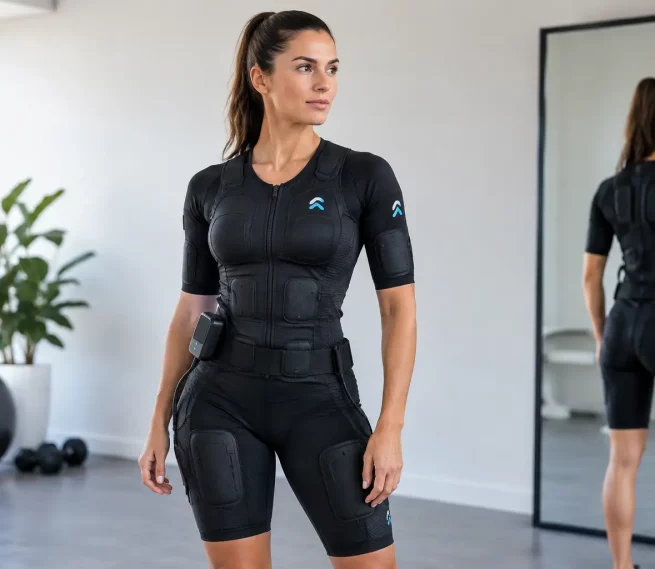
The day after a hard session tells the truth. If your legs feel heavy, your back tight, or your energy flat, recovery has become the limiting factor – not effort. That is exactly why more people are asking how to improve recovery with EMS, especially when they want better results without adding more hours to their week.
EMS can be a powerful recovery tool when it is used with purpose. It helps stimulate muscles without the joint impact of another full training session, which makes it appealing for busy professionals, active parents, runners, golfers, and anyone trying to stay consistent while managing fatigue, stiffness, or low-level aches. Used well, it can support circulation, muscle activation, mobility and post-session freshness. Used badly, it can simply become more stress piled on top of stress.
Why recovery matters more than most people think
A lot of people treat recovery as passive. They train hard, wait, and hope their body catches up. The problem is that progress happens when your body adapts, not when you are constantly digging a deeper hole. If your muscles stay tight, your nervous system stays overloaded, and your sleep or movement quality drops, performance usually follows.
For many adults, the challenge is not motivation. It is capacity. You may want to train more, but your body says no. Recovery is what keeps momentum alive. It is what allows the next session to be productive instead of sluggish.
That is where EMS can help. Rather than asking tired joints and connective tissue to tolerate more load, it allows muscles to contract in a controlled way. In a recovery setting, that can encourage blood flow, reduce the feeling of stiffness, and help the body return to better movement patterns after demanding training or long sedentary days.
How to improve recovery with EMS in the real world
The biggest mistake people make is assuming all EMS is the same. It is not. The settings used for strength and body transformation are different from the settings used for recovery and mobility support. If your goal is to feel fresher and move better, the session needs to match that goal.
Recovery-focused EMS should usually feel restorative, not punishing. You should come out feeling switched on, looser and more balanced rather than wiped out. That is one reason coached sessions matter. A trainer can adjust pulse intensity, exercise choice and session structure based on how your body actually feels that day.
Timing matters too. Some people respond well to EMS on the same day as a demanding workout, particularly later on once the body has settled. Others do better with a recovery session the following day when soreness starts to build. There is no single perfect schedule. It depends on your training age, stress levels, sleep, hydration, and the type of sport or exercise you are doing.
If you are training hard two or three times a week, a lower-intensity EMS recovery session can fit well between those efforts. If you are dealing with stiffness from desk work, long drives or poor posture, it may be useful even when you have not done a major workout. Recovery is not only about sport. It is also about undoing the physical cost of modern routines.
What EMS can realistically do for recovery
EMS is not magic, and it is not a replacement for sleep, nutrition or sensible programming. But it can make those foundations work better by supporting the body in a few practical ways.
First, it can help improve circulation to working muscles. That matters because tired, tight muscles often feel better when they are getting more movement and more blood flow, not less. Second, it can encourage gentle muscle contractions without the pounding that comes from running, jumping or heavy lifting. That makes it useful when you want activity without impact.
Third, it can help reawaken muscles that are not firing properly. This is especially relevant for clients with desk-based jobs, recurring back discomfort or postural imbalances. Sometimes the issue is not only fatigue. It is poor activation. If certain muscles switch off while others overwork, recovery slows because movement quality stays compromised.
This is why a personalised approach matters. A runner may need support through the glutes, calves and hamstrings. An office worker with a stiff upper back may need a different focus. Someone returning from a lay-off or managing low confidence around exercise may need far lower intensity and a gentler progression.
When to use EMS for best recovery results
If you want to know how to improve recovery with EMS, start by thinking less about frequency and more about fit. The right session at the right time beats doing more for the sake of it.
After heavy strength training, a recovery-oriented EMS session can be useful once the immediate fatigue settles and the body is ready for gentle stimulation. After endurance training, it may help reduce that flat, drained feeling in the legs. For people with physically demanding jobs or persistent muscular tightness, it can also serve as a reset that keeps movement quality higher through the week.
There is a trade-off here. More intensity is not better for recovery. If an EMS session is too aggressive, it can add another layer of fatigue and leave you feeling worse. Recovery work should support your nervous system, not batter it.
This is particularly important if life is already stressful. Poor sleep, work pressure, inconsistent meals and dehydration all lower your recovery capacity. In that state, even a technically good session can be too much if the dosage is wrong. Smart coaching means reading the whole picture, not just following a preset plan.
Pair EMS with habits that actually move the needle
The best recovery results come when EMS is part of a wider system. Clients often notice the biggest changes when they combine structured sessions with better hydration, enough protein, consistent sleep and honest communication about how they are feeling.
Mobility work also matters. EMS can help muscles contract and release, but you still need to restore joint freedom and movement confidence. A few well-chosen exercises after a session can make the benefit more noticeable. The same goes for walking. Gentle movement between harder sessions often improves recovery far more than complete rest.
Nutrition plays a bigger role than many people expect. If your training demand is rising but your meals are rushed and your fluid intake is poor, your body has less to work with. Recovery support should not be treated as a shortcut around basic care. It should strengthen the basics.
That is often where people do well in a coaching-led environment. They are not just plugged into a machine and left to guess. They get feedback, progression and accountability. For busy people, that can be the difference between trying something once and building a routine that actually changes how they feel week to week.
Who benefits most from EMS recovery support
EMS recovery is especially useful for people who want results but cannot afford to feel wrecked for days. That includes professionals with packed diaries, parents balancing family life with training, and clients returning to exercise after pain or inconsistency.
It can also be valuable for sport-focused clients. Runners often want fresher legs without more impact. Golfers want better rotation and less stiffness through the back and hips. Combat athletes and strength trainees want to keep training quality high while managing accumulated fatigue.
Then there is the group that often gets overlooked – people who are not chasing elite performance but simply want to move without discomfort. If your lower back tightens after sitting, your posture dips as the week goes on, or your body feels older than it should, recovery support is not a luxury. It is part of staying functional, active and confident.
What good EMS recovery should feel like
A strong recovery session should leave you feeling lighter, not flattened. Muscles may feel worked, but not hammered. Your posture may feel more upright. Walking should feel easier. Stiff areas should start to release rather than lock down further.
Results also build over time. One session can help, particularly if your body has been feeling sluggish or tight, but lasting improvement usually comes from consistency. Better recovery tends to show up as better training quality, fewer missed sessions, improved mobility, less background soreness and more stable energy.
That is the real win. Recovery is not just about easing discomfort. It is about creating the conditions for progress. If you can bounce back faster, you can train better, move better and stay consistent for longer.
At E-Pulse Studio, that is exactly how EMS should be used – not as a gimmick, but as a precise tool within a personalised plan. When recovery improves, everything else starts to move with it.
If your body has been asking for a smarter way to keep up, listen to it. Better recovery is often the fastest route to better results.

 8min
8min