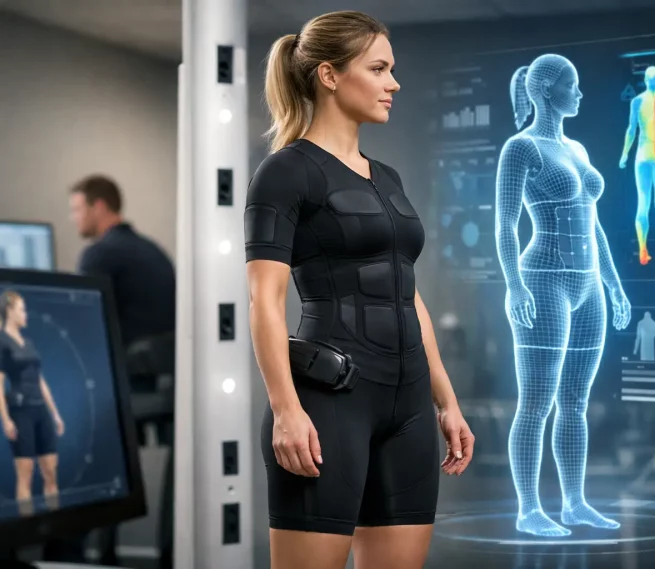
A changing number on the scales can tell you something, but it rarely tells you enough. You may be getting stronger, standing taller and losing centimetres around your waist while your body weight barely moves. That is exactly why this guide to 3D body composition matters: it helps turn progress from a guess into something you can see, measure and act on.
For busy professionals, parents and anyone who wants results without living in the gym, clear data creates focus. A 3D body scan gives your coach a detailed starting point, then shows how your body is responding as your training, nutrition and recovery improve.
What is 3D body composition?
3D body composition is a visual and measurement-based assessment of your physique. During a scan, cameras and sensors capture the shape of your body from multiple angles and create a digital 3D model. From that model, the system can calculate measurements such as waist, hips, chest, thighs, arms and overall body volume.
Rather than relying on a tape measure at one or two points, it creates a far fuller picture of your proportions. You can see where shape is changing, compare scans over time and identify the areas where your programme is making the biggest difference.
The phrase can be slightly misleading, so it is worth being precise. A 3D scanner does not directly measure body fat, muscle tissue or bone density in the same way as a clinical DEXA scan. Depending on the technology used, it may provide estimates related to body composition based on body shape, volume and algorithms. Its real strength is consistent, repeatable tracking of physical change.
That consistency is valuable. If you are scanned under similar conditions at regular intervals, you can look beyond day-to-day fluctuations and assess the trend that actually matters.
Why scales alone can hide genuine progress
Weight is influenced by far more than fat loss. Hydration, salt intake, digestion, hormonal changes, a hard training session and even the time of day can move the number on the scales. None of those factors tells you whether your waist is reducing, your posture is improving or your legs are becoming more developed and capable.
This is especially relevant when you begin resistance training or EMS training. As your body adapts, you may reduce body fat while maintaining or building lean muscle. The scales may slow down, yet your clothes fit differently and your measurements move in the right direction.
A 3D scan makes those changes visible. It can show a reduction in waist circumference, improved left-to-right balance, changes in hip or thigh measurements, or a more upright silhouette. For someone returning to exercise after back pain or a long break, those functional improvements can be every bit as motivating as a smaller clothing size.
The goal is not to chase a perfect body shape on a screen. The goal is to understand whether your programme is helping you move towards your own target: feeling lighter, getting stronger, improving sporting performance, reducing discomfort or feeling confident in your clothes again.
Your guide to 3D body composition results
The first scan is your baseline, not your verdict. It records where you are now so that future results have meaning. Your coach should talk you through the numbers in context, including your training history, injuries, lifestyle, stress levels and realistic outcome goals.
Start with circumference changes
For most people, circumference measurements are the clearest place to start. A reduction around the waist may indicate that body fat is reducing, particularly when it is repeated across several scans. Changes in the chest, arms, thighs and hips can also reflect how your body is responding to training.
Do not judge a single measurement in isolation. A one-centimetre change can sometimes be down to positioning, breathing or normal water retention. A steady change over four, eight or twelve weeks is far more meaningful.
Look at proportion, not just size
Body transformation is not always about becoming smaller everywhere. A runner may want stronger glutes and legs to support performance. A client with rounded shoulders may benefit from developing their upper back and improving posture. Someone focused on fat loss may see their waist reduce while preserving muscle in their arms and legs.
The 3D visual helps bring this to life. It gives you a clearer view of proportion and symmetry than scales can provide. That can be useful for performance goals, rehabilitation support and confidence, but it should always sit alongside how you feel, move and train.
Compare like with like
To get useful results, scanning conditions need to be as similar as possible. Ideally, complete scans at a similar time of day, wear close-fitting clothing, stand in the same position and avoid comparing a scan after a large meal with one taken first thing in the morning.
You do not need to obsess over controlling every variable. You simply need a consistent approach. Your coach can then spot the wider pattern without overreacting to normal short-term variation.
Turning scan data into an effective plan
Data only becomes powerful when it changes what you do next. If a scan shows your waist measurement is reducing but strength has stalled, your coach may review protein intake, recovery and progressive resistance. If your posture is improving but mobility remains restricted, the focus may shift towards targeted movement work and technique.
At E-Pulse Studio, 3D scanning is used as part of a wider coaching conversation, not as a gimmick or a one-off photo opportunity. The most useful plan combines measurable scan results with performance markers such as strength, stamina, mobility, posture and how your body feels during daily life.
For clients with limited time, this is where 30-minute EMS sessions can be particularly effective. The training is structured, coached and designed to challenge major muscle groups efficiently. But EMS is not a shortcut around the fundamentals. Results still depend on regular attendance, appropriate intensity, daily movement, quality sleep, hydration and nutrition that supports your goal.
A scan may show that you are progressing even before the mirror catches up. Equally, it may reveal that a plan needs adjusting. Both outcomes are useful because they replace guesswork with a clear next step.
How often should you have a 3D body scan?
For most transformation goals, every four to six weeks is a sensible interval. This gives your training and nutrition habits enough time to create measurable change without turning progress tracking into a weekly source of pressure.
If you are preparing for an event, returning from injury or following a tightly managed programme, your coach may recommend a different schedule. More frequent scans are not automatically better. Meaningful physical adaptation takes time, and the most successful clients stay focused on the habits between appointments.
Use each scan as a checkpoint. Ask what has improved, what has stayed the same and what one or two actions will make the biggest difference before the next assessment. That might mean adding a second weekly session, increasing your protein intake, taking recovery more seriously or building more walking into your working week.
Common mistakes that make results harder to read
The biggest mistake is treating one scan as proof that a programme is or is not working. Bodies do not change in straight lines. A stressful week, poor sleep or a change in routine can affect measurements temporarily.
Another mistake is chasing a result that does not match your real goal. If you want to play golf without stiffness, run faster or feel stronger carrying your children, measurements are only one part of the picture. Your programme should reflect the outcome you genuinely care about.
Finally, avoid comparing your scan to someone else’s. Different heights, frames, training backgrounds and life stages produce different starting points. Progress is personal, and a good coach helps you set targets that are challenging without being unrealistic.
Your first scan is simply the point where the story becomes measurable. Show up consistently, train with purpose and let the next scan reflect the work you have put in.
 7min
7min