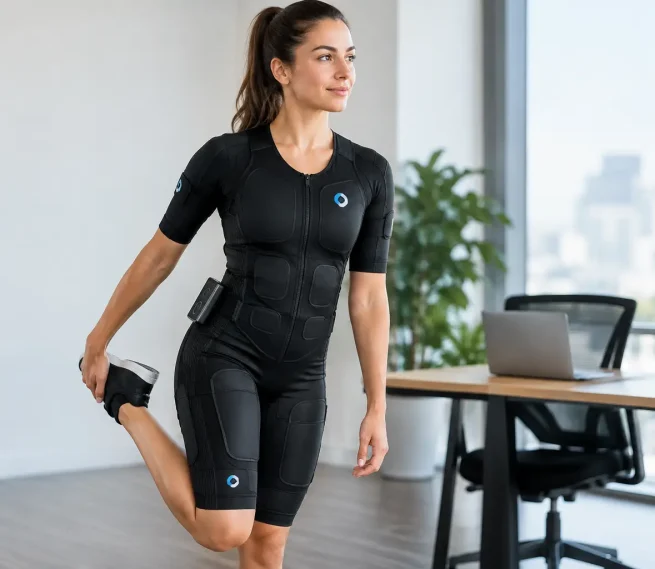
Your legs feel heavy after a hard session, your lower back is tight from long hours at a desk, and tomorrow’s workout is already on the calendar. The question is not whether recovery matters. It is whether recovery massage versus EMS is the better use of your time, money and energy.
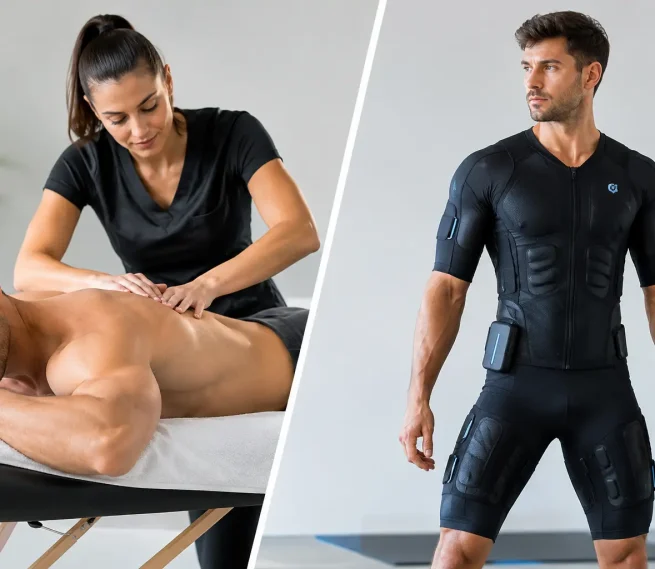
Both can play a valuable role, but they work differently. Massage is hands-on, calming and often immediately relieving. EMS uses controlled electrical impulses to stimulate muscles, making it a more active recovery tool when used at the right intensity. The best choice depends on what your body needs today, what you are training for and whether your recovery plan is actually realistic enough to repeat.
Recovery massage versus EMS: the key difference
Recovery massage works through manual pressure, movement and touch. A therapist may use techniques designed to reduce the sensation of tightness, improve comfort and help you relax after training. For many people, the biggest benefit is how they feel walking out: lighter, calmer and more mobile.
EMS, or Electro Muscle Stimulation, sends impulses through electrodes placed over targeted muscles. During a training session, those impulses are paired with purposeful movement to increase muscle recruitment. For recovery, settings can be adjusted to create gentle contractions rather than a demanding workout. This may support circulation, muscle activation and a feeling of reduced stiffness without asking you to spend another hour in the gym.
One is not automatically superior. Massage is passive and sensory. EMS is targeted and muscular. If you need to switch off, settle a stressed nervous system or ease general tension, massage may be the better fit. If you want structured muscle activation after inactivity, training or a period of sitting still, EMS may offer more specific support.
What massage does well after training
Massage earns its place in a recovery routine because it addresses more than muscles. It gives busy people permission to stop. That matters when your week involves work deadlines, school runs, poor sleep and trying to fit training around everything else.
A good recovery massage can help you feel less sore, less restricted and more prepared to move. It can be particularly useful after a long run, a heavy lower-body session or a period of unusual training volume. It may also help you become more aware of areas that are habitually tight, such as the hips, calves, upper back and shoulders.
The trade-off is that massage does not build strength, restore lost conditioning or correct movement patterns on its own. The effects can also be short-lived if the underlying issue is poor load management, weak supporting muscles, limited mobility or hours spent in one position. Feeling better is valuable, but long-term progress usually needs a plan beyond the treatment table.
Where EMS can add more to recovery
Low-intensity EMS can be useful when your muscles feel switched off rather than simply tight. Think of the glutes that stop contributing after a full day at a desk, the quads that feel flat after a long cycle, or the core muscles that need retraining after a break from exercise.
The key is appropriate intensity. Recovery EMS should not leave you exhausted or create significant next-day soreness. It should feel controlled, comfortable and purposeful, with settings selected around your current fatigue, movement quality and goals.
At E-Pulse Studio, recovery support is not treated as an afterthought. A coach can adjust an EMS session around your training load, pain history and movement restrictions, rather than applying the same protocol to every client. That level of guidance is especially useful for people who want to return to training consistently but are tired of the cycle of pushing hard, aching for days and then stopping altogether.
EMS can also be a time-efficient option. A short coached session may help you maintain a connection with your training when a full workout is not sensible or practical. For working professionals and busy parents, that can make the difference between doing nothing for two weeks and staying on track.
Choose based on the problem, not the trend
If your main goal is relaxation, stress relief and a general sense of physical ease, recovery massage is hard to beat. It is often the better choice after a mentally draining week, before a rest day or when you simply need space to slow down.
If your goal is to reactivate muscles, support mobility through guided movement and keep your body engaged between demanding sessions, EMS may be more suitable. It can be particularly relevant for people returning from a period of low activity, rebuilding confidence after discomfort or managing a stop-start routine.
For some people, the answer is both. Massage can help with the immediate feeling of tightness, while coached EMS and mobility work can support the muscle activation and movement habits that reduce the chance of the same issue returning. This is not about choosing the most high-tech option. It is about choosing the intervention that moves you closer to your goal.
Does EMS replace stretching, sleep and nutrition?
No. Neither EMS nor massage can outwork poor recovery habits.
If you are sleeping five hours a night, under-eating protein, drinking little water and increasing your training volume too quickly, your body will continue to feel run down. Recovery tools work best when they sit on top of the basics: consistent sleep, enough food to support your activity, regular movement, sensible training progression and days that are genuinely easier when needed.
That does not mean recovery has to become another full-time project. Start with what you can sustain. A 30-minute coached EMS session, a daily walk, five minutes of mobility between meetings and a more consistent bedtime can create a far stronger foundation than occasional extreme efforts.
Pain needs a different conversation
Muscle fatigue and post-training stiffness are normal. Sharp pain, numbness, unexplained swelling, significant weakness, chest pain or pain that worsens instead of settling are not situations to manage with a massage or an EMS session. Seek advice from an appropriate healthcare professional.
EMS also is not suitable for everyone. People with certain medical conditions, implanted electronic devices, pregnancy considerations or recent injuries should be screened before using it. A reputable studio will ask questions, adapt the session or advise you to get clinical clearance where necessary. That is not a barrier to progress. It is what responsible coaching looks like.
Make recovery part of your performance plan
The most successful clients do not wait until they are completely broken before they recover. They schedule it around their real lives. A runner might use a low-intensity EMS session after a hard mileage block. A parent rebuilding fitness may use it to stay consistent without adding long gym sessions. A desk-based professional may combine it with mobility work to improve posture and reduce the familiar end-of-day stiffness.
Track what happens afterwards. Do you move better? Does your next session feel stronger? Are you less likely to skip training because you are sore or tired? Those are useful markers, alongside body composition or performance data. Recovery should help you train well again, not just provide a pleasant hour in isolation.
The right choice between recovery massage and EMS is the one that fits your body and keeps you moving forwards. If your routine is built around expert coaching, sensible progression and recovery that matches your goals, you do not have to choose between feeling better now and building a stronger body for the long term.
 7min