A stiff back after a desk-heavy week, a knee that no longer trusts stairs, or a shoulder that makes lifting feel like a gamble can quickly shrink someone’s world. The right rehabilitation focused EMS training results are not about pushing through pain or chasing an exhausted sweat session. They are about restoring confidence in movement, building usable strength and helping the body tolerate more of everyday life again.
For busy adults, that process needs to be focused. A well-coached 30-minute EMS session can create meaningful muscular work without asking you to spend hours loading joints in a conventional gym. But the word well-coached matters. EMS is a powerful training tool, not a shortcut around good assessment, gradual progression or clinical advice where it is needed.
What Rehabilitation Focused EMS Training Results Can Include
Rehabilitation is not one fixed destination. One person may want to walk the dog without lower-back tightness. Another may be rebuilding leg strength after time away from training, while a runner may need better hip control before returning to mileage. The best outcome is always connected to the activity that matters to you.
With an intelligent EMS programme, people commonly work towards stronger muscles around vulnerable areas, improved posture, better movement control, greater mobility and a more comfortable return to exercise. Some also notice that daily tasks feel easier: getting up from the floor, carrying shopping, climbing stairs or sitting through a meeting without constantly shifting position.
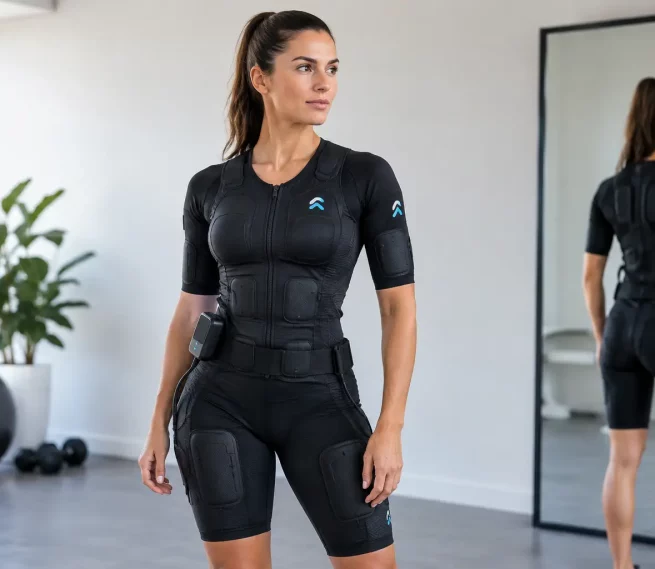
EMS delivers electrical impulses through a specialised suit to encourage muscular contraction while you perform controlled exercises. Because several muscle groups can be activated at once, the session can be highly time-efficient. That does not mean every session should be intense. During a rehabilitation-led phase, precision beats punishment.
A trainer may use a lower intensity, a shorter working period, more supported positions and simple movement patterns at first. As coordination, tolerance and confidence improve, the programme can progress towards more demanding strength, balance, conditioning or sport-specific work.
Why Results Depend on the Starting Point
There is no honest promise that every sore joint will disappear after a set number of sessions. Pain can have many drivers, including previous injury, workload, sleep, stress, movement habits and medical factors. Results depend on your diagnosis, training history, consistency and whether the programme is matched to your current capacity.
For someone who has become deconditioned after months of avoiding exercise, the first win may be learning that they can train safely again. They may begin with controlled squats to a box, glute work, gentle trunk stability drills and mobility-led movements. After several weeks, they could be moving with better control, using stronger positions and recovering more comfortably between sessions.
For an experienced gym-goer managing recurrent aches, the goal may be different. They might already have strength but need a better balance between effort and recovery, improved technique or more consistent activation through a particular muscle group. In that case, EMS can support targeted training without simply adding more volume to an already demanding week.
The result is not just a number on a scale. It is often a clearer measure of capability: more range in a squat, better posture at a desk, less hesitation when carrying a child or the ability to return to a favourite activity with greater confidence.
The Coaching Process That Makes EMS Useful for Recovery
Rehabilitation-focused training should start with a real conversation, not an automatic high-intensity workout. A coach needs to understand what aggravates symptoms, what improves them, what movements you have stopped doing and what you want to get back to.
At E-Pulse Studio, that means using personal coaching and progress tracking to build a plan around the individual, rather than treating every body like a standard fitness class. Where appropriate, body composition and 3D scan data can add another layer to the picture, particularly when a period of inactivity has affected muscle mass, posture or body confidence. Yet movement quality and how you feel day to day remain just as valuable as a scan result.
A sensible programme generally follows three stages. First comes tolerance: gentle exposure to movements that feel manageable and productive. Next comes capacity: progressively building strength, stability and work rate. Finally, there is return to function, whether that means longer walks, golf, running, combat training, lifting at work or simply keeping up with family life.
Progress is rarely perfectly linear. A demanding work week, poor sleep or an active weekend may mean the next session needs adjusting. Good coaching responds to that feedback instead of forcing a plan designed for someone else.
What a typical progression might look like
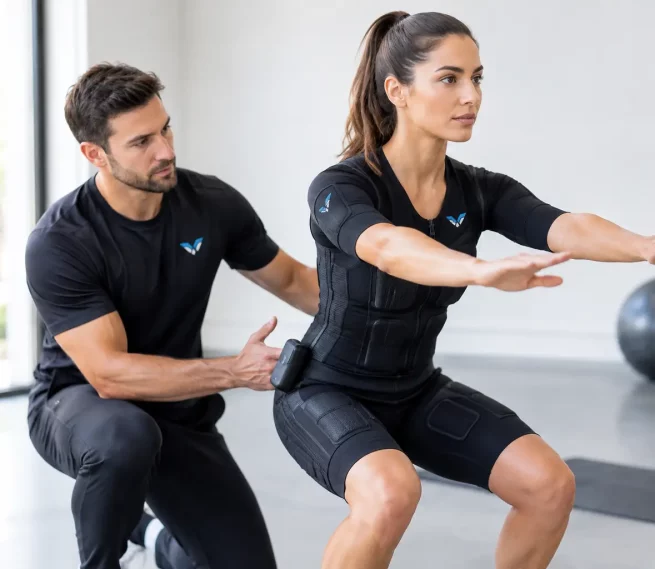
Early sessions may prioritise breathing, bracing, hip mobility, controlled leg work and upper-body positioning. The trainer can adjust EMS intensity by muscle group, helping you feel the intended area work without overwhelming the movement.
As confidence develops, exercises can become more functional. You may add deeper squat patterns, split stances, pulling movements, carries, balance challenges or low-impact conditioning. Later, the programme can reflect your goal more closely, such as rotational control for golf, lower-limb resilience for running or stronger posture for long working days.
The pace matters. Feeling challenged is useful. Sharp pain, worsening symptoms that linger, numbness, dizziness or a dramatic drop in function are not signs to push harder. They are reasons to stop, review and, where necessary, seek input from an appropriate healthcare professional.
Where EMS Fits – and Where It Does Not
EMS can be particularly valuable when time is limited, conventional loading feels intimidating or you need focused muscular stimulus with close supervision. A 30-minute session can make consistency more achievable for parents, business owners and professionals who would otherwise miss training altogether.
It can also help clients reconnect with muscles that have become underused. When people have protected an area for a long time, they often compensate elsewhere. A coached session gives them a controlled setting to practise better movement patterns while developing strength across the body.
However, EMS is not a substitute for medical assessment, physiotherapy or surgery when those are required. It should not be used to diagnose injuries. If you have a recent trauma, unexplained pain, neurological symptoms, a significant medical condition, a pacemaker or another implanted electronic device, speak to a qualified medical professional before training. Trainers should also know about relevant health history, medication and any guidance you have already been given.
The strongest outcomes often come from collaboration. A client may follow a physiotherapist’s rehabilitation plan while using EMS coaching to build general strength and confidence within agreed boundaries. That joined-up approach respects both the clinical side of recovery and the practical challenge of returning to normal movement.
How to Measure Progress Beyond Pain
Pain scores can be useful, but they are not the only marker worth tracking. In fact, chasing zero discomfort can become frustrating when the bigger picture is improving. Look for changes in what you can do and how reliably you can do it.
You may find that you can sit longer before stiffness begins, complete a full day without a flare-up, recover faster after activity or use better technique under light load. Your trainer can also monitor mobility, balance, strength endurance, posture and movement quality over time. For clients who want body transformation alongside recovery, regular body scanning can show whether changes in muscle and body composition are matching the work being put in.
A useful question after each week is simple: what can I do now that felt difficult, worrying or impossible a month ago? That answer tends to be more motivating than a single metric.
Building Results That Last
One excellent session will not undo months or years of reduced activity, but regular guided work can change the direction of travel. Two consistent sessions a week, combined with walking, mobility work and sensible recovery habits, can be more effective than occasional all-out gym efforts followed by another long break.
Your trainer should leave you feeling worked, not wrecked. The aim is to build a body that can cope with more, not one that spends the week recovering from training. Nutrition, hydration, sleep and day-to-day movement all support that process, especially when your goal includes body composition or performance as well as rehabilitation.
If pain or limited movement has made exercise feel like a risk, start with a conversation rather than another false start. A carefully tailored EMS session can give you a clear, supported first step towards moving better, feeling stronger and trusting your body again.
 8min