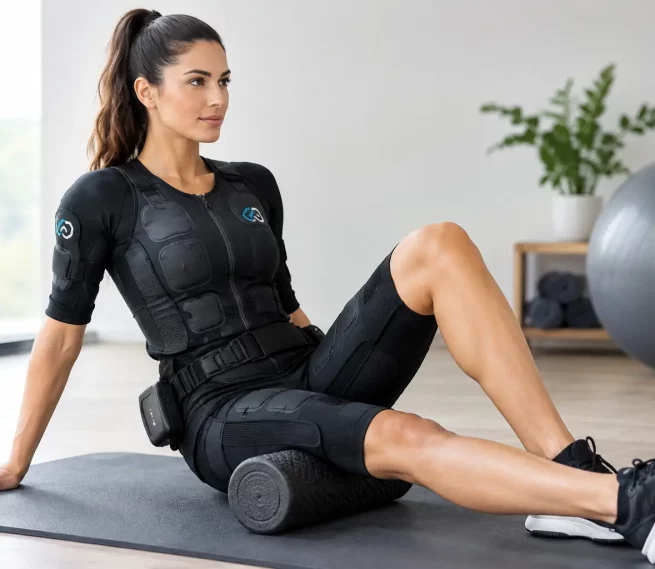
The scales can stay stubborn while your waistline changes, your posture lifts and your clothes begin to fit differently. That is exactly where body scanning earns its place. For people training around demanding jobs, family commitments or recurring aches and pains, it turns progress from a guess into something you can see, measure and act on.
At E-Pulse Studio, results are not judged by one number after a morning weigh-in. Your weight can move for reasons that have little to do with fat loss or fitness – hydration, food, sleep, stress and muscle soreness can all affect it. A 3D body scan gives the bigger picture, helping your trainer assess changes in body shape and measurements alongside your strength, mobility, energy and training performance.
What is body scanning?
Body scanning uses specialist technology to create a detailed digital model of your body. Rather than relying only on tape measurements, mirror checks or body weight, a scan captures body shape and circumference measurements at multiple points. It gives you a consistent reference point at the start of your programme and at planned review stages afterwards.
The real value is not the image alone. It is the conversation it creates. A skilled coach can compare your scans over time and look for the changes that match your goal: a smaller waist, improved symmetry, a stronger-looking frame, reduced measurements around key areas or better posture.
For someone beginning a body transformation programme, that baseline is powerful. It replaces vague promises with a clear starting point. For an experienced trainer or athlete, it offers a more refined way to monitor the physical effects of a focused block of EMS training, recovery work and nutrition support.
Why scales do not tell the full story
Weight is useful information, but it is not a complete report card. If you are gaining muscle while reducing body fat, your scale weight may barely change. Yet you may look leaner, feel firmer and move with more confidence. This is often where people lose motivation too early – they see one static number and assume the programme is not working.
Body scanning helps prevent that narrow view. It can show a reduction in waist or hip measurements even when total body weight is stable. It can make gradual changes visible before they become obvious in day-to-day life. That matters because consistency is easier when you have evidence that your effort is moving you forward.
It is also valuable for people returning to exercise after injury, pain or a long break. The first win may not be dramatic weight loss. It may be standing taller, moving more freely, feeling less restricted through the hips or having the confidence to train without worrying that every session will leave you exhausted.
What a 3D body scan can help you track
The exact data available depends on the scanning system, but a 3D scan is typically used to monitor body circumference measurements and changes in overall body shape. Your coach may use this alongside weight, progress photos, fitness assessments and how you feel in training.
The strongest reviews look at patterns, not isolated readings. A single scan is a starting point. A series of scans, completed under similar conditions, can show whether your plan is producing the change you want.
That might mean your midsection is reducing while your legs and glutes become more defined. It could mean that a runner is maintaining a stable shape through a demanding training period, or that a busy professional is finally seeing a difference after replacing inconsistent gym visits with two focused sessions each week. The measurement is useful because it gives your programme direction.
Shape and circumference changes
For fat-loss and body-recomposition goals, measurements often tell the story more clearly than kilograms. A changing waist measurement may be more meaningful than a small fluctuation on the scales. It is a practical signal that your training, food choices and recovery habits are aligning.
Posture and physical presentation
A scan can also give you a useful visual record of how you carry yourself. Better posture does not happen from scanning alone, of course. It comes from appropriate strength work, mobility, technique and daily habits. But seeing changes over time can reinforce the work you are putting into your upper back, core, hips and movement quality.
Motivation with proof behind it
Most people do not need more motivation speeches. They need proof that their effort is worthwhile. When a review shows measurable change, the next session feels different. You are no longer hoping for a result – you can see that your actions are creating one.
How body scanning fits into a coaching-led programme
A scan should never be treated as a verdict. It is a tool, and tools are only as useful as the plan behind them. At E-Pulse Studio, body scanning fits naturally alongside personalised EMS training, movement support and regular coaching conversations.
Your first scan establishes where you are now. From there, your programme can be built around your priority, whether that is fat loss, strength, improved mobility, body confidence, sports performance or a return to regular exercise. A person with lower-back discomfort needs a different approach from someone preparing for a running event, even if both want to change their body composition.
At review points, your trainer can compare your scan data with what is happening in real life. Are your trousers looser? Is your back pain easing? Are you recovering better between sessions? Has your strength improved? Are you actually able to stick to the plan around work and family life? This context matters more than chasing a perfect reading.
EMS training is particularly suited to clients who value efficiency. Sessions are short, focused and coach-led, making it easier to train with intent rather than spending hours drifting through a conventional gym routine. Body scanning adds an objective progress check to that time-efficient approach.
Getting a useful body scan: consistency matters
For a fair comparison, try to scan under similar conditions each time. Your body naturally changes throughout the day, and food, fluid intake, exercise and clothing can affect measurements. You do not need to obsess over controlling every variable, but consistency makes the trend more reliable.
Aim for a similar time of day, similar clothing and similar preparation before each review. Avoid treating a scan immediately after a large meal, intense workout or unusually high-salt day as a final judgement on your progress. It is one reading within a wider process.
Your trainer should also set review intervals that make sense for your goal. Weekly scans can be useful for some people, but they may also create noise and unnecessary pressure. For many clients, allowing several weeks of consistent training gives the body enough time to show a meaningful shift. The right frequency depends on your starting point, target and how closely your programme is being managed.
What body scanning cannot tell you
A 3D scan is motivating and highly practical, but it does not measure your worth, discipline or health in full. It cannot tell you how well you slept, how stressed you are, whether your shoulder feels better, or whether you have built the confidence to play with your children, complete a 5K or wear clothes you once avoided.
It is also not a substitute for medical advice. If you have persistent pain, a medical condition, are recovering from surgery or have concerns about whether exercise is appropriate, speak with a qualified healthcare professional. Your training plan should respect what your body needs, not force it into a generic transformation timeline.
The most useful mindset is simple: use the scan for information, not punishment. If progress is slower than expected, that is not failure. It is a prompt to review training consistency, recovery, nutrition, stress, expectations or the programme itself. Good coaching adapts.
Start with a baseline you can build on
The most rewarding transformations are rarely built on extremes. They come from a plan you can maintain, coaching that keeps you accountable and progress checks that show what is genuinely changing. Body scanning gives you a clear baseline, but the real result is what you do with it: train with purpose, recover properly and keep showing up long enough for the evidence to speak for itself.
 7min
7min