You can train consistently for weeks, feel stronger, and still wonder whether your body is actually changing. The scales might barely move. Your clothes may fit differently, but you cannot put a number on it. This is exactly how body scanning guides training: it replaces guesswork with a clear starting point, then gives your coach evidence to shape the work ahead.
For busy professionals, parents and business owners, every training session needs a purpose. If you have 30 minutes to give, you should know what that time is working towards. A 3D body scan helps create that focus, whether your goal is fat loss, more muscle tone, better posture, stronger performance or renewed confidence after a long break from exercise.
A scan gives you more than a number on the scales
Body weight has its place, but it is a blunt measure. It does not tell you whether a drop in weight reflects fat loss, reduced muscle mass, hydration changes or simply a different time of day. Equally, someone can gain lean mass, reduce body fat and look noticeably different while their scale weight stays broadly the same.
A 3D body scan builds a more useful picture. Depending on the assessment used, it can track measurements across key areas of the body, estimated body composition trends and visible changes in shape and posture. These are the details that make progress feel real.
That matters because many people quit too early when they judge their progress by one metric. A scan can show that the waist is reducing, the hips are changing or the body is becoming more balanced, even before the scales reflect the full story. For someone who has felt stuck after months of random gym sessions, that evidence can be a powerful reset.
It is not about chasing perfection or scrutinising every inch of your body. It is about having an honest baseline and a practical way to measure what your effort is delivering.
How body scanning guides training from day one
The first scan is not a verdict. It is the starting line for a coaching plan that fits your body, your lifestyle and the outcome you want.
If your scan and consultation show that fat loss is the priority, training can focus on building and maintaining muscle while improving work capacity. If your aim is body recomposition, the programme may place greater emphasis on progressive strength work, protein intake, recovery and consistent training frequency. If posture, mobility or discomfort is holding you back, the coach can look at how you move, where you feel restricted and what needs careful attention before intensity increases.
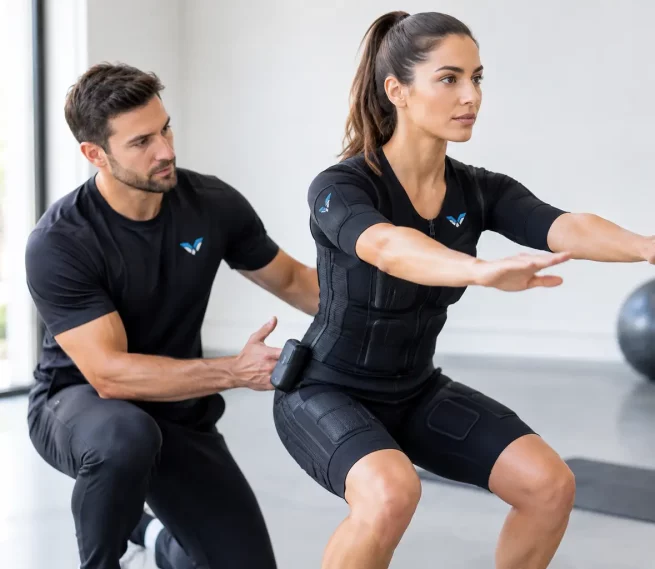
This is where personalised EMS training earns its place. Electro Muscle Stimulation can make a short, trainer-led session highly demanding, but the best results do not come from turning every session into a maximum-effort challenge. Your coach adjusts the stimulus, exercise selection, movement quality and progression around your current capacity.
For a beginner, that may mean learning to squat, hinge, brace and move with control while EMS supports muscle activation. For an experienced runner, golfer or combat athlete, it may mean building strength through specific movement patterns, improving stability and addressing imbalances that affect performance. The technology is valuable, but the coaching behind it is what turns data into a training plan.
The right plan changes as your body changes
A good programme should never be set once and forgotten. Re-scanning at planned intervals makes it easier to assess whether the programme is doing what it should.
Perhaps measurements are moving in the right direction but energy levels have dipped. That may point to a recovery, sleep or nutrition issue rather than a need for more training. Perhaps weight has stayed stable while body shape and strength are improving. That is often a sign to stay the course rather than slash calories. Perhaps progress has genuinely slowed after an early burst of change. Then it may be time to alter training volume, increase resistance, refine food habits or look more closely at daily activity outside the studio.
The key is not reacting emotionally to every scan. Bodies do not change in a straight line. Water retention, digestion, stress, menstrual cycle changes, illness, travel and inconsistent sleep can all affect short-term readings and how you look or feel.
That is why a scan works best as part of a wider coaching conversation. Your trainer should consider your performance in sessions, your movement quality, how your clothes fit, your recovery and your habits between appointments. The scan provides strong direction, not a reason to panic over a single fluctuation.
Body scanning makes progress visible when motivation drops
Motivation is rarely the problem in week one. It becomes harder when work gets busy, family life takes over or the initial excitement fades. This is when visible evidence of progress can keep you engaged.
Imagine two people with the same goal of reducing body fat. One relies on occasional mirror checks and a bathroom scale. The other has baseline measurements, regular scans, strength markers and a coach who can explain what is changing. The second person is more likely to understand the process and trust it when results take time.
That accountability is especially valuable for people who have spent years starting and stopping. You are not left wondering whether you are doing enough or wasting time. You can see the direction of travel, celebrate the wins that matter and make sensible adjustments before a minor setback becomes a reason to quit.
At E-Pulse Studio, the goal is not to create dependency on data. It is to use data to build confidence. When you can see your progress and feel your strength improving, you make better decisions even outside the studio – from choosing meals that support your goals to protecting time for sleep and recovery.
What a body scan cannot tell you
Advanced measurements are useful, but they are not magic. A body scan does not diagnose injury, explain every source of pain or replace advice from a GP, physiotherapist or other qualified healthcare professional. If you have persistent pain, sudden swelling, unexplained weight change or a medical condition, seek appropriate clinical guidance.
It also cannot outwork inconsistent habits. One scan cannot compensate for a programme that is repeatedly interrupted by poor sleep, skipped sessions, low protein intake or weekend routines that undo the week. Results come from the combination of smart training, manageable nutrition, recovery and repetition.
Accuracy also depends on consistency. For the most meaningful comparisons, aim to scan under similar conditions: at a similar time of day, with similar hydration, and without treating the day before as an excuse for extreme eating or dehydration. Coaches are looking for trends over time, not a perfect reading on one particular day.
Turning your scan into action
The most useful question after a scan is not, “Is this good or bad?” Ask, “What do we do next?” That keeps the focus on action rather than judgement.
Your next steps may be simple: commit to two EMS sessions each week, add daily walks, improve protein at breakfast, include mobility work for a stiff back or set a realistic bedtime routine. The exact plan depends on your starting point. A person returning after injury needs a different pace from someone training for a sporting event, and someone aiming to feel firmer and more energetic may need a different approach from someone preparing for a major body transformation.
The best plan is the one you can repeat. It should challenge you, fit around real life and produce measurable signs that your effort is paying off. A scan helps make that balance visible, so you do not have to rely on motivation alone.
Your body is not a number to be judged. It is a moving, adapting record of what you practise consistently. Start with clear information, train with intent, and let each check-in guide the next smart decision.
 8min
8min