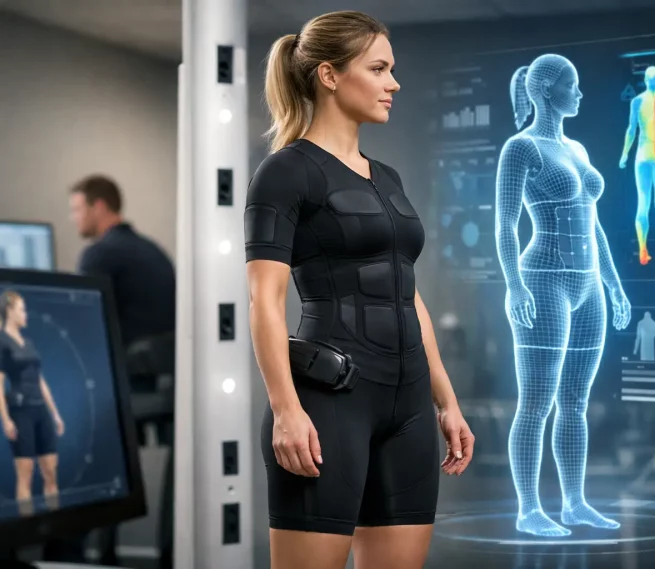
You do not need another fitness plan that looks good on paper and falls apart by week three. If you are short on time, fed up with stop-start routines, or training around pain, this complete guide to EMS body transformation will show you what the method actually does, where it works best, and how to turn short sessions into visible, measurable progress.
What EMS body transformation really means
EMS stands for Electro Muscle Stimulation. In a coached training session, impulses are used to activate muscles more intensely while you perform a series of guided movements. The goal is not to lie down and let a machine do the work. Done properly, EMS is active training, with a trainer adjusting the intensity, exercise selection, and session focus around your body, your fitness level, and your outcome.
When people talk about body transformation, they usually mean a combination of fat loss, improved muscle tone, better posture, stronger movement, and a body that feels more capable day to day. EMS can support that process because it recruits multiple muscle groups at once and makes short, focused sessions work harder than many people expect.
That matters if you are a busy professional squeezing training into a packed week, a parent trying to rebuild consistency, or someone who has drifted in and out of traditional gyms without getting traction. The appeal is simple – less time wasted, more structure, and coaching that keeps you moving towards a clear result.
The complete guide to EMS body transformation starts with expectations
The strongest results usually come from people who understand two things from day one. First, EMS is effective, but it is not magic. Second, transformation is never about one session. It is about the compounding effect of consistency, progression, recovery, and sensible nutrition.
Some clients notice early changes quickly. Clothes fit better. The midsection feels tighter. Posture improves. Back discomfort eases. Energy comes up. Others see slower visual change but clear performance gains first, such as stronger core control, better stamina, or more confidence in movement.
That range is normal. Your starting point matters. So do sleep, stress, age, hormones, current body composition, and how well you follow the wider plan outside the studio.
How EMS helps change body shape and performance
The reason EMS gets attention is efficiency. A properly coached session can stimulate a high percentage of muscle fibres across major muscle groups in a short window. That can help improve muscular strength, support calorie expenditure, and increase training quality without long hours on the gym floor.
For body recomposition, this is useful because muscle and metabolism are closely linked. If you can build or maintain lean muscle while reducing body fat, the body changes shape. You often look firmer, stand taller, and move better even before the scales shift dramatically.
There is also a practical benefit for people who struggle with motivation. Long workouts can be a barrier. A shorter, high-focus format is easier to commit to and easier to repeat. In body transformation, repeatability is everything.
Who EMS suits best
EMS can work well for beginners, experienced gym users, and those returning after time away from training. It is especially attractive for people whose main problem is not lack of effort but lack of time, structure, or accountability.
If you are already active, EMS can sharpen weaknesses, improve muscle activation, and support sport-specific goals. Runners often use it to strengthen the posterior chain and core. Golfers value rotational control and posture. Clients with desk-based jobs often benefit from work on the back, glutes, and deep core muscles that tend to be underused.
It can also be helpful for people dealing with mild mobility limitations or recurring aches, provided the programme is properly adapted. That said, it depends on the individual. EMS is not a blanket answer for every injury or medical condition, which is why trainer oversight and screening matter.
What a transformation plan should include
A serious EMS body transformation plan is more than turning up and hoping for the best. It should begin with an assessment of your body, your movement, and your goals. If you want measurable change, you need a starting line.
This is where progress tracking makes a real difference. Photos are useful. Tape measures help. But advanced body analysis gives more detail around body fat, muscle balance, posture, and changes over time. That is important because scale weight alone can be misleading, especially when body composition is improving.
A good plan will also match training frequency to your goal. Someone aiming for general tone and consistency may need a different set-up from someone pushing for faster fat loss, stronger athletic performance, or a return from inactivity. More is not always better. Better is better.
What results can you realistically expect?
Most clients want to know how soon they will see a difference. The honest answer is that early wins often show up in the first few weeks, but more significant visual transformation usually takes longer. You may feel stronger and more energised before your reflection catches up.
Within the first month, many people report improved muscle engagement, less stiffness, stronger posture, and better adherence because the sessions fit their schedule. Over a longer stretch, body composition changes become more noticeable if training is paired with sensible eating and recovery habits.
There is a trade-off here. EMS can accelerate the quality of training, but it cannot outwork poor sleep, regular overeating, or weekend inconsistency. The clients who achieve standout results are usually the ones who treat the session as the anchor of a wider routine rather than the whole solution.
Nutrition still matters – even with efficient training
If your goal is body transformation, food choices matter. Not in a crash-diet way, and not through extreme restriction, but through consistency. You need enough protein to support muscle retention and recovery. You need a calorie intake that matches your goal. You need hydration. And you need a plan that works in real life, not just Monday to Wednesday.
This is where many people go wrong with conventional fitness. They train hard, then fall back into convenience eating because life gets busy. An efficient training model helps, but it works best when the same practical mindset is applied to nutrition. Simple meals, repeatable habits, and realistic structure beat perfection every time.
Recovery is part of the result
Because EMS training is intense, recovery should never be treated as an afterthought. Good coaching includes managing load, spacing sessions properly, and adjusting intensity based on how your body is responding.
For some people, recovery means better sleep routines and more water. For others, it means mobility work, walking, and reducing the temptation to pile on extra high-intensity exercise. If you are already stressed, under-slept, and running on caffeine, pushing harder is not always the smart move.
A transformation plan has to fit your life. The best programme is one you can recover from and sustain.
Common mistakes that slow progress
The biggest mistake is expecting passive results from active training. EMS is not a shortcut that removes the need for effort. You still need to engage, follow coaching, and build momentum week after week.
Another common issue is changing the goal too often. One week it is fat loss, the next it is muscle gain, then it becomes simply surviving a busy month. Clear priorities produce better outcomes.
The third mistake is ignoring data. If posture improves, body fat drops, strength rises, and movement feels better, progress is happening even if the scales are stubborn. This is exactly why measured tracking matters.
Is EMS better than a normal gym?
For some people, yes. For others, not necessarily. If you love long gym sessions, enjoy lifting independently, and already have a strong routine, EMS may be a powerful addition rather than a replacement. If you struggle to stay consistent, want expert guidance, or need high-value training in minimal time, EMS can be the better fit.
The real question is not which method looks better online. It is which method you will actually stick with, recover from, and build into your week. A shorter, coached session that happens regularly will usually beat an ambitious gym plan that keeps getting postponed.
Why coaching changes everything
The most overlooked part of EMS body transformation is the coach in the room. Technology matters, but results come from how that technology is used. Intensity needs to be appropriate. Form needs to be watched. Sessions need to evolve as your body adapts.
That is where a premium studio approach stands apart from generic fitness options. You are not left to guess whether you are doing enough or doing too much. You have accountability, progression, and support when motivation dips or life gets messy.
For many clients, that support is the difference between another abandoned plan and a genuine transformation. E-Pulse Studio has built its reputation around that exact combination of efficiency, coaching, and measurable progress.
If you are considering EMS, think beyond the novelty. Think about whether the programme is personalised, whether your progress will be tracked properly, and whether the coaching is strong enough to carry you from your starting point to your goal. The body changes when the plan finally fits the person.
 7min
7min