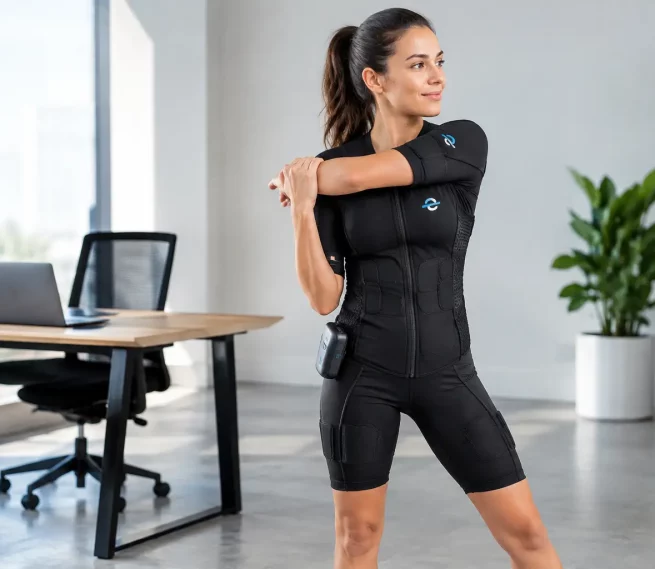
If your week already feels packed before Monday lunch, the debate around ems training vs gym workouts is not really about fitness trends. It is about what you can stick to, what gets results, and what fits real life. For some people, a 20-minute coached EMS session changes everything. For others, the gym still offers the freedom, volume and training variety they want. The best option depends less on hype and more on your goals, your body and your schedule.
EMS training vs gym workouts: the real difference
Traditional gym workouts rely on external resistance and repetition. You lift weights, use machines, row, cycle or work through circuits, and your muscles contract in response to that effort. Results come from consistency, progressive overload, good technique and enough recovery.
EMS training works differently. During a session, electrical impulses stimulate muscle contractions while you perform guided movements under a trainer’s supervision. Because multiple muscle groups are activated at once, the session is short, intense and highly targeted. That is a big reason busy professionals, parents and people returning to exercise often find it easier to commit to.
The key point is this: both methods can improve strength, body composition and fitness. The difference is how they get there, how long they take, and how much coaching support you need along the way.
When EMS has a clear edge
Time is where EMS stands out immediately. A well-structured EMS session can deliver a serious training effect in a fraction of the time many people spend in the gym. If you regularly miss workouts because commuting, work and family life get in the way, efficiency is not a luxury. It is the difference between training consistently and not training at all.
EMS also suits people who need more guidance. In a gym, it is easy to drift. You do a few machines, maybe some cardio, then leave wondering whether you actually trained hard enough to move the needle. In a coaching-led EMS session, that uncertainty disappears. The structure is already there. Intensity is monitored. Form is corrected. Progress is tracked.
For clients focused on posture, core strength, mobility support or reducing recurring aches, that close supervision matters. Many people do not need more access to equipment. They need a smarter plan, someone to keep them accountable, and a method they can actually sustain.
Another advantage is whole-body recruitment. EMS sessions are designed to engage multiple major muscle groups at the same time, which can make the work feel more complete despite the shorter duration. That appeals to people who want measurable outcomes without living in the gym.
Where gym workouts still come out strong
There are good reasons the gym remains popular. It offers range. If you enjoy lifting heavy, training for hypertrophy, building technical skill with free weights or doing longer conditioning sessions, a gym gives you more room to explore.
It is also a strong option for people who genuinely love training and have the time to do it well. If you can commit to several sessions a week, follow a progressive programme and train with intent, gym workouts can deliver excellent results. For advanced strength goals, sport-specific lifting cycles or endurance blocks, traditional training often gives you more flexibility.
Cost can be another factor. A standard gym membership usually looks cheaper on the surface than premium personal training or specialist studio sessions. But that comparison only tells half the story. If a lower-cost gym membership goes unused for months, it is not really better value. Real value comes from results, not just access.
Fat loss and body composition: which works better?
This is where the conversation gets more personal. Fat loss does not come from exercise alone. Nutrition, recovery, stress and consistency matter just as much. But training style can make staying consistent either easier or harder.
EMS can be very effective for people chasing body transformation because it removes common barriers. Sessions are short. Coaching is built in. The effort is high. If someone has been stuck in a stop-start cycle with the gym, EMS often feels like a reset. They begin training regularly, feel stronger quickly and start seeing changes in tone, posture and energy.
Gym workouts can absolutely support fat loss too, especially if they combine resistance training with a sensible nutrition plan. The challenge is adherence. Plenty of people join with good intentions, then struggle to maintain frequency, intensity or structure once life gets busy.
So which wins for body composition? If you are disciplined and consistent in the gym, it can work brilliantly. If you need a more efficient, guided and accountable route, EMS often has the advantage.
Strength, stamina and performance
Strength is not one single thing. There is muscular strength, muscular endurance, power, stability and sport-specific performance. That is why blanket claims rarely help.
EMS is especially useful for improving muscular activation, core engagement and overall strength efficiency. It can complement runners, golfers, combat athletes and general fitness clients who want more from less time. Many people also notice improvements in posture and movement quality because the training is controlled and coached closely.
Gym training shines when the goal is maximum load progression. If you want to squat heavier, bench more, or build a detailed strength programme over months and years, free weights and machines are still hugely valuable. There is no shortcut around practising those lifts if that specific outcome matters to you.
For stamina, both methods can help, but in different ways. EMS can support cardiovascular improvement through high-intensity, full-body sessions. A gym gives you more options for longer endurance work such as rowing, cycling, incline walking or circuits. Again, it depends on the result you are training for.
What about pain, mobility and getting back into exercise?
This is where the right coaching environment matters as much as the method itself. People with lower back discomfort, poor posture, mobility restrictions or long breaks from training often feel intimidated by a busy gym floor. They are not lazy. They are unsure where to start and worried about making things worse.
A carefully managed EMS session can be a strong entry point because the work is supervised, personalised and adjusted to the individual. That makes it appealing for people rebuilding confidence, improving movement and creating training momentum again. It can also be a good fit for those who want to strengthen without spending an hour moving between machines.
That said, not every condition should be approached in the same way. Some people need medical clearance, rehabilitation protocols or gradual exposure to conventional resistance training. This is why expert screening and programme design are essential.
EMS training vs gym workouts for busy people
If you are juggling client calls, school runs and a diary that changes by the hour, the ideal programme is the one that survives a busy week. This is where ems training vs gym workouts becomes less theoretical and more practical.
A gym workout often requires travel, changing, warming up, training, cooling down and getting home again. Even a “quick” session can easily take 60 to 90 minutes door to door. EMS compresses the process. For many people, that makes regular training realistic instead of aspirational.
And consistency changes everything. Two or three highly focused sessions you actually complete will always beat a perfect gym plan that lives in your notes app.
The best choice depends on who you are
If you are self-motivated, enjoy training independently and want full freedom over your programme, the gym may suit you better. If you thrive with structure, want expert support and need results to fit around work and life, EMS is often the smarter choice.
Some people get the best of both. They use EMS for efficient full-body training, accountability and targeted progress, then add gym work or sport practice around it. That blended approach can be excellent for performance-focused clients who want both efficiency and training variety.
At E-Pulse Studio, that is often what people discover after trying to force themselves into a routine that never quite fits. Once training becomes guided, measurable and time-efficient, progress feels far more achievable.
So, which one should you choose?
Choose the option that matches your reality, not the one that sounds impressive. If long gym sessions are working and you enjoy them, keep going. If you have been paying for access without getting outcomes, it may be time to train differently.
The right training method should make you stronger, more capable and more consistent. It should fit your week, support your body and give you enough feedback to know you are improving. That is what keeps motivation alive long after the first burst of enthusiasm wears off.
If you have been stuck between wanting better results and not having more hours to give, start with the method you are most likely to maintain. Fitness works best when it feels possible.
 7min
7min