You do not need another fitness plan that looks good on Sunday night and falls apart by Wednesday. For most people, the real problem is not motivation. It is time, structure and knowing whether the effort is actually working. That is exactly why short workout studio sessions have become such a smart option for busy adults who want visible progress without spending hours in a gym.
The appeal is obvious, but the value goes deeper than convenience. A well-designed short session is not just a condensed version of a long workout. When it is coached properly, it can be more focused, more measurable and far easier to stick with week after week. For professionals juggling work, parents trying to fit training around family life, and anyone who has struggled with stop-start exercise habits, that matters.
What makes short workout studio sessions effective?
The biggest advantage is precision. In a traditional gym, a 60-minute session can easily turn into 20 minutes of actual training and 40 minutes of wandering, waiting, checking your phone or second-guessing what to do next. In a studio setting, short sessions are built to remove that drift.
You arrive with a plan, a coach guides the session, and every minute has a purpose. That changes the quality of the workout straight away. Instead of relying on willpower after a long day, you are stepping into a structure that does the thinking for you.
This is also where intensity matters. Shorter does not automatically mean better. A rushed, random 20-minute workout is still a rushed, random workout. But a targeted session with the right resistance, pace, coaching and progression can create a strong training stimulus in far less time than people expect. That is why many clients see better consistency and better outcomes when they stop chasing long sessions and start focusing on effective ones.
Why consistency beats duration every time
The people who get results are rarely the ones who train the longest. They are the ones who train regularly enough for the body to adapt.
That sounds simple, but it is where many fitness routines fail. A plan that demands five long workouts a week might look impressive on paper, yet it often collapses in real life. Meetings overrun. Kids get ill. Energy dips. Travel gets in the way. Miss a few sessions and the routine starts to feel like another unfinished project.
Short workout studio sessions work because they are easier to repeat. When training fits your life, you are less likely to skip it. And when you stop skipping it, you give yourself a genuine chance to improve strength, body composition, stamina and mobility.
This is especially true for people who have spent years telling themselves they need to “get back into shape” but never quite find the rhythm. A shorter appointment with a trainer can feel manageable from day one. That early momentum matters more than most people realise.
Short workout studio sessions and measurable results
A lot of people are understandably sceptical of anything described as quick. Fitness has trained us to believe that results must come from long, punishing sessions. There is some truth in the idea that effort matters. But effort and duration are not the same thing.
What drives results is the quality of the stimulus, how well it matches your goal, and whether you recover and repeat it consistently. If your aim is to get stronger, improve muscle tone, support fat loss, move better or rebuild confidence after a long break, a short coached session can be extremely effective.
Studios that use tools such as body composition analysis or progress scanning add another layer of accountability. You are not guessing whether things are changing. You can see shifts in posture, lean mass, body fat trends, circumference and performance markers over time. That is often the difference between someone giving up after three weeks and someone staying committed for three months.
Results also tend to improve when people stop wasting energy on decision fatigue. If you know when you are training, what you are doing and how progress is being tracked, it becomes much easier to stay engaged.
Why coaching changes the game
One of the most overlooked benefits of a studio model is the coach in the room. For busy adults, that can be the difference between another false start and a routine that finally sticks.
A good coach brings more than encouragement. They adjust technique, control intensity, adapt around injuries, push when needed and pull back when needed. That matters for beginners who want confidence, but it matters just as much for experienced exercisers who have plateaued or are carrying aches they have been ignoring for months.
It also creates accountability that home workouts and open gym memberships often lack. If you have a booked session and someone expecting you, you show up differently. You train with more intent. You stop negotiating with yourself.
For clients dealing with back pain, joint stiffness or reduced mobility, guided sessions are often the safer route too. Exercise is helpful, but only when it is appropriate. The right studio programme can support movement quality and strength without throwing you into exercises your body is not ready for.
Where EMS fits into shorter sessions
This is one area where people should expect nuance. Not every short session is the same, and not every method suits every goal.
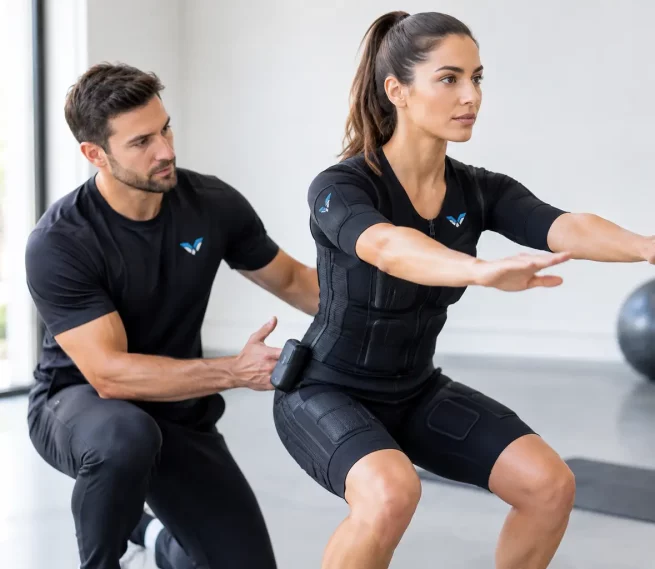
EMS training has grown because it offers a highly time-efficient, coach-led approach that can stimulate multiple muscle groups during a focused session. For clients who want results but cannot commit to long workouts, that is a serious advantage. It can be particularly useful for strength development, body shaping, posture support, mobility work and rebuilding confidence after time away from training.
At E-Pulse Studio, this approach appeals to people who want expert guidance and measurable progress without living in the gym. That includes busy professionals, parents, runners, golfers and clients managing pain or recovery.
That said, it depends on your starting point and your goal. If you are training for a marathon, your programme may still need sport-specific running work alongside studio sessions. If your main challenge is general strength, body tone and consistency, a shorter EMS-led format can be an excellent fit. The best results usually come when the method is matched to the person rather than sold as a miracle fix.
Who benefits most from short sessions?
People often assume short sessions are only for the time-poor, but that is not the full story. Yes, they are ideal for someone trying to fit training into a packed week. They are also valuable for people who feel intimidated by large gyms, those returning after injury, and anyone who tends to overcomplicate exercise.
They work well for beginners because the barrier to entry feels lower. A shorter session is less mentally daunting than a long one, especially if you have not trained consistently in years.
They also suit experienced clients who want efficiency. Many already know that spending longer in the gym does not always mean spending better. If a focused session can support strength, recovery and performance while freeing up the rest of the day, that is not a compromise. It is intelligent programming.
For people managing pain, posture issues or reduced confidence in movement, shorter guided sessions can be a far safer re-entry point than jumping into generic classes or trying to copy workouts online.
What to look for in a studio
If you are considering short workout studio sessions, do not just ask how long they are. Ask how they are built.
A quality studio should offer personalised coaching, clear progress tracking and a programme that reflects your actual goal rather than a one-size-fits-all class format. The environment matters too. If the space feels supportive, organised and focused on outcomes, you are far more likely to stay with it.
It is also worth asking how the studio handles progression. Short sessions only work when they evolve with you. The right trainer will not keep you on the same plan indefinitely. They will adjust resistance, intensity, exercise selection and recovery strategy as your body changes.
That is how short sessions stay effective instead of becoming just convenient.
The real reason people stick with them
The strongest argument for short workout studio sessions is not that they save time. It is that they remove friction.
When training feels manageable, coached and worthwhile, people stop treating fitness like an all-or-nothing project. They start seeing it as part of normal life. That shift is powerful. It is where confidence grows, habits become stable and results begin to compound.
You do not need to earn progress through endless hours. You need a method you can trust, coaching that keeps you moving forward and a format that respects real life. If your current routine keeps slipping down the list, a shorter, smarter studio session may be exactly what finally makes training stick.
The best plan is the one you can keep showing up for, especially on the weeks when life is full.

 8min
8min