The choice between personal training versus self guided gym is rarely about whether you are capable of working hard. It is about whether your training fits around a demanding job, family life, energy levels and the results you want to see. A gym membership can look like the cheaper option, but a programme only works when you use it consistently, train with purpose and know how to progress.
For some people, independent gym training is exactly right. For others, it becomes a monthly direct debit attached to good intentions. The right answer depends on your goal, your experience, your time and the level of support you need to stay moving forwards.
What a self guided gym gives you
A self guided gym gives you freedom. You can train before work, during a lunch break or late in the evening. You can choose your own exercises, take your time and build a routine around the equipment you enjoy using. If you already understand training principles, can maintain good technique and genuinely like planning sessions, this independence can be valuable.
It can also be cost-effective on paper. A standard membership usually gives access to cardio machines, free weights, resistance equipment and classes for a fixed monthly fee. For experienced gym-goers with clear goals, that can be enough to make steady progress.
The challenge is that access is not the same as direction. Many people arrive without a programme, repeat the same comfortable exercises for months or change their training every week because they are not sure what will work. They may work hard, leave sweaty and still see little change in strength, body composition, posture or stamina.
There is also the time commitment. A conventional gym visit can easily take 60 to 90 minutes once you include travel, changing, waiting for equipment and the session itself. That is manageable for some, but it is a serious barrier for busy parents, business owners and professionals whose diary is already full.
When training alone works well
Self guided training tends to suit people who have a realistic plan, know how to adjust it and can hold themselves accountable. It is particularly useful if your main goal is general fitness, you enjoy the gym environment and you have enough time to train regularly.
It may be less suitable if you are returning after injury, dealing with persistent back pain, unsure about form, or have repeatedly started and stopped gym routines. In those cases, more equipment does not necessarily solve the real problem.
What personal training changes
Personal training replaces guesswork with a plan built around you. A coach assesses your starting point, learns what you want to achieve and creates sessions that reflect your fitness level, mobility, injury history and available time. Instead of asking, “What should I do today?”, you arrive knowing that every part of the session has a purpose.
That structure matters. A good trainer knows when to challenge you, when to improve your technique and when to adapt the session because your body is telling you something different. This is especially valuable for beginners, but advanced exercisers benefit too. Once you have trained for a while, progress often slows because the easy gains have gone. Better programming and more precise progression can make the difference.
Accountability is another major advantage. When a session is booked, it becomes an appointment with yourself. On the days when work has been relentless or motivation is low, your trainer is there to keep the session focused, safe and worthwhile. You do not need to arrive feeling fired up. You only need to show up.
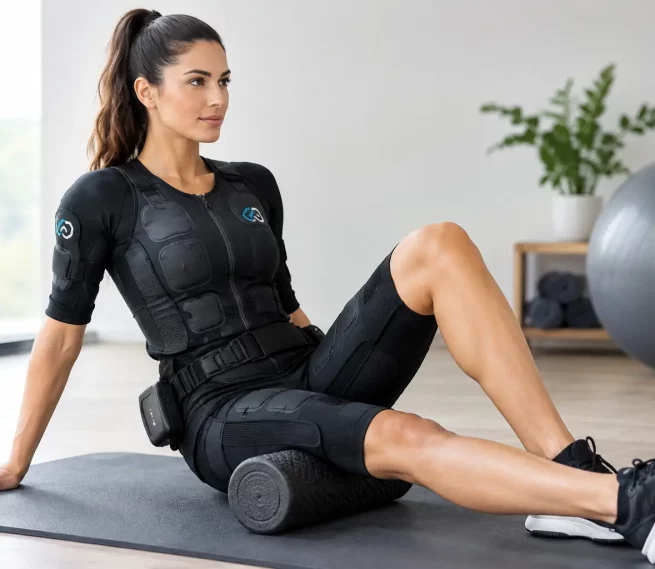
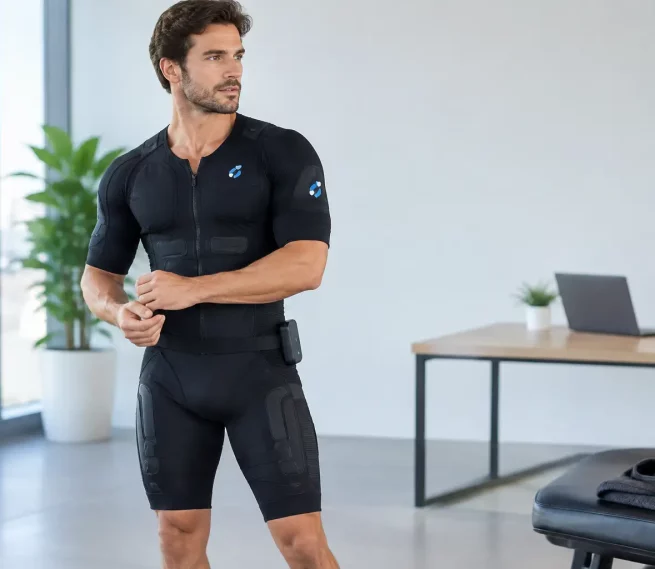
At E-Pulse Studio, that coaching-led approach is paired with EMS personal training, designed to make sessions highly efficient while keeping the focus on form, effort and individual progression. Body scanning can also give clients a clearer view of change over time, rather than relying solely on the number on the scales.
Personal training versus self guided gym: the real comparison
The biggest difference is not simply that one option includes a trainer and the other does not. It is the amount of decision-making you have to do alone.
In a self guided gym, you choose the programme, exercises, loads, rest periods and progression. You also need to notice when your technique is slipping or when a lack of mobility is limiting you. That responsibility can be empowering, but it can also create friction. If every session begins with uncertainty, it is easier to skip it.
With personal training, the plan and feedback are already in place. The session is tailored, your technique is watched and progression is managed. You are more likely to use your time well because there is less wandering, scrolling between sets or repeating exercises that no longer challenge you.
Cost deserves an honest comparison too. A gym membership has a lower monthly price, while personal training is a greater investment. But value is not measured only by the fee. Consider the result you are actually getting from what you pay for. If you attend a low-cost gym four times a month without a clear plan, it may not be the bargain it first appears. If guided sessions help you train consistently, feel stronger and make visible progress, the higher investment may offer better value for your goals.
This does not mean personal training is automatically the right choice forever. Some clients use coaching to build confidence and then train independently with a stronger foundation. Others enjoy the ongoing support because it keeps training efficient and adaptable through changing work schedules, injuries or performance targets.
Choose based on your goal, not the membership price
If your aim is simply to move more and you already enjoy the gym, self guided training may serve you very well. Create a straightforward programme, track what you lift and give yourself enough time to improve. Consistency will still beat the perfect plan that never gets followed.
If you want fat loss, muscle tone, improved posture, more energy or better performance but have struggled to stay consistent, personal training can remove the obstacles that usually get in the way. The same applies if you have pain, reduced mobility or nerves about starting. Guidance allows you to build confidence without feeling exposed or overwhelmed on a busy gym floor.
For people with limited time, efficiency becomes the deciding factor. You may not need more hours of exercise. You may need better-directed sessions that fit into your week and produce measurable progress. This is where a premium, coaching-led studio experience can be particularly effective.
A practical way to decide
Ask yourself three direct questions. Do you know exactly what you will train for the next eight weeks? Can you perform the key movements safely and progress them without guessing? And, most importantly, have you been consistent enough to get the results you want?
If the answer is yes to all three, a self guided gym may be an excellent fit. If one or more answers is no, personal training could save you months of frustration. It gives you a starting point, a clear route forwards and someone in your corner when life tries to derail your routine.
Results come from the system you can repeat
The best training option is not the one that sounds most impressive or costs the least. It is the one you can sustain long enough to become stronger, healthier and more confident.
A self guided gym can give you flexibility and independence. Personal training can give you direction, accountability and a faster route to training with confidence. Choose the environment that makes you more likely to turn up, work with intent and keep going. Your future results will be built from those ordinary sessions you actually complete.
 7min
7min