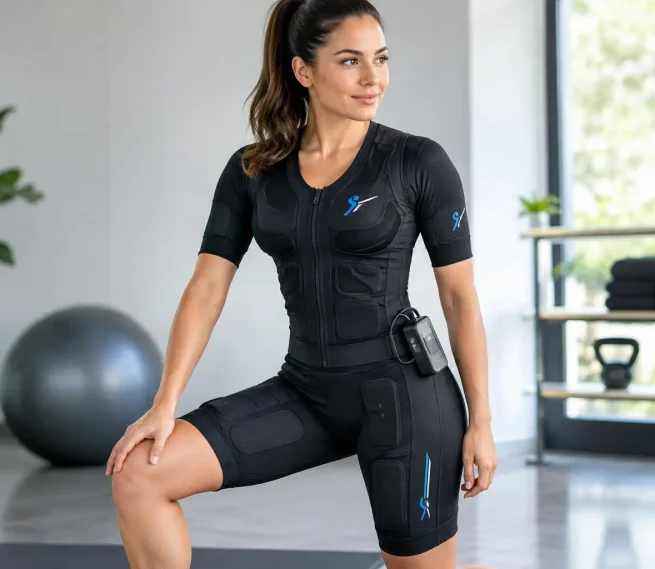
Menopause can make an old training routine feel suddenly unreliable. You may be working just as hard, yet noticing less muscle tone, more aches, disrupted sleep, a lower energy ceiling or weight settling around your middle. EMS menopause strength training offers a practical answer: focused, coached resistance work that respects a changing body and a packed diary.
The aim is not to punish yourself for hormonal changes. It is to build and retain the strength that makes everyday life feel easier – carrying shopping, climbing stairs, playing with the children, travelling, working long days and feeling capable in your own body.
Why strength matters more through menopause
Oestrogen has a role in muscle, bone and connective-tissue health. As levels fluctuate through perimenopause and decline after menopause, many women find that maintaining muscle mass and recovering from exercise takes more intention than it once did. This is not a personal failure, and it is not fixed by eating less and doing endless cardio.
Muscle is valuable well beyond appearance. It supports joint control, posture, balance, glucose management and metabolic health. Progressive resistance training also places useful load through the skeleton, which is one reason it is widely recommended as part of an active lifestyle that supports bone health.
For many busy women, the real barrier is not motivation. It is time. A conventional gym programme can ask for several long sessions each week, plus the mental load of planning exercises, checking technique and wondering whether it is working. When sleep is inconsistent and work or family life is full, that can be the point where training disappears altogether.
A properly coached EMS session is different. Electrical muscle stimulation adds external stimulation to targeted muscle groups while you perform controlled movements such as squats, hinges, pulls, presses and core work. It does not replace effort or good coaching. It can, however, make a short session highly demanding without needing to spend hours under heavy barbells.
How EMS menopause strength training works
At E-Pulse Studio, sessions are built around 30 minutes of purposeful work, not random intensity. Your trainer adjusts the stimulation and exercises to your current fitness, movement quality, confidence and goals. That matters especially if you have been inactive, are returning after an injury, or simply have not trained consistently for a while.
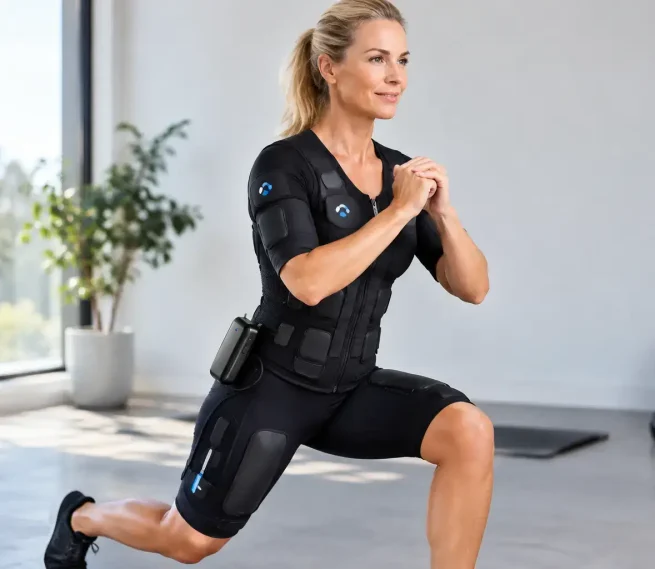
The suit stimulates major muscle groups while you move through simple, functional patterns. Think controlled sit-to-stands, squats, lunges, rows, presses, rotational work and stability drills. The coach can increase or reduce the intensity for each area independently. Your legs may be ready for more challenge while your shoulders need a gentler approach, for example.
This creates a useful combination: your muscles are asked to work hard, while the movements remain deliberate and technically supported. For someone who feels intimidated by a busy gym floor, that can make strength training far more approachable.
The result is effort, not magic
EMS is not a shortcut around the basics. Strength and body-composition change still depend on regular training, enough protein and nutrients, recovery, daily movement and a programme that progresses at the right pace. A single intense session cannot compensate for months of poor sleep, stress or inactivity.
What EMS can offer is efficiency and accountability. If a coached 30-minute appointment is realistic enough for you to attend consistently, it may produce far more value than the ideal gym plan that stays on your to-do list.
What a smart menopause programme should prioritise
The best programme is not the one that leaves you exhausted every time. It is the one you can recover from, repeat and gradually progress. During menopause, that often means being more strategic with intensity rather than assuming every session needs to be all-out.
A good starting point is two strength-focused sessions per week, with walking and gentle mobility on other days. Some women thrive with more training volume; others need greater spacing between demanding sessions while managing poor sleep, hot flushes, joint discomfort or a high-stress period at work. Your recovery is useful feedback, not an inconvenience to ignore.
Your coach should pay close attention to movement quality. If your knees collapse inward during a squat, your lower back takes over every hinge or your shoulders feel pinched when pressing, increasing the stimulation is not the answer. Better positioning, an adjusted range of motion and a sensible progression are what build confidence and strength safely.
Nutrition should support the work you are doing. Restrictive dieting can make it harder to retain muscle, particularly when protein intake is low. Aim for regular meals with a quality protein source, colourful fruit and vegetables, fibre-rich carbohydrates and healthy fats. Individual needs vary, so anyone with a medical condition, digestive concerns or a history of disordered eating should seek personalised clinical advice rather than follow a generic plan.
EMS and bone health: the honest picture
Strength training is a valuable part of supporting bone health, but it should not be oversold. Bone responds to loading, and traditional weight-bearing activity and resistance exercise are particularly relevant. EMS can make muscles work intensely, but it is not a standalone treatment for osteopenia or osteoporosis.
If you have been diagnosed with low bone density, have a history of fragility fractures, severe back pain or are taking medication that affects bone health, speak to your GP or relevant clinician before starting a new programme. A qualified coach can then adapt the exercise selection and loading appropriately. In some cases, avoiding certain movements or ranges is sensible.
The same principle applies to pelvic-floor symptoms, prolapse, significant joint pain, recent surgery and cardiovascular conditions. The right response is not to stop moving forever. It is to get the right clearance and train with the information that keeps your programme appropriate.
Progress you can actually feel and measure
The first wins are often practical. Clients commonly notice that stairs feel easier, their posture improves during long desk days, bags feel lighter and they have more confidence getting up and down from the floor. These changes matter because they make an active life feel available again.
Visible body-composition changes may follow, but they are rarely linear during menopause. Water retention, changing hormones, stress and sleep can all affect how you look and feel week to week. This is why progress should not be judged only by the scales.
Strength markers, movement quality, waist and body measurements, energy levels and consistency give a fuller picture. A 3D body scan can help create objective check-ins over time, while regular coaching conversations reveal changes that a number alone cannot capture. The goal is not perfection by Friday. It is measurable progress that lasts.
Who EMS menopause strength training suits
This approach can work particularly well for women who want expert structure without giving up large blocks of their week. It suits the professional who cannot face a crowded gym after work, the parent trying to fit training around everyone else’s schedule, and the former exerciser who wants a supported return after a long break.
It can also be a strong option if you enjoy personal attention. In a coached studio setting, someone is watching your technique, adapting the session and challenging you when you are ready. That removes much of the guesswork that derails progress.
It may not be suitable for everyone. EMS has contraindications, including certain implanted electrical devices, and suitability should always be screened before training. If you prefer long endurance sessions, heavy free-weight lifting or independent gym training, a conventional programme may be a better fit – or EMS may complement it rather than replace it.
Start where your body is now
You do not need to wait until you feel fitter, lighter or more confident to begin strength training. Those outcomes are often created by beginning with the capacity you have today, then building from there with support.
Book an introductory consultation, be honest about your symptoms, history and goals, and let your first sessions establish a sustainable baseline. A stronger next chapter does not require more hours in the gym. It requires a plan you can trust, coaching that meets you where you are, and the decision to keep showing up for yourself.
 7min