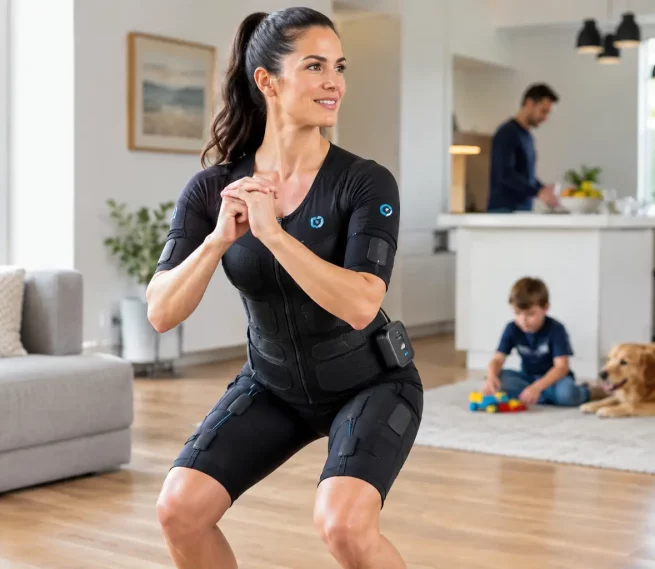
The most convincing EMS body transformation success story rarely begins with someone who loves the gym. It usually starts with a diary that is already full: work deadlines, school runs, long commutes, poor sleep and another month of saying, “I’ll get back to it next week”.
That is why a short, coached training format can be so powerful. The goal is not to cram a two-hour gym session into 30 minutes. It is to make those 30 minutes focused enough that they become a habit, measurable enough that progress stays visible, and personal enough that you do not feel left to figure it out alone.
At E-Pulse Studio, transformation is not treated as a dramatic before-and-after photograph with no story behind it. It is built through structured EMS personal training, practical coaching, body composition tracking and the small lifestyle decisions that support what happens in the studio.
An EMS body transformation success story starts with a real baseline
Picture a busy professional in their forties. They have trained on and off for years, but consistency has disappeared. Their back feels tight after hours at a desk, clothes are fitting differently, and energy drops sharply by mid-afternoon. They do not need another punishing fitness plan. They need a starting point that fits their life.
The first win is clarity. Before chasing a number on the scales, a proper assessment looks at goals, training history, mobility, posture, injury considerations and current body composition. A 3D body scan can help create a more useful baseline than weight alone. It can show changes in measurements and body shape over time, even when scales move slowly or fluctuate.
This matters because body transformation is not one thing. One person may want to reduce body fat and feel more confident in fitted clothes. Another may want stronger legs for running, less discomfort through the lower back, or the ability to keep up with their children without feeling exhausted. The programme should reflect that difference.
Why EMS can work for time-poor people
EMS training uses electrical muscle stimulation alongside purposeful movement. During a coached session, the suit delivers impulses that encourage muscles to contract while you perform exercises such as squats, lunges, presses, pulls and core work. The trainer controls the intensity and adjusts the session to your ability, technique and goal.
The appeal is simple: it creates a demanding, full-body training stimulus in a short appointment. For someone who struggles to protect several gym sessions a week, a 30-minute slot can feel achievable rather than overwhelming. That lower barrier to consistency is often where the real transformation begins.
But EMS is not a shortcut that removes the need for effort. You still have to move well, show up regularly, eat in a way that supports your goal and recover properly. It can make training more efficient; it cannot out-train a lifestyle that is completely working against you.
For beginners, the value is often confidence and supervision. For experienced trainees, it may be an efficient way to add a challenging strength-focused stimulus around sport, travel or a demanding job. For people returning after a lay-off, the pace and intensity need careful management. That is where trainer-led programming matters.
The transformation is built between sessions
A strong programme begins with a realistic weekly rhythm. Some members use EMS as their core resistance training. Others combine it with walking, running, golf, mobility work or another sport they enjoy. What matters is not copying someone else’s routine. It is creating one you can repeat for long enough to see change.
Nutrition deserves the same practical approach. Extreme restriction may produce a fast drop on the scales, but it can leave you low on energy, hungry and more likely to rebound. A better strategy is to establish consistent meals, adequate protein, hydration and portions that match your aim. Organic supplementation can support a wider wellbeing routine where appropriate, but it is not a replacement for nourishing food or a sustainable calorie balance.
Recovery is not an optional extra either. If you are sleeping badly, under pressure at work and training hard without enough rest, progress can stall. Some people need a firmer training push. Others need their plan to account for stress, mobility restrictions or pain before increasing the load. The smartest route is the one your body can recover from.
What progress can look like after the first few months
The early changes are often less glamorous than a social media transformation, but they are the ones that keep people going. A member may report that stairs no longer leave them breathless, they can hold a plank with better control, or their posture feels less collapsed at the end of the day. They may notice their jeans fitting differently before they see a major change in body weight.
As sessions build, trainers can progress exercise selection, resistance, movement quality and EMS intensity. The aim is not simply to make every session harder. It is to make it more effective. Better squat depth, stronger glutes, improved core control and greater confidence with movement all count as progress.
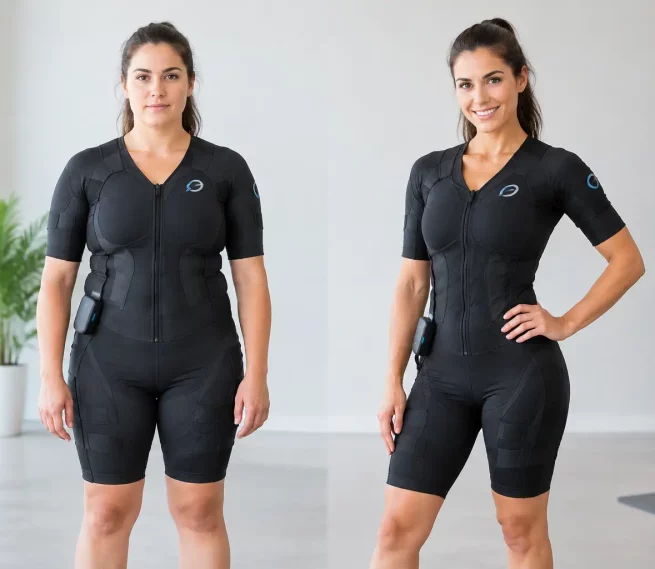
Regular 3D scans give the story some evidence. Changes in circumference, shape and composition trends can show whether the plan is moving in the right direction. If the data and how the person feels are both improving, the programme is working. If they are not, the response should be to review the plan, not to pretend that effort alone will fix everything.
This is where accountability changes the experience. When a coach knows your goal, notices when you have lost momentum and celebrates the improvements you might dismiss, it becomes easier to stay engaged. For many people, that support is more valuable than access to another room full of machines.
Results need context, not hype
It is reasonable to want visible results. It is also reasonable to be cautious about big promises. Fat loss, muscle development, mobility and strength all respond at different rates depending on your starting point, training frequency, food intake, sleep, age, stress levels and medical history.
Someone with little recent training may see quick improvements in strength and confidence. Someone already training consistently may need more time and a more detailed programme to change body composition. A person managing pain may first measure success by moving more comfortably, not by changing a clothing size.
EMS may not be suitable for everyone. Certain medical conditions, implanted electrical devices, pregnancy and recent health concerns may require medical advice or mean training is not appropriate. Be open with your trainer about your health history, medications, injuries and symptoms. Good coaching starts with safety, not bravado.
The same applies to soreness. A productive session should challenge you, but severe soreness is not proof of a better workout. Your trainer should help you build up sensibly, especially if you are new to resistance training or returning after time away.
How to make your own story worth telling
The people who maintain results usually stop waiting for perfect conditions. They book their sessions as they would any important appointment, keep daily movement simple and repeatable, and use progress reviews to make decisions from facts rather than frustration.
Set a goal that means something beyond a number. It might be feeling confident on holiday, completing a 10K, improving your golf swing, getting through a workday without your back tightening up, or simply recognising yourself in the mirror again. That personal reason gives the training plan staying power when motivation dips.
If you are in Peterborough or Upminster and tired of starting over, begin with an honest assessment rather than another generic workout plan. A good coach will meet you where you are, challenge you appropriately and show you what can be measured.
The best transformation is not the one that looks dramatic for a week. It is the one that gives you more strength, more energy and more trust in what your body can do, long after the first progress photo.
 7min
7min