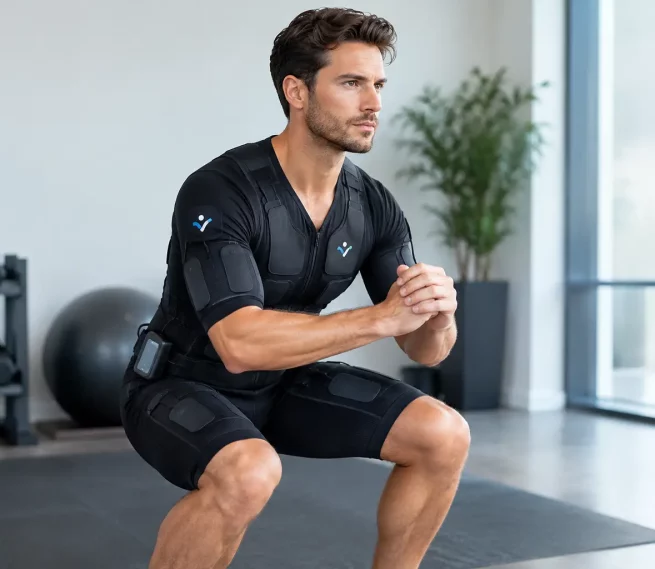
Thirty minutes can sound too short to make a meaningful difference to your strength. Yet when you are working against precisely timed electrical stimulation, under the eye of a coach who can correct every squat, hinge and press, those 30 minutes can be demanding. So, does EMS improve muscle strength? For many people, yes – provided it is used as structured training rather than a passive shortcut.
EMS can be particularly valuable for busy professionals, parents returning to consistent exercise, and people who need a lower-impact route back to training. The result is not magic. It is a focused training method that asks your muscles to work hard, then gives them the recovery and progression required to adapt.
How EMS training can build strength
Electro Muscle Stimulation uses controlled electrical impulses to stimulate muscle contractions while you perform purposeful movements. In a whole-body EMS session, the stimulation is delivered through a suit to major muscle groups including the legs, glutes, core, back, chest and arms. Your trainer then guides you through exercises matched to your ability, goals and movement quality.
Your nervous system normally sends an electrical signal to a muscle when you move. EMS adds an external stimulus to that process. This can increase the training demand during relatively simple movements, which is useful when time is limited or heavy loads are not appropriate.
Strength improves when the body is challenged enough to adapt. That adaptation includes better coordination between the brain and muscles, improved recruitment of muscle fibres, and, over time, increases in muscle size where nutrition, recovery and training consistency support it. EMS can contribute to all of these, particularly when sessions progress gradually rather than repeating the same comfortable routine week after week.
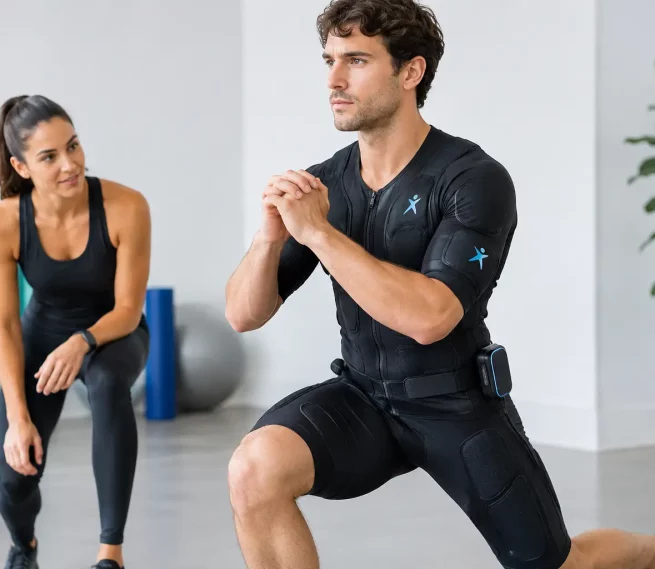
The key word is active. Lying down with electrodes on may create a contraction, but it is not the same as learning to brace through a squat, control a lunge or maintain posture through a pulling movement. At E-Pulse Studio, EMS is used alongside coached movement because how you move matters as much as how hard the suit feels.
Does EMS improve muscle strength as well as weights?
EMS is not a replacement for every form of resistance training, and it should not be sold that way. Traditional weights remain excellent for building strength, practising specific lifts and progressively handling heavy external loads. If your goal is to maximise a barbell squat, deadlift or bench press, you will need to practise those lifts with appropriate loading.
But strength is broader than a number on a bar. It is being able to climb stairs without your legs giving up, lift children or shopping confidently, hold a stable position on the golf course, or run with better control when fatigue arrives. For these outcomes, coached EMS can be a highly effective option.
It may be especially useful when conventional gym sessions are difficult to sustain. A well-run 30-minute session removes the usual wasted time: deciding what to do, queuing for equipment, drifting between exercises or training without enough intensity. You arrive, train with purpose and leave knowing what you did.
For some members, EMS is a stand-alone strength routine. For others, it works best beside running, cycling, martial arts, golf or conventional lifting. A runner may use it to develop stronger glutes, core and legs without adding another long gym workout. A regular lifter may use it during a busy period to maintain training quality. The best approach depends on your starting point, injury history and target.
What determines your results
The suit matters, but coaching and consistency determine whether EMS becomes a strength-building plan or simply an intense experience. A sensible programme begins with an assessment of your movement, fitness level and aims. The intensity must be challenging enough to stimulate adaptation, but not so aggressive that your technique breaks down or recovery suffers.
Progression can come from gradually increasing stimulation, improving the quality and range of each movement, increasing time under tension or choosing more demanding exercise variations. More is not automatically better. Stronger contractions are only useful if you can keep good posture, breathe well and work through the movement with control.
Your body also needs the raw materials to adapt. Regular protein intake, enough total food for your goal, hydration and sleep all affect results. If fat loss is a priority, an appropriate calorie deficit can help reveal muscle definition, but pushing the deficit too hard may compromise performance and recovery. If building muscle is the priority, adequate nutrition becomes even more important.
Progress should be measured rather than guessed. Strength markers might include more controlled repetitions, better balance, greater range of motion, improved posture or a higher resistance level with the same quality. Body composition and circumference measurements can add useful context. A 3D body scan can make changes that are hard to spot day to day more visible over time.
Who can benefit most from EMS strength training?
People new to training often benefit because they receive clear instruction from the first session. Instead of feeling exposed in a busy gym, they have a trainer ensuring every movement is appropriate and achievable. Confidence grows quickly when someone can feel their body becoming more stable and capable.
Busy adults are another strong fit. Two focused sessions a week may be more realistic than a plan that requires several long gym visits. Realistic training is powerful because it gets repeated. The programme that fits into your week is more likely to produce results than the perfect plan you never manage to do.
EMS can also support people returning from pain, mobility restrictions or a period away from exercise. That does not mean everyone with pain should jump straight into high-intensity stimulation. A qualified coach should adapt the session, focus on movement control and work within appropriate medical guidance. Anyone with a pacemaker or other implanted electronic device, certain neurological or cardiovascular conditions, epilepsy, pregnancy, acute illness or recent surgery should seek medical advice before EMS training.
Advanced exercisers should expect a different benefit. EMS can add a time-efficient whole-body challenge, encourage muscular endurance and support a more structured recovery or conditioning plan. It does not remove the need for sport-specific practice, but it can strengthen the foundations that help performance hold up.
What a productive EMS programme looks like
A productive programme is not based on chasing soreness. It is based on sessions you can repeat, recover from and progress. Most people respond well to regular training with recovery between demanding EMS sessions, especially at the beginning. Your coach should adjust intensity according to how you feel, how well you are moving and what else you are doing that week.
Expect the early sessions to teach you as much as they challenge you. You will learn how to brace your core, create tension through the right muscles and maintain alignment as the stimulation rises. That learning is one reason strength can improve even before visible muscle changes occur.
The clearest signs of progress are practical. Your squats become deeper and steadier. Your lower back feels less fatigued after a desk-heavy day. You can hold a plank with better control, carry bags more easily or return to your chosen sport with more confidence. These are meaningful wins, not minor details.
The honest answer on EMS and strength
EMS can improve muscle strength, but its effectiveness depends on the programme around it. Strong contractions alone do not create a long-term result. Personalised exercise, expert supervision, progressive challenge, recovery and nutrition do.
For someone who has struggled to find time, lacks confidence in a conventional gym, or wants a smarter addition to an existing routine, EMS offers a serious and efficient training option. The most valuable first step is not choosing the highest setting. It is working with a coach who can meet you where you are, set a measurable target and help you earn progress session by session.
 7min
7min