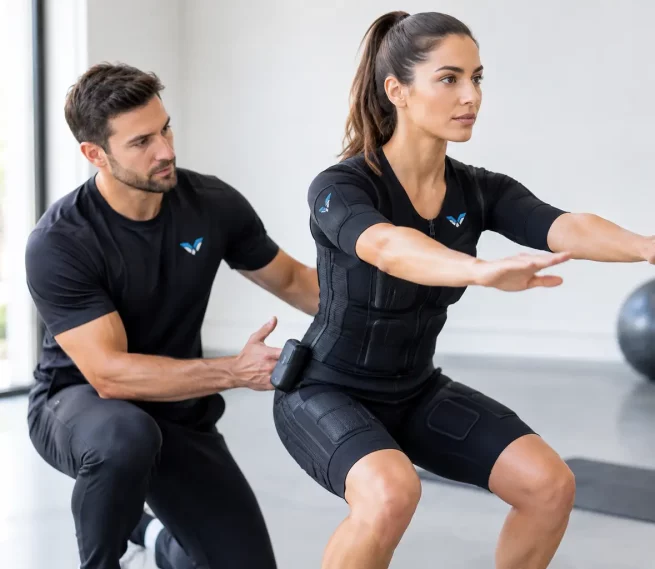
A full diary, low energy and a body that no longer feels like it should can make fitness feel like another job. A real EMS transformation success story begins when training stops being something you keep meaning to do and becomes a focused appointment that fits your life.
For many people, the goal is not simply to lose a few pounds. It is to feel strong carrying the shopping, confident in work clothes, comfortable on the golf course or able to play with the kids without a sore back taking over. Those outcomes need more than hard sessions. They need a plan, coaching and evidence that your effort is moving you forward.
An EMS Transformation Success Story Starts With the Real Problem
Consider a typical client we see in the studio: a working professional in their forties who has tried gyms, home workouts and restrictive eating plans. None lasted. Long sessions competed with work and family, and an old knee niggle made high-impact classes feel like a risk rather than a solution.
Their starting point is not failure. It is a lack of a system built for their reality.
At E-Pulse Studio, that first session is about more than putting on an EMS suit. A coach looks at goals, training history, movement quality, mobility and any pain or limitations that need consideration. A 3D body scan provides a useful starting snapshot, so progress is not left to the mood of the bathroom scales or how someone feels on a difficult Monday morning.
That matters because the right target varies. A client who wants body recomposition needs a different emphasis from a runner looking to improve strength and stamina. Someone returning after back pain needs controlled progression, not a punishing bootcamp approach. EMS training can be highly effective, but it is not a shortcut around good coaching, recovery or sensible nutrition.
Why 30 Minutes Can Create a Different Habit
The practical advantage of EMS is efficiency. During a coached 30-minute session, electrical stimulation works alongside purposeful movements to recruit muscles while the trainer manages intensity, technique and progression. Instead of wandering around a busy gym deciding what to do next, clients have a clear session and someone paying attention to every rep.
For a busy parent or business owner, that can remove the biggest barrier: time. Two short, well-managed sessions each week may be far more sustainable than a five-day programme that looks impressive on paper but disappears after three weeks.
The trade-off is that intensity has to be earned. EMS is not a reason to switch off or expect a result while doing the bare minimum. The stimulation must be set appropriately, movement must stay controlled and recovery has to be respected. The best results usually come from clients who treat those 30 minutes as a serious commitment, then support them with daily movement, protein-rich meals, hydration and sleep.
The First Four Weeks: Building Trust in the Process
In the first few sessions, visible physical change may not be the headline. The meaningful win is often consistency. The client arrives twice a week, learns the movements and starts to recognise that training does not have to leave them drained for days.
Coaches begin with a manageable level of stimulation and adapt the programme to the individual. Squats may be adjusted for mobility. Core work may focus on control before intensity. A client who has spent years avoiding exercise because of discomfort needs confidence in their body as much as they need a tougher workout.
By week four, clients commonly report everyday differences first: stairs feel easier, posture feels more upright, their shoulders feel less tense after a desk-heavy day, or they have more energy in the afternoon. These are not cosmetic details. They are signs that strength, movement confidence and routine are beginning to connect.
The 3D scan and regular check-ins offer a more grounded view. Weight can fluctuate because of hydration, stress, hormones and muscle glycogen. Measurements, body composition trends, strength improvements and how clothes fit together tell a fuller story. If progress is slower than expected, the answer is not automatically more intensity. It may be sleep, food intake, stress, recovery or a programme adjustment.
From Attendance to Measurable Change
The middle phase is where a transformation starts to show. The client can hold better positions, move with more control and tolerate a stronger stimulus. Exercises progress with purpose rather than for the sake of variety. A stronger hinge pattern can support someone with daily lifting demands. Better leg strength can help a runner. Improved trunk control can make a difference to a golfer looking for more stability through the swing.
For body transformation goals, coaching outside the session matters too. You cannot out-train a lifestyle that repeatedly works against your objective. That does not mean living on salad or refusing every meal out. It means creating habits that can survive a normal UK working week: planning protein, having sensible options available when meetings run late, drinking enough water and avoiding the all-or-nothing mindset after a social weekend.
Organic supplements can support a wider wellbeing routine where appropriate, but they are support, not the main event. The foundations are training, nutrition, recovery and consistency. Anyone promising dramatic change from a single product, a single scan or a few sessions is selling fantasy.
A strong success story may show fat loss, improved muscle tone and more favourable body measurements. It may also show gains that do not fit neatly into a before-and-after photograph: less fear around movement, fewer excuses, better stamina and the confidence to book a holiday without worrying about hiding in every photo.
The Results That Last Are Not Always the Fastest
There is a reason transformation photos get attention. They make progress instantly visible. But the most valuable change is often the one that remains when motivation dips, work gets hectic or family life becomes demanding.
A client might reach their first body-composition target, then decide their next goal is performance. Another may begin with rehabilitation and remain focused on mobility and pain management rather than chasing a certain clothing size. This is where personalised coaching earns its place. The programme should evolve as the person does.
Group EMS sessions can add another layer of momentum for people who enjoy shared energy, while still allowing coaches to manage individual needs in small groups. For others, one-to-one attention is the better route, particularly when movement restrictions or specific performance targets are involved. It depends on confidence, goals and the level of support required.
Progress is rarely a perfect straight line. Holidays happen. Children get ill. Deadlines pile up. A good coaching relationship does not treat a missed session as the end of the plan. It helps the client return quickly, make the next sensible choice and keep the long-term direction intact.
What Makes the Story Worth Sharing
The most credible EMS transformation success story is not about an overnight reinvention. It is about someone who had limited time, a clear reason to change and a programme they could actually maintain. They were coached rather than left to guess. Their progress was measured rather than assumed. And their training matched their life instead of demanding they rebuild their life around the gym.
If you are tired of starting again every January, begin with an honest conversation about where you are now and what you want your body to do better. The right first session should leave you with clarity, not pressure – and a plan you can still follow when life gets busy.

 8min
8min