Your VO₂max is not just a number for serious runners with expensive watches. It is a useful measure of how well your body uses oxygen when effort rises – climbing stairs, chasing the children around the park, playing five-a-side, finishing a round of golf strong, or pushing through the final kilometre of a run. If you are asking how to improve VO2max, the answer is not simply to train harder. It is to train with enough purpose and consistency that your heart, lungs and muscles have a reason to adapt.
For busy professionals and parents, this is good news. Better aerobic fitness does not require daily two-hour gym sessions. It does require a plan, the right intensity at the right time, and enough recovery to repeat the work week after week.
What VO₂max actually tells you
VO₂max is the maximum amount of oxygen your body can take in, transport and use during intense exercise. A higher score is generally linked with better endurance capacity and cardiovascular fitness. It can also make everyday activity feel less taxing because you are working at a lower percentage of your maximum effort.
Your score is influenced by age, genetics, training history, body composition and health status. That means two people can follow the same programme and see different changes. The result that matters most is your own trend: can you sustain a faster pace, recover quicker between efforts, or complete the same session with a lower heart rate?
Wearables can estimate VO₂max, while a formal test offers greater accuracy. Either way, treat the figure as a guide rather than a verdict. One isolated reading can move with sleep, stress, heat, hydration and the type of workout you logged.
How to improve VO2max with focused intervals
The most time-efficient driver of VO₂max improvement is interval training. This means alternating challenging efforts with planned recovery, so you can accumulate meaningful time at a high aerobic demand without having to maintain an all-out pace continuously.
A practical starting point is one interval session each week. After a gradual warm-up, try four rounds of three minutes at a hard but controlled effort, followed by three minutes of easy movement. Running, cycling, rowing, cross-trainer work and brisk incline walking can all work. You should be breathing heavily and able to say only a few words, but you should not be sprinting blindly from the first repetition.
As your fitness and confidence improve, you may progress towards four or five rounds of four minutes hard with equal or slightly shorter recoveries. This is demanding work. More is not always better. Two high-intensity sessions per week is plenty for most people, particularly if they are rebuilding fitness, carrying extra body weight, managing a busy schedule or returning after pain or injury.
The right mode depends on your body. Running is specific and effective for runners, but it also creates more impact. A bike or rower may allow someone with sensitive joints, back discomfort or limited mobility to reach a strong cardiovascular effort more comfortably. Good coaching is about choosing the tool that lets you train consistently, not forcing the trendiest option.
Build the aerobic base that makes intervals work
Hard intervals get attention because they feel productive. Easier aerobic work is what gives them a foundation. Low-to-moderate intensity sessions improve your ability to use oxygen efficiently, build exercise tolerance and help you recover between harder efforts.
Aim for one or two sessions each week where you can keep moving at a conversational pace for 30 to 60 minutes. For some people, that is a steady jog. For others, it is a fast walk with hills, a cycle, a swim or a longer weekend walk. You should finish feeling as though you could have done a little more.
This is where consistency wins. A single heroic workout followed by ten days off will not move your fitness forwards. Three purposeful sessions across a normal working week will. If your diary is packed, begin with two 30-minute sessions: one interval-based and one steady. Add time or a third session only once that routine feels sustainable.
Get stronger so every effort costs less
VO₂max is a cardiovascular measure, but your muscles are the engine using the oxygen. Stronger legs, glutes and trunk can improve movement economy, meaning you use less energy at a given pace. That matters whether you run, cycle, box, play sport or simply want to move through the day with more confidence.
Include strength training two or three times per week, with particular attention to squats or sit-to-stands, hinges, lunges, pushes, pulls and trunk control. The aim is not to leave every session exhausted. It is to build usable strength with sound technique and progressive challenge.
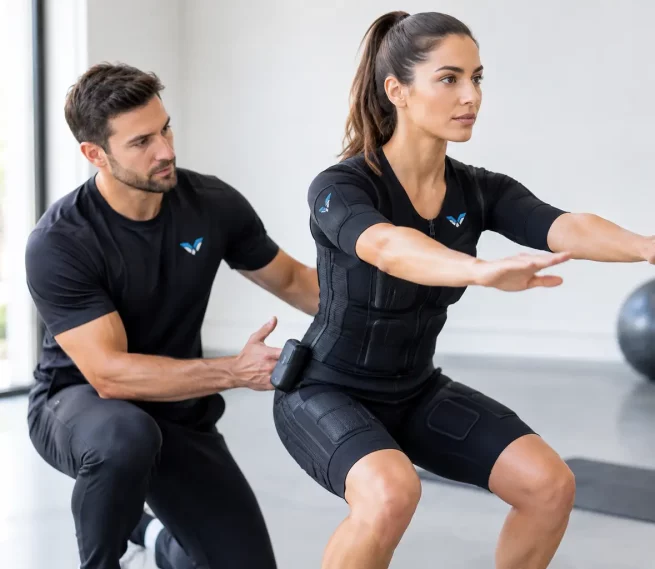
For people short on time, coached EMS training can complement an aerobic programme by delivering a focused strength stimulus in a 30-minute session. At E-Pulse Studio, that can be especially useful for clients who need accountability, want to improve posture and muscular support, or find conventional gym routines difficult to maintain. It is not a substitute for aerobic work if VO₂max is the primary goal. The biggest gains still come from regular cardiovascular training at suitable intensities. The advantage is combining efficient strength work with a clear cardio plan rather than trying to squeeze everything into long gym visits.
Recover like your progress depends on it
It does. Fitness improves after the session, when the body repairs and adapts to the work you have done. Poor sleep, high stress and repeated all-out training can turn a good plan into a frustrating plateau.
Give hard sessions at least 48 hours apart where possible. Keep easy days genuinely easy. Eat regular meals with enough protein and carbohydrate to support your activity, and drink enough water, especially if you train early, sweat heavily or work in warm conditions. Supplements can support an already solid routine, but they cannot compensate for under-fuelling, irregular training or five hours of sleep.
Watch for signals that you need to pull back: a persistently elevated resting heart rate, unusually poor motivation, disrupted sleep, heavy legs that never lift, or performance falling for more than a few sessions. Reducing intensity for a week is not losing ground. It is often what allows you to make the next block of training count.
A realistic weekly plan for busy people
A simple structure is more valuable than a perfect plan you cannot follow. Here is what a balanced week could look like:
- One interval session, such as 4 x 3 minutes hard with 3 minutes easy recovery.
- One 30 to 60-minute steady cardio session at a conversational pace.
- Two strength sessions, or one focused EMS session plus one additional strength or mobility session.
- Daily light movement, including walking, mobility work and short breaks from sitting.
If you already train regularly, add a second interval session only after several weeks of coping well with one. Make the two sessions different – for example, longer four-minute efforts on a bike and shorter hill intervals on another day. If you are a beginner, replace the hard intervals with brisk walk intervals until your joints, confidence and fitness are ready for more.
Measure progress beyond the watch
Retest under similar conditions every six to eight weeks rather than obsessing over daily readings. Use the same route, machine or wearable method where you can. Pair the number with performance markers: your pace at a comfortable heart rate, how quickly your breathing settles after a hill, how many intervals you can complete with control, and how energised you feel afterwards.
Body composition and movement quality matter too. Carrying less non-functional weight may improve relative VO₂max, while better mobility and strength can make cardio training more comfortable and repeatable. This is why a 3D body scan, coaching feedback and performance testing can be more useful together than chasing one metric alone.
If you have chest pain, unexplained breathlessness, dizziness, a known heart or respiratory condition, or you have been inactive for a long period, speak to a healthcare professional before starting high-intensity training. The same applies if pain changes how you move.
The most effective VO₂max plan is the one that fits your real life and gives you a clear next session to complete. Start with the minimum that you can repeat, train hard with intention when the programme calls for it, and let steady work and recovery do their part. A few well-coached hours each week can change far more than a number on your watch – it can give you the stamina to show up stronger everywhere else.

 8min
8min