A stiff neck after laptop work, shoulders that round forwards in the car, or a back that aches by late afternoon are not fixed by simply telling yourself to “sit up straight”. The best exercises for posture correction support help you build the strength, control and mobility to hold better positions without constantly thinking about them.
For busy people, posture work needs to earn its place in the week. It should improve how you move in meetings, on school runs, during training and when you finally get time to switch off. The aim is not military-straight posture or one perfect position. It is having the capacity to move well, change position often and feel strong through your whole body.
What posture correction support actually means
Posture is dynamic. Your body naturally shifts while standing, walking, lifting and sitting. Problems often appear when you spend too long in one shape, lack strength to support key areas, or have reduced movement around the upper back, hips and ankles.
That is why a useful programme does more than stretch the chest. It strengthens the upper back and deep neck muscles, builds a stable trunk, improves hip control and restores movement where you are restricted. If pain is sharp, persistent, follows an injury, or comes with tingling, numbness or weakness, seek assessment from an appropriate healthcare professional before training through it.
The best exercises for posture correction support
These movements are practical, scalable and effective when performed with control. Start with two or three sessions weekly. A short, consistent routine will beat an ambitious plan that only happens once a month.
1. Wall slides for shoulder control
Stand with your back near a wall, feet slightly forward and ribs gently stacked over your hips. Place your arms against the wall in a goalpost shape, then slowly slide them upwards as far as you can without your ribs flaring or shoulders shrugging towards your ears. Return with control.
Wall slides train the muscles around the shoulder blades while encouraging better movement through the upper back. Aim for 2-3 sets of 8-12 repetitions. If your arms cannot stay close to the wall, reduce the range. Quality matters more than forcing the position.
2. Rows to build the upper back
A resistance-band row, cable row or supported dumbbell row can be one of the most valuable additions to a posture-focused plan. Pull the handles towards your lower ribs, keep your neck long and pause briefly as your shoulder blades move back and down. Avoid turning every repetition into a shrug.
Rows counter the tendency to spend the day reaching forwards. They are especially useful for desk-based professionals, drivers and parents who regularly lift, carry and lean over. Complete 3 sets of 10-15 controlled repetitions, choosing resistance that makes the final few reps challenging without losing your position.
3. Chin tucks for neck endurance
Sit or stand tall, looking straight ahead. Gently draw your chin backwards as if making a small double chin, without tipping your head down. Hold for three to five seconds, then relax.
This is a subtle exercise, not a dramatic movement. It can help train the deep muscles at the front of the neck and reduce the habit of letting the head drift forwards. Try 6-10 slow repetitions during a work break. If it causes dizziness or increases symptoms, stop and get professional advice.
4. Thoracic rotations for a freer upper back
Lie on your side with knees bent and arms extended in front of you. Keeping the knees together, open your top arm across your body and rotate through the upper back until you reach a comfortable end range. Follow your hand with your eyes, then return slowly.
Long periods at a screen can leave the upper back feeling fixed. Thoracic rotations provide movement where many people need it, which can make reaching overhead and maintaining an upright position feel easier. Perform 6-8 repetitions per side, breathing out as you rotate.
5. Dead bugs for rib and core control
Lie on your back with hips and knees bent to 90 degrees, arms reaching towards the ceiling. Gently brace your middle as though preparing for a cough, then lower one heel and the opposite arm towards the floor. Bring them back and alternate sides.
The goal is to keep your lower back from arching excessively and your ribs from popping up. Dead bugs teach your trunk to stay organised while your limbs move – a skill that carries over to lifting, walking and everyday tasks. Begin with 2-3 sets of 6-10 reps per side.
6. Glute bridges for hip extension
Lie on your back with knees bent and feet flat. Press through your feet, squeeze your glutes and lift your hips until your body forms a comfortable line from shoulders to knees. Pause, then lower steadily.
Glute bridges strengthen the muscles that help control the pelvis and support efficient movement. They are not a cure-all for lower-back discomfort, but they can be a strong foundation where prolonged sitting has left the hips inactive. Perform 3 sets of 10-15 repetitions, avoiding the temptation to overarch at the top.
7. Split squats for whole-body posture under load
Step into a staggered stance and lower your back knee towards the floor, keeping your front foot planted and your torso tall. Push through the front foot to return to standing. Hold on to support if balance is the limiting factor.
Split squats develop leg strength, hip stability and trunk control in a position that resembles real life. They also reveal left-to-right differences that can be hidden in two-legged exercises. Start with bodyweight, 2-3 sets of 8-10 reps each side, then add load as control improves.
Make the exercises work in a time-pressed week
You do not need an hour every day. A focused 10-minute mobility and activation block can work well before your working day, after commuting or ahead of a gym session. Pair thoracic rotations and chin tucks with rows, dead bugs and bridges, then add split squats on two or three days each week.
Your environment matters too. Raise your screen if you are repeatedly looking down, bring your keyboard close enough that you are not reaching, and stand up between tasks. There is no magic chair or perfect desk set-up that removes the need to move. The win is reducing how long you stay locked in one position.
Also consider your training balance. Endless pressing, cycling in a rounded position, or high-volume running without strength work may leave some people feeling tighter or less supported. That does not mean you must stop the activity you enjoy. It means your programme should include the strength and mobility that activity does not provide.
Why coached training can speed up progress
Posture exercises are simple on paper, yet the detail changes the result. A row performed with an overextended lower back will not train the same control as a row performed with ribs stacked, shoulders positioned well and the right resistance. Equally, a client with limited hip mobility needs a different starting point from a runner managing one-sided tightness.
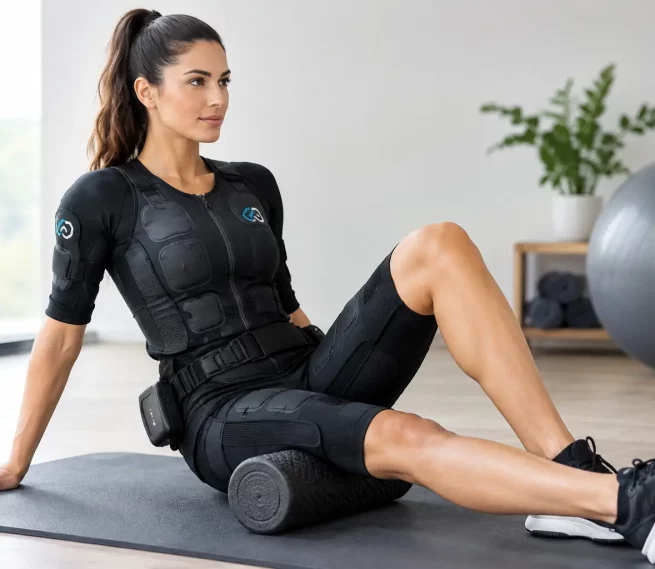
At E-Pulse Studio, coaching-led EMS sessions can be used alongside targeted mobility and strength work to help clients train efficiently while focusing on movement quality. The right plan is personal: it considers your work routine, training history, pain levels, goals and the movements that currently feel difficult. Progress can then be tracked rather than guessed.
Better posture is rarely created by one exercise or one heroic session. Build strength, keep moving during the day and give your body enough repetition to make the improved position feel natural. Start with the movement you can do well today, and let consistency do the powerful work.
 7min
7min