If the scales have barely moved but your clothes fit better, your waist looks tighter and your strength is climbing, you are probably seeing body recomposition in action. That is exactly why understanding how to measure body recomposition matters. If you only track body weight, you can miss some of the most valuable progress your body is making.
Body recomposition means losing fat while building or maintaining muscle. For busy adults, that is often the real goal – not just weighing less, but looking leaner, feeling stronger and moving better. The catch is that progress does not always show up neatly on a bathroom scale. Muscle is denser than fat, so your body can change shape and performance long before your weight reflects it.
How to measure body recomposition without guessing
The most accurate way to track recomposition is to look at several markers together. One number on its own rarely tells the full story. Weight can fluctuate because of water, food intake, hormones, stress or training. A single photo can be misleading if lighting changes. Even body fat readings can shift depending on hydration.
What works best is a simple system. Track body weight, body measurements, progress photos, strength performance and, where possible, body composition scans. When these start moving in the right direction together, you have a far clearer picture of what is really happening.
This is also where many people lose motivation too early. They think nothing is changing because one metric has stalled, when in reality their body is improving across other areas. Good tracking keeps you focused on facts rather than frustration.
Start with body measurements
If you want one practical method you can start this week, use a tape measure. Circumference measurements are affordable, repeatable and often far more useful than people expect.
Measure the same areas each time, ideally first thing in the morning, before food and on the same day each week or fortnight. For most people, the key sites are waist, hips, chest, thighs and upper arms. Men often notice recomposition clearly through the waist and chest. Women often see it through the waist, hips and thighs, though it depends on where they naturally store fat.
The waist measurement is especially valuable. A dropping waist with stable body weight often suggests fat loss while maintaining muscle. If your arms or legs hold steady or even increase slightly while your waist comes down, that can be a very positive sign.
Consistency matters more than perfection. Use the same tape, measure at the same point on the body and avoid pulling it tighter one week than the next.
Use progress photos properly
Photos are one of the most honest ways to see physical change, but only if you take them well. Random mirror shots with different angles, lighting and posture will not help much. You need a repeatable setup.
Take front, side and back photos in the same clothing each time. Stand naturally. Use the same room, same lighting and similar time of day. Monthly photos are usually enough. Weekly pictures can make people overanalyse tiny changes that are not meaningful.
This method is powerful because body recomposition is visual. You may see more shape through the shoulders, glutes or legs, or a leaner look around the waist, before any dramatic change appears on the scales. For clients who feel discouraged by slow weight loss, photos often tell a much better story.
Body weight still matters, just not on its own
Some people swing too far the other way and decide the scale is useless. It is not. It is just incomplete.
Weigh yourself under the same conditions, ideally several mornings per week, then look at the average. Daily fluctuations are normal. Salt intake, sleep, stress, the menstrual cycle and hard training sessions can all shift body weight temporarily.
If your average weight is slowly dropping and your strength is holding or improving, that usually points towards fat loss with muscle retention. If your weight stays similar but your waist decreases and your physique looks firmer, that often points towards recomposition. If your weight rises slightly while measurements improve and performance climbs, you may be adding muscle while reducing fat.
This is why context matters. The number itself is never the full answer.
How to measure body recomposition with body fat scans
If you want a more advanced option, body composition scanning can give you a clearer breakdown of fat mass, muscle mass and overall shape changes. This is particularly helpful if you are training hard, short on time and want measurable evidence that your plan is working.
A good 3D body scan can show changes in circumference, posture and body shape in more detail than a tape measure alone. It also helps remove emotion from the process. Instead of saying, “I think I look a bit different,” you can compare actual data over time.
That said, no scan is flawless. Different machines use different methods, and results can vary depending on hydration, meal timing and testing conditions. The smartest approach is to use the same device consistently and focus on trends rather than obsessing over tiny changes from one scan to the next.
For many people, this kind of tracking creates momentum. When you can see measurable progress, it becomes easier to stay committed.
Strength and performance are part of the picture
Body recomposition is not only about how you look. It is also about what your body can do.
If your lifts are improving, your sessions feel stronger and your recovery is better, that often signals positive adaptation. You might be building muscle, improving neuromuscular efficiency or simply becoming more resilient under load. All of that matters.
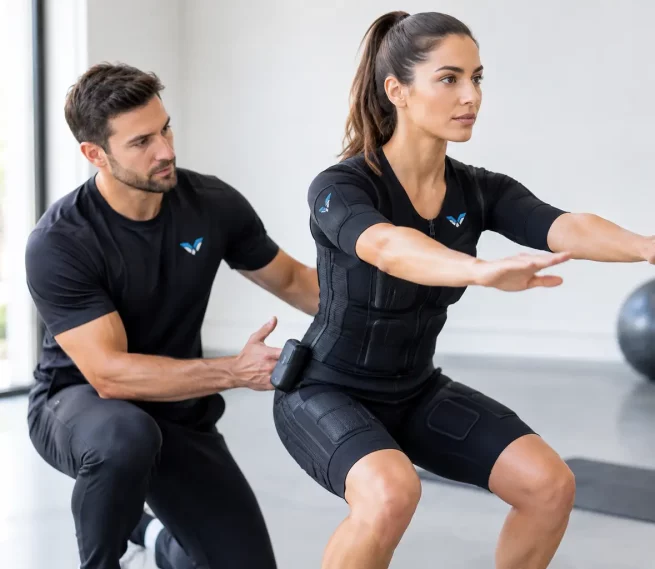
Track a few key performance markers. That might be the weight you can squat, your press-ups, rowing pace, running stamina or how much resistance you can handle in a coached EMS session. If performance is moving upwards while body measurements improve, that is a strong sign your training is working.
This matters especially for people who want more than just aesthetics. Better strength can support posture, reduce aches, improve mobility and make day-to-day life easier. That is real progress, even if your total body weight has not changed much.
Pay attention to fit, feel and recovery
There is a reason experienced coaches ask how your clothes fit, how you are sleeping and how your body feels in training. These are not vague questions. They often reveal changes before your data catches up.
Trousers fitting looser around the waist, jackets sitting better across the shoulders or feeling less breathless on stairs can all point to recomposition. The same goes for improved posture, reduced back discomfort or feeling more stable through your core.
These signs should not replace objective tracking, but they absolutely deserve a place alongside it. They make progress feel real and relevant to daily life.
The biggest mistakes people make
The first mistake is relying on one metric. The second is checking too often. The third is expecting linear progress.
Body recomposition is slower than crash dieting, but it is usually far more sustainable. You are asking your body to do two things at once – reduce fat and build or preserve muscle. That takes patience, enough protein, proper recovery and training that is structured well.
Another common mistake is changing the plan too quickly. If you have only followed your routine for ten days, you do not yet have enough data. Give your body time to respond. In most cases, a four to six week block gives you a much more useful view.
It is also worth saying that recomposition looks different depending on the person. Beginners often see it faster. People returning after a long break can respond quickly too. More advanced trainees may need tighter nutrition, smarter programming and better recovery habits to see the same visible shifts.
A simple tracking system that works
If you want a practical answer to how to measure body recomposition, keep it simple enough to stick to. We recommend using weekly body weight averages, fortnightly tape measurements and monthly progress photos. Add performance notes from your training sessions and, if available, periodic body scans.
That gives you enough information to spot real trends without becoming obsessive. It also suits busy professionals and parents who want results but do not have time to turn fitness into a part-time job.
At E-Pulse Studio, this is one reason coached tracking works so well. When progress is measured properly, clients stop chasing random numbers and start focusing on results they can actually see and feel.
If your goal is to get leaner, stronger and more defined, do not let one stubborn weigh-in convince you that nothing is happening. The body changes in layers. Sometimes the mirror notices first. Sometimes the tape measure does. Sometimes your performance tells the story before anything else. Keep measuring the right things, and your progress becomes much harder to miss.
The best tracking method is the one that keeps you honest, motivated and consistent long enough to let the results show.
 8min
8min