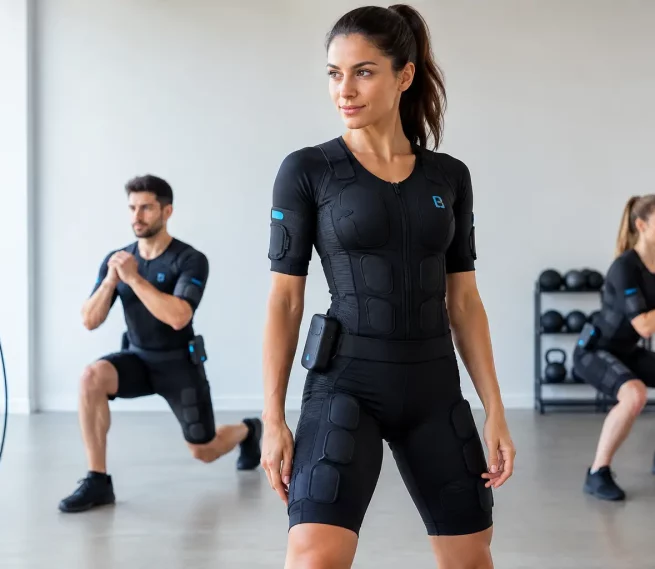
If your week already feels full before Monday lunchtime, the usual advice to spend hours in the gym can feel detached from real life. Time efficient strength training exists for exactly that reason. It gives busy people a realistic way to get stronger, improve body shape, support posture and move better without letting fitness become another part-time job.
The key point is this: shorter does not have to mean softer. A well-designed session can create a serious training effect in far less time than people expect, provided the work is focused, the intensity is appropriate and the programme matches the person in front of the coach.
What time efficient strength training really means
Time efficient strength training is not about rushing through random exercises and hoping sweat equals progress. It is about getting the highest return from the time you can genuinely commit each week.
That usually means prioritising exercises or training methods that recruit a lot of muscle at once, reducing wasted rest, removing fluff from the session and tracking progress properly. Instead of spending 90 minutes drifting between machines, checking your phone and guessing what to do next, you train with intent. Every minute has a purpose.
For a working professional, that might mean two focused sessions a week instead of aiming for five and doing none. For a parent, it could mean a structured 20-minute session that fits between school drop-off and the first meeting of the day. For someone returning from pain or injury, it may mean carefully coached strength work that improves stability and confidence without overloading the body.
Why longer is not always better
Many people still carry the old belief that effective training must be lengthy. In reality, training quality matters more than clocking endless minutes.
Strength gains come from the right stimulus, repeated consistently. That stimulus can be created in different ways depending on your training age, recovery capacity, technique and goals. Beginners often respond extremely well to shorter, high-quality sessions because almost everything is new and the body adapts quickly. More advanced trainees may need more detail and volume, but even then, efficiency still matters.
There is a trade-off. If your goal is elite powerlifting totals or highly specialised athletic development, your training may need more time and more technical practice. But for most adults who want to feel stronger, look fitter, reduce aches and build momentum, a concise plan is often the smartest plan.
This is also where consistency beats heroics. One brilliant two-hour session followed by ten days of nothing will not outperform regular, manageable training. The best programme is the one you can actually keep doing.
The building blocks of effective short sessions
When time is limited, exercise selection becomes far more important. Sessions work best when they focus on movements that train multiple muscle groups at once and challenge the body in a practical way. Squat patterns, hinge patterns, pushing, pulling, rotation control and core stability all earn their place because they deliver more than isolated, low-impact movements.
Coaching matters too. Good coaching trims away indecision. You do not waste half the session wondering what machine is free or whether your technique is right. You train with structure, clear targets and progression. That is one reason premium studio models continue to appeal to busy clients – they remove friction.
Intensity also has to be managed properly. Time efficient training is not about turning every session into a punishment. If intensity is too low, nothing changes. If it is too high, recovery suffers and consistency drops. The sweet spot is enough challenge to trigger adaptation while still allowing you to recover and come back strong.
How EMS fits into time efficient strength training
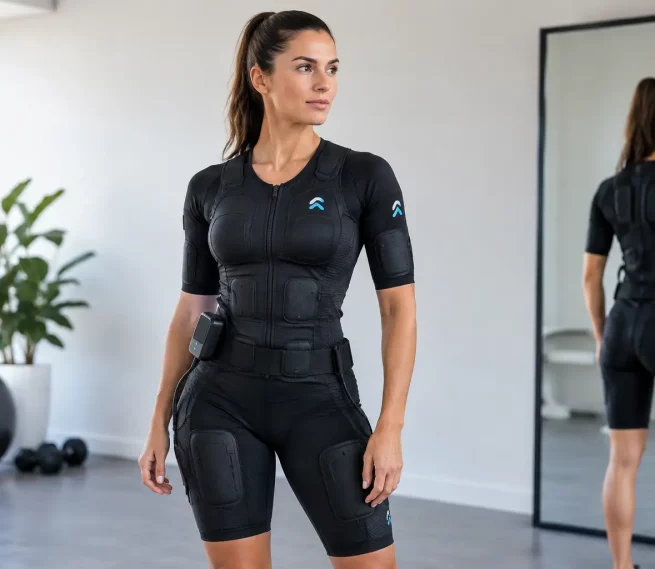
This is where modern methods can make a real difference. EMS personal training is designed around efficiency because it stimulates multiple muscle groups at the same time during guided exercise. In practical terms, that means a short session can create a level of muscular demand that would usually take much longer in a conventional setting.
For clients with packed schedules, that can be a game changer. Instead of trying to carve out repeated hour-long visits to the gym, they can complete focused sessions that fit into real life while still working towards measurable outcomes such as improved strength, body composition, posture and mobility.
It is not magic, and it is not a shortcut that removes effort. You still need proper coaching, commitment and progression. But it can be a highly effective solution for people who want serious input in less time, especially when sessions are personalised and tracked.
At E-Pulse Studio, that coaching-led approach is central. The value is not just the technology itself. It is the combination of advanced training, trainer support and progress measurement that helps clients stay accountable and see what is changing.
Who benefits most from this approach
Busy professionals are the obvious fit because time is often the biggest barrier between intention and action. They do not need another lecture about discipline. They need a model that respects the pace of their week.
Busy parents often benefit for the same reason, but with an added layer of unpredictability. School runs, childcare, work and household logistics can destroy the kind of rigid training schedule many gym programmes assume. Short, coached sessions are easier to maintain when life becomes chaotic.
People dealing with pain, reduced mobility or long breaks from exercise can also do very well with time-efficient strength work, as long as it is tailored properly. A shorter session can feel far less intimidating, and coaching can help rebuild confidence while improving movement quality.
Then there are the performance-focused clients. Runners, golfers and combat athletes do not always need endless gym sessions. Often they need targeted strength work that supports their sport, improves force production and addresses weak links without stealing too much energy from their main training.
What results can you realistically expect?
That depends on where you are starting, how often you train and whether your nutrition and recovery support the process. But realistic short-term wins often include feeling stronger in everyday movement, better posture, more muscle tone, improved training confidence and less of the stop-start pattern that holds so many people back.
Body composition can improve with shorter training sessions, but it is worth being honest here: exercise alone is rarely the full answer. If fat loss is the goal, your food choices, sleep and stress levels matter. Time efficient strength training supports that goal very well because it helps preserve or build lean muscle, which is valuable during any body transformation phase.
If pain reduction is part of the goal, the same rule applies – it depends. Strength training can be hugely helpful for certain types of back pain, poor posture and muscular weakness, but it needs to be appropriate to the individual. Good assessment and progression are essential.
Why measurement keeps people motivated
One of the biggest reasons people quit training is that they cannot clearly see progress. They may feel they are trying hard, but without data or structure, everything starts to feel vague.
That is why measurable tracking matters. Strength improvements, body composition changes, mobility gains, postural improvements and fitness markers all help turn effort into evidence. When clients can see movement in the right direction, motivation becomes more durable.
This is particularly useful for people who have been disappointed by generic gym memberships. A busy person does not just want access to equipment. They want reassurance that their limited time is being well spent.
The mistakes that make short training ineffective
The first mistake is confusing short with casual. A 20-minute session can absolutely work, but only if it is planned. Wandering through a few token exercises will not produce much.
The second is doing too much too soon. Some people feel guilty about training less often, so they try to crush themselves in every session. That usually backfires. Soreness is not the goal. Progress is.
The third is ignoring recovery. Efficient training still needs support from sleep, hydration, decent nutrition and sensible scheduling. If you train hard but recover badly, results slow down.
The fourth is chasing novelty over progression. Constantly changing exercises may keep things interesting, but your body needs repeat exposure to improve. There should be enough consistency in the programme to measure whether you are genuinely getting stronger.
A smarter standard for busy people
The old model of fitness often rewards people with spare time. Real life does not. Most adults need training that respects work, family, energy levels and the fact that motivation is not endless.
That is why time efficient strength training has become so relevant. It offers a practical standard rather than an idealised one. Train with focus. Use methods that deliver more in less time. Get coached properly. Measure what matters. Stay consistent enough for the results to compound.
If you have been telling yourself you will train properly when life calms down, it may be time to change the question. Not how can I find more hours, but how can I make the hours I have count more?
 7min
7min