You can feel stronger, look leaner and still wonder whether your training is actually working. That is exactly where a 3d body scan for fitness progress changes the game. Instead of relying on the scales, mirror guesses or how tight your jeans feel, you get a clearer picture of what is changing in your body and where.
For busy people, that matters. If you are fitting training around work, school runs, travel or recovery from pain, you do not want vague reassurance. You want evidence. You want to know whether body fat is dropping, whether muscle is building, whether posture is improving and whether the effort you are putting in is moving you closer to your goal.
What a 3D body scan actually shows
A good scan does far more than produce a flashy image of your shape. It captures body measurements, tracks circumference changes and helps map shifts in body composition over time. Depending on the system used, it can also highlight posture, symmetry and how your body is changing in specific areas rather than just as a total number.
That is the key difference. A standard scale can tell you your total weight on one particular day. It cannot tell you whether you have lost fat around the waist, added muscle through the legs or improved the way you stand and move. A 3D scan gives more context, and context is what helps people stay motivated and make better decisions.
For someone focused on fat loss, this can be a huge relief. Weight does not always fall in a straight line. Water retention, hormonal changes, stress and poor sleep can all affect the number on the scale. A scan may show that your waistline is reducing and your shape is changing even when body weight has barely moved.
Why a 3D body scan for fitness progress is more useful than the scales
The scales are not useless. They are just limited. If you only measure success by total body weight, you can miss the wins that matter most.
Take someone starting a structured training plan. In the first few weeks, they may lose body fat while also improving muscle tone. The scale might stay stubbornly similar, which often leads people to think nothing is happening. Then motivation drops, consistency slips and good results get cut short. A 3D body scan can show visible progress earlier because it captures body shape and measurement changes that scales miss.
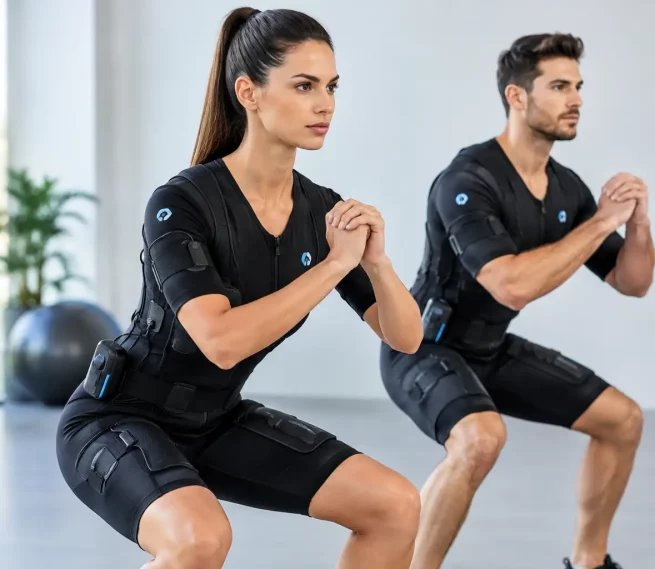
This is especially valuable for people doing resistance training, EMS sessions or any programme designed to improve strength, muscle activation and body composition. Those methods are not just about getting lighter. They are about changing what your body is made of and how it performs.
There is also a psychological benefit. When clients can see real changes in black and white, they stop second-guessing every meal, every workout and every fluctuation. They become more consistent because the process feels real.
Where scans help most in a transformation journey
The biggest advantage of scan data is that it gives direction. It helps trainers and clients move beyond general statements like “I want to tone up” and turn them into something measurable.
Fat loss and body reshaping
If your goal is to lose fat, a scan can show where measurements are coming down and how your overall shape is changing. That matters because body fat rarely comes off evenly. You may notice your midsection reduce first, or your hips, or your upper back. Seeing those shifts helps you stay patient with the areas that are slower to change.
Muscle gain and tone
If your goal is to build muscle or look more defined, you need more than a lower number on the scales. A scan can help show whether your frame is changing in the right way. Even small improvements in key areas can make a visible difference over time.
Posture and symmetry
Many people train because they want less back pain, better movement or a more upright posture. A scan can help highlight imbalances and posture trends, which is useful if your programme includes mobility, rehab-style work or targeted strengthening.
Motivation through proof
This may be the most underrated part. People stick to plans when they can see that those plans are working. A proper scan gives you a checkpoint. It turns effort into evidence.
A 3D body scan for fitness progress is not magic – but it is smart
A scan is a tool, not a miracle. It does not replace good coaching, strong training, sensible nutrition or recovery. What it does is remove some of the guesswork.
That distinction matters. Some people expect one scan to tell them everything. In reality, the real value comes from comparing scans over time under similar conditions. If you scan regularly and interpret the results properly, patterns start to emerge. That is when the information becomes genuinely useful.
It also depends on what you do with the data. If a scan shows that progress has stalled, that is not bad news. It is feedback. Maybe recovery needs attention. Maybe training intensity needs adjusting. Maybe nutrition has been less consistent than expected. Clear measurements help you make practical changes instead of hoping things improve on their own.
What to expect from your results
The best results are rarely dramatic overnight transformations. More often, they are steady improvements that compound over a few weeks and then become obvious over a few months.
One client may see their waist and hip measurements reduce while their weight changes only slightly. Another may improve posture and muscle tone before they notice a major drop in body fat. Someone returning from injury may show better alignment, movement quality and physical confidence long before they chase aesthetic goals.
That is why coaching matters alongside the scan itself. Raw numbers do not tell the whole story. They need to be read in the context of your training age, lifestyle, stress, sleep, injury history and goals.
At E-Pulse Studio, this kind of tracking fits naturally with a coached model. Clients are not left staring at a printout trying to work out what it means. The value is in understanding what has changed, why it has changed and what happens next.
How often should you get scanned?
More is not always better. Daily or weekly scans usually create noise rather than clarity. The body needs time to adapt.
For most people, a scan every four to six weeks is sensible. That gives enough time for meaningful progress to show up while keeping momentum high. If someone is early in a transformation phase, highly goal-focused or returning after injury, timings may vary slightly. But the principle stays the same: track often enough to stay accountable, not so often that normal fluctuation becomes distracting.
Consistency matters here too. Try to scan under similar conditions each time. Time of day, hydration, meals and training can all affect readings. If you want data you can trust, your process has to be consistent.
Who benefits most from this type of tracking?
Almost anyone can benefit, but it is especially useful for people who have felt frustrated by traditional progress measures.
If you are a busy professional who wants maximum return from limited training time, scans provide reassurance that your sessions are doing their job. If you are a parent trying to rebuild fitness after a long stop-start period, they help you see progress before confidence fully returns. If you are dealing with pain, posture issues or reduced mobility, they can show changes that matter beyond aesthetics.
They also suit more advanced clients. Runners, fighters, golfers and strength-focused members often want detail. They want to know whether their body is adapting in a way that supports performance as well as appearance. A scan gives that conversation more substance.
The real win is better decision-making
People often think the best part of a body scan is the visual reveal. That is powerful, but the bigger win is what happens after. Better data leads to better choices.
You stop panicking over random weight changes. You stop changing your plan too quickly. You stop assuming that hard work is not paying off just because progress does not look dramatic in the mirror on a Tuesday morning.
Instead, you start training with more confidence. You make adjustments based on evidence. You stay patient when patience is required and push harder when the data says you are ready.
That is what real progress tracking should do. It should keep you focused, honest and encouraged.
If you are serious about changing your body, feeling stronger and making your training time count, a 3D scan is not just a nice extra. It is one of the clearest ways to see whether your effort is producing the result you came for – and that kind of clarity can keep you moving when motivation alone is not enough.
 7min
7min