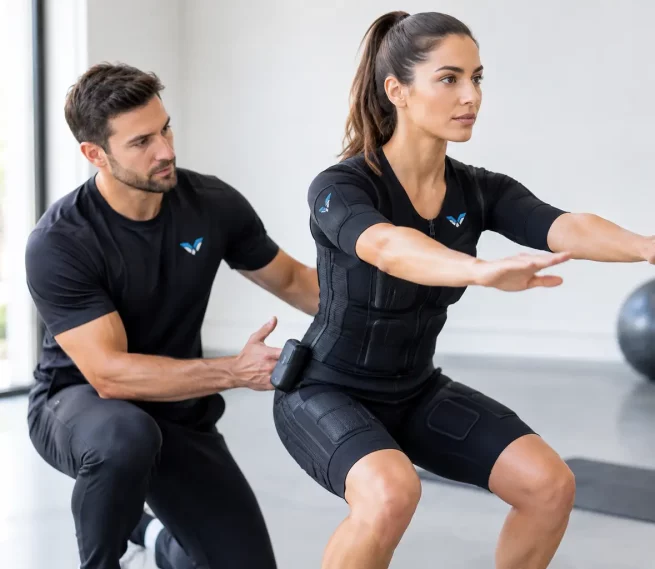
When sleep is patchy, energy changes from one day to the next and your body no longer responds as it once did, motivation can disappear quickly. Menopause EMS training gives you a focused, coached way to keep strength work in your week without spending hours on the gym floor.
For many women, this stage is not about chasing a smaller number on the scales. It is about feeling strong getting up from the floor, carrying shopping without niggles, moving with confidence and recognising yourself in the mirror again. A smart training plan should respect that – not demand that you train harder just because your body feels different.
Why strength matters during menopause
Hormonal change can affect muscle mass, bone health, body composition, recovery, mood and sleep. None of this means that feeling fit and capable is off the table. It does mean that the old approach of endless cardio, skipped meals and punishing workouts can become harder to sustain and less useful for the result you want.
Strength training is one of the most practical tools available. Building and maintaining muscle supports everyday movement, posture and long-term independence. It can also help you create the firmer, more athletic shape that many women want, while improving the confidence to do more outside the studio.
The challenge is consistency. Busy professionals, parents and business owners often have limited time, interrupted sleep and a long list of people to look after before themselves. A programme only works if it fits real life.
What menopause EMS training can offer
EMS stands for electro muscle stimulation. During an EMS session, wearable equipment delivers controlled electrical impulses to key muscle groups while you perform guided movements. Your trainer sets the intensity, checks your technique and adjusts the session around your ability, goals and how you are feeling that day.
At E-Pulse Studio, sessions are designed to be efficient: 30 minutes of coached, purposeful work rather than a vague hour spent moving between machines. The technology is not a replacement for effort or good coaching. It is a way of making carefully selected movements more demanding, so you can train multiple major muscle groups in a short window.
That can be particularly valuable when menopause symptoms make time and recovery feel less predictable. Some clients arrive wanting a clear plan after months of inconsistent exercise. Others are already active but want to improve strength, posture, body composition or performance without adding more long sessions to their week.
The result is not magic and it is not identical for everyone. Progress depends on starting point, attendance, nutrition, sleep, stress, medication and the wider programme. But a short, structured session can make regular strength training feel achievable again.
The benefits people notice first
The first win is often not aesthetic. It may be feeling steadier on stairs, less stiff after a desk-heavy day or more capable during a weekend walk. When you train with progressive resistance and good technique, your body has a reason to adapt.
Clients frequently value the accountability just as much as the equipment. You have a booked session, a trainer watching your form and a programme that progresses when you are ready. That matters when hot flushes, low energy or poor sleep make it tempting to cancel another workout.
Over time, a well-managed plan may support:
- stronger muscles and improved everyday function
- better posture, mobility and body awareness
- a more toned appearance as body composition changes
- improved confidence with movement and exercise
- a consistent training habit that does not take over your diary
For women returning after a long break, those foundations are significant. For experienced exercisers, EMS can be a useful addition to a wider routine that includes walking, running, Pilates, sport or conventional resistance training.
A coached plan beats a one-size-fits-all workout
Menopause is not one experience. One person may feel powerful and want to push strength targets. Another may be dealing with joint discomfort, anxiety, pelvic-floor concerns, fatigue or a loss of confidence after a difficult few years. The right training dose changes accordingly.
Your first sessions should be about learning how your body responds. Intensity does not need to be high to be effective, especially at the beginning. A skilled trainer can use simpler movements, longer recovery periods and lower stimulation settings while you build tolerance and technique.
As confidence improves, training can progress through resistance, range of movement, exercise selection and control. Squat patterns, hinges, pulling, pushing, lunges, core stability and posture work all have a place, but the precise mix depends on you. The goal is challenging work that leaves you feeling capable, not flattened for the next three days.
This is where the premium studio model makes a genuine difference. You are not left to guess the settings, copy a workout from social media or push through discomfort because no one is paying attention. You are coached, monitored and encouraged throughout.
How often should you train?
For most people, one or two EMS sessions a week can be a realistic starting point, particularly if you are new to structured strength training or returning after time away. Recovery matters. More is not always better when your sleep, stress and symptoms are already demanding attention.
Between sessions, keep movement simple and sustainable. A brisk walk, mobility work, a swim, cycling or a class you genuinely enjoy can all support your wider fitness. Daily movement also helps prevent the all-or-nothing pattern where exercise only happens during a perfect week.
Food matters too. Enough protein, regular meals, hydration and a sensible approach to supplementation can support recovery and body-composition goals. There is no need for extreme restriction. If fat loss is part of your goal, the most effective approach is usually one you can maintain alongside work, family and social life.
Track the changes that scales miss
The scales can be frustrating during menopause. Fluid shifts, changing body composition and normal day-to-day variation can hide progress that is happening elsewhere. That is why measurable tracking is useful.
3D body scanning can help show changes in shape and measurements over time, while strength markers, mobility, photos, clothing fit and energy levels add valuable context. A client who feels stronger, stands taller and has improved their waist measurement has made real progress, even if their body weight has barely changed.
Set targets that mean something to you. It might be completing a full day without back stiffness, feeling confident in sleeveless clothes on holiday, improving your golf swing or having enough energy left for the children after work. Specific goals make training more personal and far more motivating.
When to get medical advice first
EMS training should feel controlled and appropriately challenging, not alarming. If you have a medical condition, a cardiac device, uncontrolled blood pressure, a history of seizures, severe osteoporosis, recent surgery or are unsure whether exercise is suitable, speak with your GP or relevant clinician before starting. Your trainer should also know about injuries, symptoms and medications that could affect your programme.
Be open about how you feel at every session. A poor night’s sleep, a migraine, unusual fatigue or a flare-up in pain may call for a lighter session, mobility-focused work or rest. Adjusting is not failure. It is intelligent training.
You do not need to accept feeling weaker, less mobile or disconnected from your body as the inevitable price of menopause. Start where you are, train with purpose and give yourself enough time to build momentum. A supportive, coached session in Peterborough or Upminster could be the appointment in your week that helps you feel strong again.

 8min
8min