Thirty minutes can be enough to make training count when every movement has a purpose. Electro muscle stimulation training combines coached functional exercise with precisely controlled electrical impulses, creating an intense full-body workout without asking you to spend your evenings hopping between machines in a crowded gym.
For busy professionals, parents and anyone who has repeatedly put their own fitness at the bottom of the list, that changes the equation. The question is not whether you can find two hours. It is whether you can commit to a focused half-hour and let a trainer take care of the structure, progression and accountability.
What is electro muscle stimulation training?
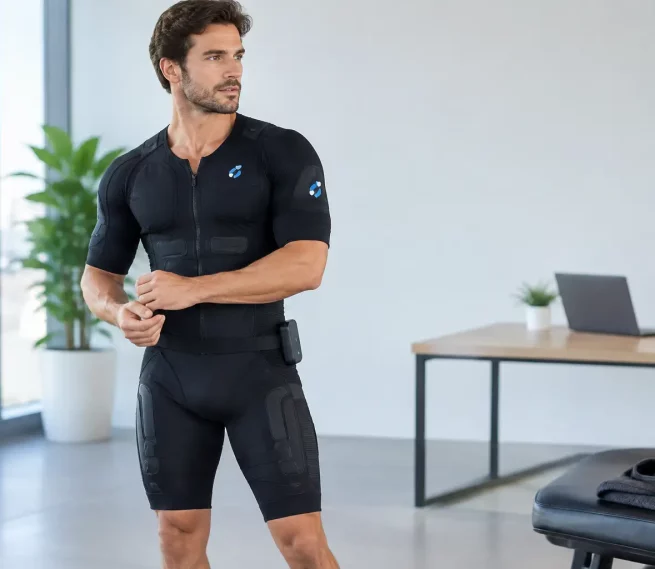
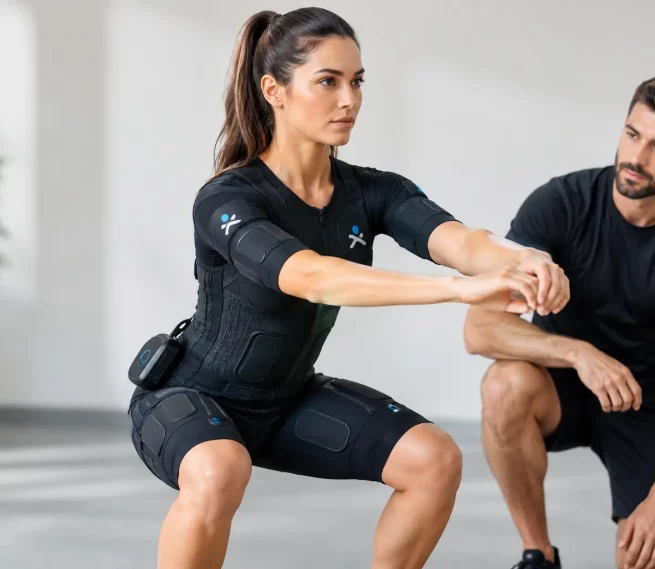
EMS training uses a wearable suit with electrodes positioned over major muscle groups. During a session, the suit sends low-frequency electrical impulses that encourage muscles to contract while you perform guided exercises such as squats, lunges, rows, presses, core work and mobility movements.
Your body already uses electrical signals from the nervous system to move. EMS adds an external stimulus alongside your voluntary contraction. In practical terms, that means a simple squat can demand more from the legs, glutes and core than the same movement performed without stimulation.
It is not a passive shortcut. You still move, brace, breathe and work. The difference is the depth of muscular recruitment and the efficiency of a coached, full-body format. A qualified trainer adjusts the intensity for each area of the body, so your stronger muscle groups are challenged without overwhelming areas that need more care.
Why a 30-minute EMS session can feel so demanding
Traditional training often has plenty of downtime: travelling to the gym, waiting for equipment, deciding what to do next and training one or two areas at a time. Electro muscle stimulation training is designed to reduce that drift. Sessions are short because the work is concentrated, not because standards are lowered.
A typical session alternates short work intervals with recovery periods. You may be performing a controlled squat while the legs and glutes are stimulated, then moving into a pull, press or anti-rotation exercise that challenges the upper body and core. The trainer is there throughout, correcting technique and adjusting the programme as you go.
This approach can suit someone who has not trained for years just as well as it can suit an experienced runner, golfer or combat athlete. The exercises, intensity and focus should be different. A beginner may start with movement quality, posture and confidence. An experienced client may use EMS to increase training stimulus, support conditioning or target strength around a specific performance goal.
The results people are really looking for
Most people are not searching for a clever bit of fitness technology. They want to feel stronger going upstairs, look more defined in their clothes, reduce the frustration of a stiff back, or see proof that their effort is moving them forward.
With consistent training, appropriate nutrition and recovery, EMS can support improvements in strength, muscle tone, body composition, posture and mobility. Because the whole body is involved, it can be a useful option for people whose schedules make frequent long workouts unrealistic. It may also complement endurance training by adding a strength-focused session without a large time commitment.
The key phrase is with consistency. One hard session does not transform a body, and no responsible coach should promise that it will. Results depend on your starting point, training frequency, sleep, stress, food intake, daily movement and the goal you are pursuing. Someone aiming for fat loss needs a sustainable calorie deficit. Someone rebuilding after time away from exercise needs gradual progression. Someone chasing better sporting performance needs a programme that works alongside their sport rather than competing with it.
At E-Pulse Studio, progress is not left to guesswork. Regular 3D body scanning can help track changes in body shape and measurements alongside performance markers, how clothes fit, movement quality and how you feel day to day. The numbers matter, but so does being able to pick up your children comfortably, finish a round of golf without stiffness or feel confident in a fitted shirt again.
EMS for mobility, recovery and pain support
If you have niggling back discomfort, poor posture from desk work or reduced mobility after a period of inactivity, the thought of high-impact exercise may be off-putting. EMS training can offer a controlled environment in which to build strength with low external loading. You are not necessarily lifting a heavy barbell on day one, but the muscles can still receive a meaningful challenge.
That said, EMS is not a medical treatment and pain is never something to push through blindly. Persistent, severe or unexplained pain should be assessed by an appropriate healthcare professional. Your coach should also know about injuries, operations, medication and relevant health conditions before you begin.
For the right person, a carefully adapted session can focus on glute activation, core control, hip mobility, upper-back strength and better movement patterns. Those details matter. They are often what make everyday activities feel easier and help clients return to more conventional training with a stronger foundation.
Who should take extra care?
EMS is not suitable for everyone. People with implanted electronic devices such as pacemakers, certain heart conditions, epilepsy, pregnancy, acute illness or other contraindications should seek medical guidance and follow studio screening requirements. If you are returning from injury or surgery, clearance from the clinician managing your care is sensible.
A professional studio will screen you properly rather than treating every body the same. That is part of the value of trainer-led EMS: the session can be adapted in real time, and intensity is never a competition.
What your first EMS training session should look like
Your first session should feel reassuringly thorough, not rushed. Before the suit is switched on, your trainer should discuss your goals, activity history, health considerations and any areas that need special attention. You should understand what the sensations will feel like and how to communicate during the session.
The impulses are often described as a strong, rhythmic tightening or tingling in the muscles. They should feel challenging, but not sharp, painful or alarming. A good trainer starts conservatively, checks in frequently and builds intensity over future sessions as your tolerance and technique improve.
Expect simple movements done well. You do not need a catalogue of complicated exercises to get a hard workout. A controlled squat, hinge, row, press and core hold reveal plenty about your movement and create a strong platform for progress. After the session, you may feel muscle fatigue similar to a demanding strength workout, particularly during your first few visits.
Hydration, recovery and spacing sessions appropriately are all part of the plan. More is not automatically better. Because EMS sessions are intense, your coach should recommend a frequency that matches your fitness level, wider training routine and recovery capacity.
How to get more from electro muscle stimulation training
The clients who tend to make the clearest progress treat their appointment as a non-negotiable part of their week. They arrive hydrated, communicate honestly with their trainer, keep their everyday activity up and avoid expecting the session to compensate for every other habit.
Food matters too. If your goal is body recomposition, enough protein and a realistic nutrition plan support the training you are doing. If you are training for energy, resilience or performance, under-fuelling can make every session feel harder than it needs to be. Supplements can be useful where appropriate, but they should support the basics rather than replace them.
It also pays to choose a target that means something beyond a number on the scales. Better posture during long workdays, a faster 5K, feeling stronger on holiday, less hesitation when playing with the kids or being able to train consistently for three months are all powerful reasons to keep going when motivation dips.
The most effective training plan is rarely the one that looks most impressive online. It is the one you can repeat, progress and recover from. If a focused 30-minute coached session removes the usual barriers and gives you evidence that you are getting stronger, that is a very good place to start.
 7min
7min