A fat reduction coaching programme should do more than hand you a meal plan, point you towards a treadmill and hope motivation appears on Monday morning. If your diary is already full, you need a plan that works around real life: meetings, school runs, travel, tired evenings and the weeks when routine disappears. The right coaching gives you a clear starting point, efficient training, honest feedback and enough structure to keep moving when enthusiasm dips.
For many people, fat loss is not about a lack of effort. It is about using effort in the wrong places. Long gym sessions done inconsistently, harsh diets that cannot survive a weekend, and scales that move up and down without explaining why can leave even determined people frustrated. A coached approach replaces guesswork with measurable actions.
What a fat reduction coaching programme should do
Fat reduction is not the same as simply losing weight. Weight can change through water, food volume and muscle tissue as well as body fat. A good programme focuses on improving body composition: reducing fat while protecting, and where appropriate building, lean muscle. That matters for how you look, how strong you feel, how your clothes fit and how well you maintain your result.
The programme should begin with a proper conversation about your goal, lifestyle, training history, injury concerns and available time. Someone returning to exercise after back pain needs a different approach from a runner seeking better race performance, even if both want to reduce body fat. Your plan should be personal enough to meet you where you are, but clear enough that you know exactly what to do next.
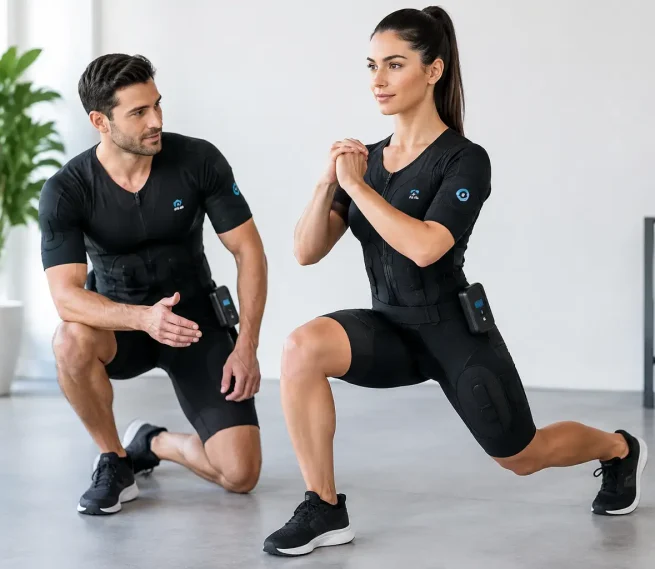
At E-Pulse Studio, coaching can combine 30-minute EMS sessions with personalised support and 3D body scanning. This gives clients a time-efficient way to train major muscle groups under expert supervision, while tracking changes beyond a single number on the scales. For a busy professional or parent, that clarity can make the difference between another short-lived health kick and a routine that finally sticks.
Train to keep muscle, not just burn calories
Extreme calorie restriction can make the scales drop quickly, but it can also leave you flat, hungry and more likely to lose muscle along the way. Muscle is valuable during fat reduction because it supports strength, function and the firmer, more athletic shape many people actually want.
That is why resistance-based training belongs at the centre of an effective plan. EMS training is designed to increase the intensity of controlled exercises by stimulating muscles alongside your voluntary movement. In a coached setting, the trainer can adapt the session to your ability, mobility and confidence, rather than expecting you to navigate a busy gym floor alone.
EMS is not a substitute for every form of movement. Walking, sport, mobility work and cardiovascular training can all have a place, depending on your goal. But for people who cannot commit to several lengthy gym visits each week, a focused 30-minute coached session can be a practical foundation. The key is consistency and progressive challenge, not punishment.
Make food support the plan
You do not need to live on chicken, broccoli and willpower. You do need an eating pattern that creates an appropriate calorie deficit without making you miserable or undermining training recovery. The best nutritional strategy is usually one you can repeat through ordinary weekdays and social weekends.
Coaching should help you establish reliable basics: regular protein-rich meals, sensible portions, more fibre, enough fluids and a realistic approach to treats and eating out. The exact details depend on the person. A client who skips breakfast and raids the biscuit cupboard at 4 pm needs a different solution from someone who eats well all week but drinks heavily every Friday and Saturday.
Organic supplementation may support general wellbeing and recovery where it fits your needs, but it is not a magic answer. Supplements cannot outwork an inconsistent diet, poor sleep or a plan that asks too much of you. They should be a useful addition, not the main event.
Why measurement changes motivation
The bathroom scale has its place, but it is a blunt tool. Salt, stress, hormones, digestion and hydration can all affect it from one day to the next. If you rely only on body weight, you may miss meaningful progress and lose heart just when the plan is working.
A 3D body scan provides a fuller picture by tracking measurements and shape changes over time. Combined with progress photos, how your clothing feels, training performance and energy levels, it gives you evidence that your work is paying off. Seeing your waist measurement reduce while your strength improves is far more useful than panicking over a small fluctuation on a Tuesday morning.
Regular check-ins also create accountability without judgement. If progress slows, the answer is not automatically to eat less and train harder. A coach looks at the full picture: adherence, sleep, stress, steps, recovery, portion creep and whether the original target was realistic. Sometimes the most productive adjustment is a better evening routine or two additional walks each week, not another restrictive rule.
The first 12 weeks: what realistic progress looks like
The early weeks are often about building momentum. You learn the movements, settle into a training rhythm and identify the habits that have quietly been holding you back. Some clients see quick changes in energy, posture and bloating before there is a dramatic visual change. Others notice that stairs feel easier, their back feels less stiff, or they are no longer constantly thinking about food.
As the weeks progress, body composition changes become easier to spot through scans, measurements and fit of clothing. Results vary. Starting point, medical history, menopause, medication, sleep quality, stress and consistency all matter. Anyone promising identical results for every person is selling a shortcut, not coaching.
What can be expected is a structured process. You train with purpose, receive guidance that fits your life, track the right markers and make adjustments based on evidence. That is far more powerful than restarting a generic plan every few months.
When a faster approach is not the better approach
There are times when pushing hard is not sensible. If you are recovering from injury, managing chronic pain, returning after a long break or dealing with high stress, your programme may need to prioritise mobility, confidence and recovery first. This is not a delay to your goal. It is how you build a body capable of progressing safely.
Likewise, a demanding training block might suit someone with a clear deadline, but only if food intake, sleep and recovery can support it. A sustainable programme should flex with your life. The goal is to develop habits you can maintain after the initial push, not spend twelve weeks white-knuckling your way through a plan you cannot wait to abandon.
Is coaching right for you?
A fat reduction coaching programme is particularly valuable if you are short on time, tired of conflicting fitness advice or know what to do in theory but struggle to follow through alone. It suits beginners who want reassurance and structure, as well as experienced exercisers who have hit a plateau and want more precise feedback.
You do not need to be fit before you begin. You need to be willing to start honestly. A good coach can work with low confidence, limited mobility and a chaotic diary. What they cannot do is create lasting change without your participation. The strongest results come from a partnership: expert guidance on one side, consistent action on the other.
Choose a programme that measures more than your weight, respects your starting point and makes progress feel achievable in the time you genuinely have. Small, repeatable actions can change far more than an all-or-nothing promise ever will – and your next session is a practical place to begin.
 7min