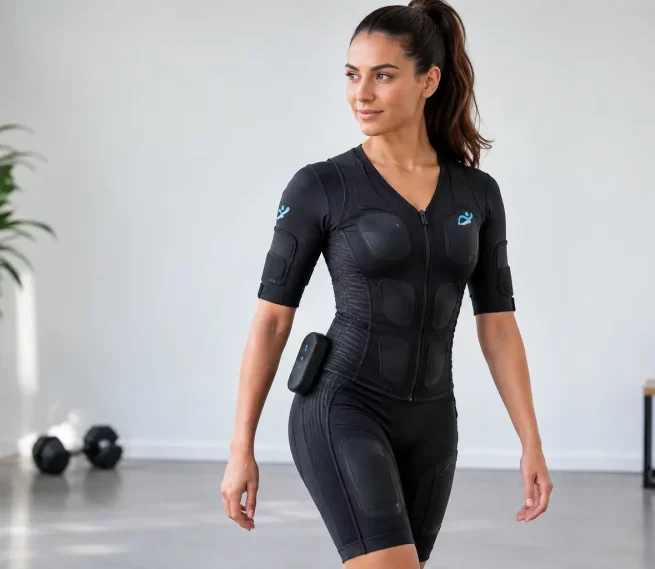
The first sign of progress is rarely a dramatic stretch or a perfect squat. For most people who spend the day at a desk, office worker mobility results begin with smaller wins: getting out of a chair without feeling locked up, turning to reverse the car more comfortably, or finishing the working day with less tension through the neck and lower back.
That matters because desk stiffness is not simply an inconvenience. Hours of sitting, screen work, commuting and rushed routines can leave the hips, upper back and shoulders doing less of the movement they were designed for. The body then compensates. Posture changes, certain muscles become underused, others work overtime, and everyday movement starts to feel more restricted than it should.
At E-Pulse Studio, we see this regularly with professionals who are not short of ambition – they are short of time. The right approach is not to punish a stiff body with random workouts. It is to rebuild strength, control and confidence in movement through a programme that fits real working life.
Why mobility can decline in office-based work
Sitting itself is not the enemy. The problem is remaining in one position for too long, then expecting the body to switch instantly into action at the gym, on the golf course or while carrying shopping. A desk-based routine often limits hip extension, reduces upper-back movement and encourages the head to drift forwards towards the screen.
Over time, this can show up as tight hip flexors, rounded shoulders, reduced overhead range and a lower back that feels constantly switched on. It can also affect training. If you cannot comfortably hinge, rotate or squat, it is harder to build strength with good technique.
Mobility is more than flexibility. Being able to pull your knee towards your chest is one thing; controlling that position, producing force from it and moving without discomfort is another. This is why passive stretching alone does not always create lasting change. Your body needs a reason to use its new range.
Office worker mobility results that matter
The most useful results are practical, measurable and relevant to your routine. Better posture is valuable, but it should mean more than looking taller in a photo. It should feel like less effort to sit upright in a meeting, stand for longer or walk after a day at the laptop.
Early progress often includes improved awareness. You may notice when your shoulders are creeping upwards, when you are shifting into one hip, or when your lower back is taking over during a movement. That awareness gives you the chance to correct the pattern before it becomes another long day of tension.
As strength and movement control improve, many clients aim for changes such as:
- easier squatting, bending and reaching in everyday tasks
- less stiffness after long periods at a desk or in the car
- greater hip and shoulder movement during exercise
- improved core control and posture under fatigue
- more confidence returning to activities such as running, golf or strength training
Pain is more individual. Some aches are related to deconditioning, muscle tension or poor movement habits, while others need assessment from an appropriate healthcare professional. A quality coaching programme does not promise to diagnose or cure pain. It works within safe limits, adapts training and helps build the strength, stability and mobility that can support better movement.
Why strength is part of the mobility solution
This is where many office workers lose momentum. They stretch their hips for a few minutes, feel temporary relief, then return to the same desk position and the same lack of muscular support. The range disappears because the body does not yet own it.
Targeted strength training helps change that. Stronger glutes can support hip movement and pelvic control. A stronger upper back can help counter the rounded, forward position common during screen work. Better trunk strength can make bending, lifting and rotational movements feel more stable.
EMS training can be particularly useful for time-pressed people because it combines coached movement with whole-body muscle activation in a 30-minute session. The technology is not a shortcut around good coaching or correct technique. It is a tool that can increase training intensity while a trainer guides your position, range and progression.
For a beginner, that may mean starting with controlled squats, hinges, lunges, pulling patterns and core work at an appropriate range. For someone already active, it may mean building strength in the positions that support their sport or make their existing training more efficient. The programme depends on your starting point, goals and any relevant limitations.
What progress can look like over time
Mobility does not follow a neat timetable. A person sleeping badly through a demanding work period will respond differently from someone who already walks daily and trains twice a week. Consistency, recovery, stress levels and previous injuries all influence the pace of change.
In the first few sessions, the focus is often on learning how to move well. Clients may feel muscles they have not properly used for years, particularly through the glutes, upper back and deep core. The goal is not to leave you exhausted for the sake of it. It is to create a strong training stimulus without making a busy week harder to manage.
After several weeks of consistent training, people commonly report that transitions feel easier: rising from the sofa, walking upstairs, putting on shoes, reaching for items overhead or getting moving after a long call. That is a better indicator than chasing extreme flexibility. Useful mobility should transfer into life.
Over a longer period, measurable improvements can come through better movement quality, increased strength and changes in posture. At E-Pulse Studio, 3D body scanning can help track physical changes alongside performance markers and how you actually feel day to day. Numbers matter, but so does the moment you realise your back has not dominated your thoughts all week.
The desk habits that protect your progress
A focused training session is powerful, but it cannot completely cancel out ten hours in one position. You do not need a complicated office routine. You need a few repeatable movement breaks.
Stand up between calls where possible. Walk for two minutes after lunch rather than scrolling at your desk. Change your position regularly, even if your workstation is well set up. A brief set of controlled shoulder rolls, chest-opening reaches, bodyweight squats or hip movements can be enough to interrupt the stiffness cycle.
The trade-off is realism. Trying to schedule a 20-minute mobility routine every day may sound ideal, but many people will not maintain it. Five minutes done consistently, plus two coached sessions each week where appropriate, is far more valuable than an ambitious plan that disappears after Monday.
When mobility work needs a different approach
Not every restriction should be pushed through. Sharp pain, numbness, tingling, unexplained weakness, a recent injury or symptoms that worsen with exercise are reasons to seek appropriate medical advice. Training should support your recovery plan, not compete with it.
There is also a difference between feeling stiff and having a significant limitation. If one side is dramatically different from the other, or a movement has become increasingly painful, a personalised assessment is the sensible first step. Good coaching means knowing when to reduce range, change the exercise or refer out.
For many office workers, though, the answer is not more rest. It is a structured reintroduction to movement, built around enough challenge to create change and enough support to make it sustainable.
Make mobility fit your working week
The best programme is one you can keep doing during deadlines, school runs, travel and the unpredictable weeks that usually derail fitness plans. That is why short, coached sessions can make such a difference. They remove the guesswork, give you accountability and create a clear moment in the week when your body gets attention too.
If your desk routine has made you feel older, tighter or less capable than you are, start with an honest assessment of how you move now. Progress does not need to begin with a huge lifestyle overhaul. It can begin with one well-coached session, a little more movement between meetings and the decision to stop accepting stiffness as part of the job.
 7min