That familiar feeling of needing five minutes to straighten up after your desk, a long drive or a hard training session is more than an inconvenience. It can make exercise feel like a bigger hurdle than it needs to be. So, does EMS ease stiffness? For many people, it can help reduce the sensation of tightness and get muscles moving more comfortably – particularly when it is used as part of a coached mobility, recovery and strength plan.
EMS is not a magic switch, and stiffness is not always caused by the same thing. The right approach depends on whether you are dealing with post-workout soreness, long hours at a desk, reduced mobility, an old injury or persistent pain. That distinction matters. At E-Pulse Studio, the focus is on using EMS training intelligently: building strength, improving movement quality and helping you feel more capable in everyday life.
Why stiffness happens in the first place
Stiffness is often your body’s response to doing too much, doing too little, or repeating the same positions for too long. A tough leg session may leave your quads and glutes feeling heavy for a day or two. Sitting with your hips bent for hours can make standing upright feel restricted. A lack of strength or control around a joint can also make nearby muscles work overtime, creating the familiar feeling of constant tension.
There is also a difference between a muscle that feels tight and one that is genuinely short. In many cases, the sensation of tightness is your nervous system asking for more control, movement or recovery – not simply more stretching. That is why repeatedly pulling on a stiff hamstring or lower back does not always solve the issue.
The most useful plan usually combines gradual strength work, appropriate mobility drills, quality sleep, regular movement and recovery. EMS can support that plan by making targeted muscle activation and training possible in a short, controlled session.
Does EMS ease stiffness by improving muscle activation?
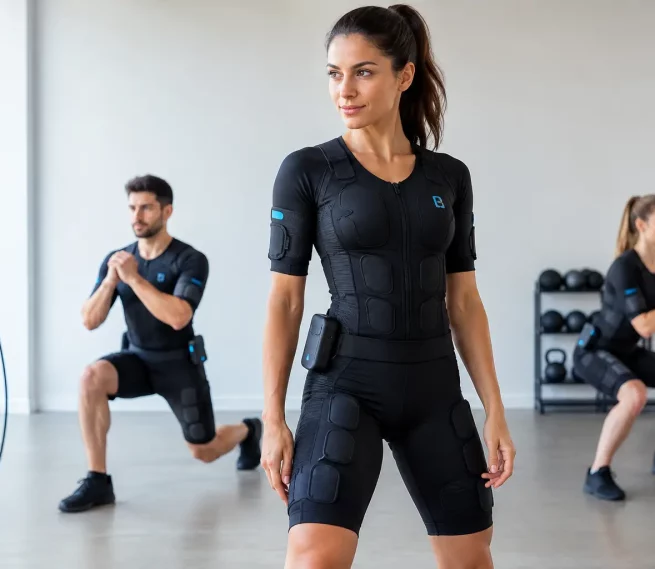
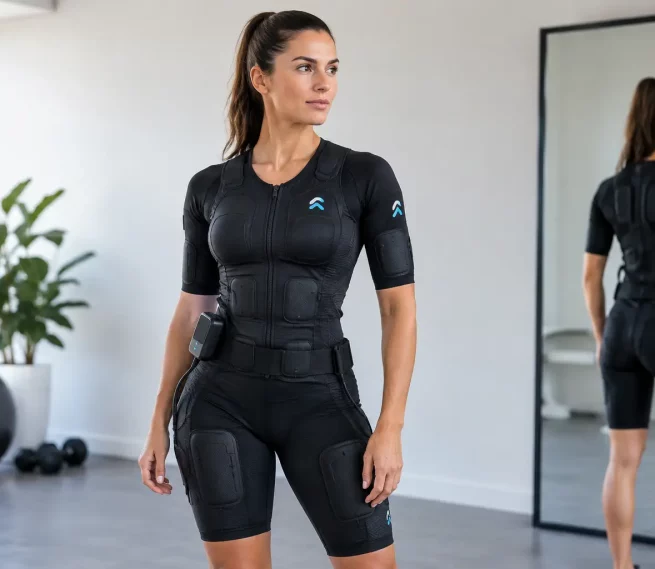
EMS, or electrical muscle stimulation, uses carefully controlled impulses to stimulate muscle contractions while you perform exercises under coach supervision. Rather than replacing movement, it adds an extra training stimulus to the movements you are already doing.
For someone who feels stiff because certain muscles are underactive or deconditioned, this can be valuable. If your glutes are not contributing well during a squat, for example, your lower back or hip flexors may take on more work than they should. By training the larger muscle groups with correct technique, EMS can help you reconnect with those muscles and build the strength to move with better support.
A well-planned EMS session also increases circulation through active muscular work. Many clients report that they feel looser, warmer and more mobile after training. This is not because the session has forced a joint into a new position. It is because the body has moved, contracted and practised control through a comfortable range.
That immediate relief can be useful, but the more meaningful change tends to come over several weeks. Stronger legs, a more stable trunk and improved awareness of posture can make daily movement feel less demanding. Getting out of a chair, carrying shopping, walking uphill or returning to sport may no longer create the same cycle of tightness and compensation.
When EMS can be particularly helpful for stiffness
The best candidates are often busy people who know they need to train but struggle to find the time or confidence to do it consistently. A coached 30-minute session can provide a focused training dose without the need to spend hours moving between machines in a crowded gym.
EMS may be especially helpful when stiffness is linked to sedentary work, poor training consistency or a return to exercise after time away. It can also complement an active recovery routine for runners, golfers and people who train hard but do not always prioritise strength and mobility.
For beginners, the coaching element is essential. Stiffness is often made worse by rushing, loading too heavily or copying random stretches online. A trainer can adapt exercise depth, intensity and position to what your body can manage on that day. The goal is challenge without unnecessary aggravation.
For more experienced exercisers, EMS can be a time-efficient way to maintain strength during a demanding work period, support a structured programme or address imbalances that have started to affect performance. The best results come when it is used with a clear purpose, rather than treated as a shortcut.
What an EMS session for mobility support looks like
A quality session should begin with a conversation, not a one-size-fits-all setting. Your coach should ask where you feel stiff, when it started, what movements aggravate it and what outcome you want. Feeling restricted after a long commute calls for a different plan from recovering after a demanding sporting event.
You may then work through simple, controlled patterns such as squats, hinges, lunges, rows and core-based movements. The electrical stimulus is adjusted to a level that feels strong but manageable. You should still be able to focus on breathing, alignment and technique.
The session is not about making every muscle cramp or leaving you unable to walk the next day. It is about creating effective contractions while building movement confidence. Your coach may also use targeted mobility work before or after training, depending on your needs.
A 3D body scan can add useful context over time. It cannot diagnose the source of stiffness, but it can help track changes in posture, body composition and progress alongside how you move and feel. Measurable data is most valuable when it supports a real coaching conversation rather than replacing one.
The limits: when stiffness needs a different answer
EMS is not the right answer for every ache. If stiffness is severe, sudden, follows a fall or accident, or comes with swelling, numbness, weakness, fever or unexplained weight loss, seek medical advice before training. The same applies if pain wakes you at night, spreads down an arm or leg, or keeps worsening despite rest.
People with certain medical conditions, implanted electronic devices, pregnancy considerations or recent surgery may need medical clearance before EMS. A responsible studio will screen for this and adjust or postpone training where appropriate.
It is also worth being realistic about delayed onset muscle soreness. If you have trained hard and feel stiff for 24 to 72 hours afterwards, gentle movement may help you feel better, but no recovery tool can completely bypass the body’s adaptation process. Hydration, protein, sleep and sensible training volume still matter.
Most importantly, do not use EMS to push through pain that needs assessment. There is a big difference between the manageable effort of a working muscle and sharp, catching or escalating pain around a joint.
How to make the benefits last between sessions
The biggest improvement often comes from what you do in the other 23 and a half hours of the day. If you sit for long periods, break up the day with short walks, standing calls or a few controlled mobility movements. You do not need an elaborate routine. Consistency beats intensity.
Build strength gradually rather than chasing exhaustion every time you train. Keep your daily steps up, prioritise sleep where possible and vary your positions. If you spend the morning at a desk, do not spend the evening folded into the sofa in exactly the same posture.
Think of EMS as a powerful part of the plan, not the entire plan. Combined with expert coaching and regular movement, it can help turn stiffness from something you work around into something you actively improve.
If your body feels held back by tightness, the most productive next step is not guessing which stretch to repeat. Get a proper conversation, a movement-led plan and coaching that meets you where you are – then build the strength and freedom of movement to do more of what you enjoy.
 7min