A diary packed with meetings, school runs and competing priorities can make fitness feel like another job you are failing to keep up with. A good guide to personalised fitness coaching starts somewhere more useful: with the result you want, the time you genuinely have, and the body you are bringing into the session today. That may be a body ready to build strength, one returning after injury, or one that has simply spent too long at a desk.
Personal coaching is not a generic plan with your name added at the top. It is a structured partnership. Your coach assesses where you are, builds a realistic route forwards, adjusts when life gets busy, and gives you a clear way to see that your effort is paying off.
For busy professionals, parents and business owners, this matters. The best programme is not the most complicated one. It is the one you can follow consistently, recover from properly and trust when motivation dips.
What personalised fitness coaching should look like
Personalisation begins before the first hard set. A coach needs to understand your goal, training history, daily movement, sleep, stress levels and any pain or restrictions. Someone training for a 10K needs a different emphasis from someone who wants to feel stronger lifting their children, improve posture, or regain confidence after a long break.
At E-Pulse Studio, that conversation is supported by detailed body analysis and ongoing progress tracking. Measurements are useful because they move the conversation beyond guesswork. The scales alone cannot tell you whether you are gaining lean tissue, improving posture, moving better or simply retaining water after a demanding week.
Your plan should then connect assessment to action. This might mean prioritising strength and core control for persistent back discomfort, building lower-body power for golf, or combining conditioning with resistance work for fat loss and stamina. The method can change over time. The goal is to make each session purposeful rather than merely exhausting.
Coaching is more than counting repetitions
A coach watches how you move, not just whether you finish the set. They can spot when a squat is being limited by ankle mobility, when a shoulder is compensating, or when fatigue is turning good technique into poor habits. That feedback is particularly valuable for beginners, but experienced exercisers benefit too. Progress often slows because training has become familiar, not because the person needs to work harder.
The human element is equally important. A personalised coach knows when to raise the challenge and when to reduce it. If sleep has been poor, work pressure is high or an old niggle has surfaced, forcing a maximum-effort session may be the wrong call. Consistency beats occasional heroics.
A guide to personalised fitness coaching with EMS
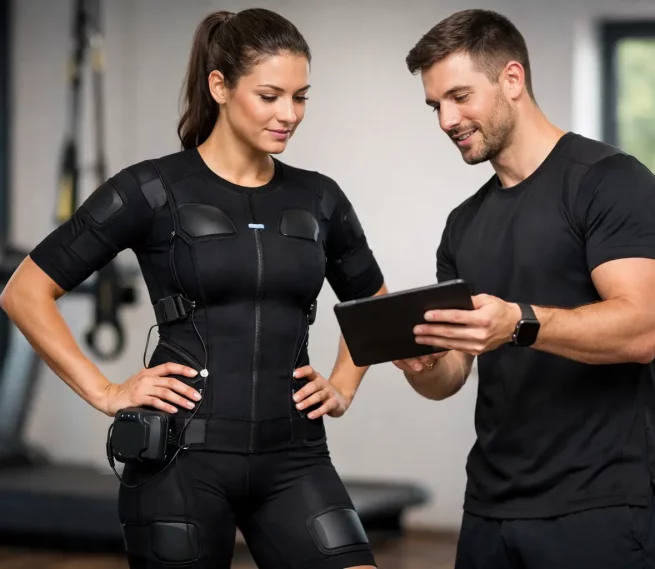
EMS personal training adds another layer of precision. During an EMS session, electrical muscle stimulation is used alongside controlled exercise to activate major muscle groups while a trainer guides every movement. It is designed to make short, focused sessions highly efficient, which can suit people who cannot commit to lengthy gym visits several times a week.
That does not mean EMS is a shortcut around effort, nutrition or recovery. You still need to show up, move with intent and support your training outside the studio. What changes is the quality of attention and the training stimulus delivered within a time-efficient format.
A coach can adjust the intensity across different areas of the body and adapt exercises to your experience and ability. A complete beginner may start with simple movement patterns, controlled positions and manageable intensity. A more advanced client may use EMS to complement sport performance, strength work or a focused body-recomposition goal.
The trade-off is that EMS needs professional supervision and an appropriate starting point. It is not suitable for everyone, particularly where certain medical conditions or implanted devices are involved. Be open about your health history, medications, recent surgery, pregnancy and injuries. A responsible studio will screen you carefully and, where needed, ask you to seek medical advice before training.
The four pillars of a programme that gets results
A strong programme should not rely on one impressive session. It should balance four connected areas:
- Training stimulus: enough challenge to improve strength, fitness, movement quality or body composition without overwhelming your recovery.
- Progressive adjustment: a plan that develops as your technique, capacity and confidence improve.
- Recovery support: realistic guidance around rest, mobility, hydration and nutrition so your body can adapt.
- Measurable tracking: regular check-ins that show what is changing and what needs attention.
These pillars keep coaching honest. If you are working hard but energy is falling, pain is increasing or measurements have stalled for several weeks, the answer may not be more intensity. It could be a recovery issue, an unrealistic nutrition approach, a technique problem or a target that needs refining.
Tracking progress without becoming obsessed with numbers
Results should be visible, but they should also be meaningful. A 3D body scan can provide a useful picture of shape, circumference and composition changes over time. Progress photos, strength markers, mobility checks and how your clothes fit can add further context.
There are also wins that do not fit neatly into an app. Clients often notice they can climb stairs without stopping, sit through a workday with less stiffness, sleep better, or return to a sport they had been avoiding. These changes are not secondary. They are often the reason people keep training long enough to achieve the larger transformation.
Aim for trends rather than daily judgement. Body weight can shift for many reasons, while strength and movement improvements can build quietly before they become obvious in the mirror. Regular reviews give you a chance to celebrate genuine momentum and make calm, evidence-based changes rather than jumping from one plan to another.
What to expect from your first few weeks
The first sessions should feel focused, not punishing. Your coach is learning how you respond: how well you move, what intensity you can tolerate, where you need support and what makes you switch off or push too hard. Early confidence is a result in itself.
You may experience muscle soreness, especially if you have been inactive or are using EMS for the first time. That is normal, but severe soreness is not proof of a better workout. Share feedback honestly. Good coaching uses it to adjust your next session, not to tell you to ignore your body.
By weeks three to six, many people begin to notice clearer movement patterns, improved energy and greater confidence with training. Physical changes vary depending on your starting point, attendance, nutrition, sleep and stress. Be wary of promises that guarantee a particular body transformation by a particular date. The more useful promise is a programme that responds to your real life while keeping you accountable.
How to get more from your coaching investment
Arrive ready to communicate. Tell your trainer if your lower back felt tight after gardening, if a work trip has disrupted meals, or if you have suddenly committed to a charity run. These details are not excuses. They are the information that makes personalisation possible.
Use your sessions as the anchor of your week, then build simple habits around them. A daily walk, a few minutes of mobility, protein-rich meals and a more consistent bedtime can all support your training. You do not need to overhaul your life on Monday morning. Small actions repeated well create the capacity for bigger results.
Most importantly, choose coaching that makes you feel capable. The right trainer will challenge you, explain the why behind the work and keep the plan grounded in your goal. Whether you are training in Peterborough or Upminster, looking for strength, better mobility, improved performance or a body you feel proud of, your programme should fit your life rather than demand that your life fit the programme.
Start with an honest assessment, commit to the next session, and let the evidence of your progress build from there.
 7min
7min