The scales have not moved for two weeks, yet your jeans sit differently, your back feels freer and the weights that once felt daunting now look manageable. That is exactly why a guide to fitness progress tracking must go beyond one number. Real change is rarely linear, especially when your goal is fat loss, muscle tone, better mobility, recovery or stronger performance.
At E-Pulse Studio, we see the difference between guessing and measuring every day. When your progress is visible, you make better decisions, stay motivated through slower weeks and recognise results that bathroom scales alone will never show.
Why the scales do not tell the whole story
Body weight is useful context, but it is a noisy measure. It can shift because of hydration, salt intake, digestion, stress, sleep, a hard training session or the time of month. A one-kilogram change from one morning to the next is not necessarily fat gained or lost.
It also cannot tell you what your body is made of. Someone building muscle while reducing body fat may see little movement on the scales, despite achieving the body recomposition they wanted. For a busy professional who wants a firmer shape, more energy and clothes that fit better, that is progress worth celebrating.
The same applies if pain reduction or movement quality is your priority. If you can pick up your child, play 18 holes of golf or walk upstairs without the familiar ache, your result is real even if your weight is unchanged.
A guide to fitness progress tracking: measure what matters
Start by choosing measures that directly reflect your reason for training. You do not need to record everything. In fact, trying to track 15 different data points often creates admin fatigue and makes people give up. Choose two to four primary measures, then review them consistently.
For body transformation, combine body composition, circumference measurements, progress photos and how clothing fits. A 3D body scan can add useful detail by showing changes in shape, measurements and body composition trends over time. It gives you a clearer baseline than relying on memory or an optimistic glance in the mirror.
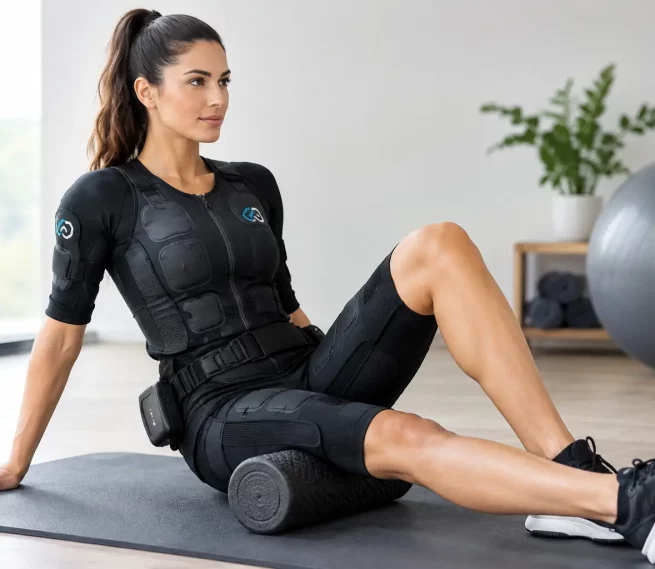
For strength and performance, log the exercise, resistance, repetitions, effort and recovery. In an EMS session, your trainer can monitor how your tolerance, control and output progress as your programme develops. You may be working for only a short period, but the training data still matters. Better technique, stronger contractions and more control under load all count.
For mobility or rehabilitation, look at the movements that affect daily life. Can you squat more comfortably? Reach overhead with less restriction? Sit at your desk longer without stiffness? Measure range of motion where appropriate, but also note the tasks you can now do with greater confidence.
For endurance goals, resting heart rate, perceived exertion, pace and recovery can be more meaningful than an isolated personal best. If the same run feels easier or you recover faster between efforts, your fitness is moving in the right direction.
Set a baseline before you chase a result
A proper starting point removes guesswork. Before changing your training, take your measurements, identify any pain or mobility limitations and record relevant performance markers. Be honest about your current routine too: sessions completed, average steps, sleep quality and consistency with nutrition all influence the picture.
Your baseline is not a judgement. It is the line from which improvement becomes visible. A client who has spent years starting and stopping does not need a punishing plan. They need a realistic starting point, expert coaching and enough evidence to see that their consistency is paying off.
Set outcome goals and process goals together. An outcome goal might be reducing your waist measurement, improving posture or preparing for a 10K. The process goal is what you can control this week: attend two coached sessions, complete your mobility work three times or hit your agreed protein target on most days.
Outcome goals create direction. Process goals create momentum.
Track at the right frequency
More data is not always better. Daily weigh-ins can work for some people when they use a weekly average and understand normal fluctuations. For others, they create unnecessary pressure. If the scales affect your mood or lead to extreme food choices, move to weekly or fortnightly check-ins.
Progress photos and body measurements are usually most useful every four weeks. Take photos in the same lighting, clothing and position. Measure at the same time of day where possible. Consistency of method is what makes comparisons meaningful.
Performance can be logged after each session, but test it less often. Retesting strength, mobility or conditioning every four to six weeks gives your body time to adapt. It also stops every workout becoming an exam.
A 3D body scan works best as part of a planned review rather than a random one-off. The value lies in comparing like with like and discussing the results with a coach who understands your goal. A scan can reveal that the plan is working before the mirror catches up, or show where your approach needs adjusting.
Use photos and numbers without letting them run the show
Tracking should give you clarity, not consume your attention. Numbers are tools, not a verdict on your effort or worth. A high-stress week, poor sleep, illness or a family commitment may temporarily affect body composition, training output and recovery. That does not erase the work you have done.
Look for trends across four to eight weeks. Ask better questions than, “Did I lose weight this week?” Try: “Am I stronger than last month?”, “Is my waist measurement trending down?”, “Do I have more energy in the afternoon?” and “Can I train with less pain and better control?”
If several measures improve at once, trust the pattern. If none improve for a sustained period despite genuine consistency, that is not failure either. It is useful feedback. Your coach may adjust training intensity, nutrition, daily movement, recovery habits or the timeline you expected.
Keep a simple training and recovery record
The most valuable information is often the least glamorous. A short note after training can explain why a session felt brilliant or unusually difficult. Record sleep, stress, soreness and energy alongside what you completed. Over time, patterns become obvious.
You may notice that late nights affect your output, that your lower back feels better when you keep up with mobility work, or that your strength improves when you eat enough around sessions. This is where personalised coaching earns its place. The right programme is not just about pushing harder. It is about recognising what your body responds to and building on it.
If your schedule is packed, keep the record deliberately simple. A notes app, a paper diary or your coach’s session log is enough. The goal is not perfect data. The goal is a reliable record that helps you make the next decision.
Celebrate performance wins early
Visible body changes can take time, particularly when you are new to structured training, returning after injury or balancing fitness with work and family life. Performance wins often arrive first. You might hold a plank longer, complete a deeper squat, recover quicker between rounds or feel more stable carrying shopping home.
These wins are not consolation prizes. They are signs that your body is adapting. Better strength, control and movement quality support the results most people want aesthetically, while making everyday life easier at the same time.
Make a point of recording your firsts: the first time you train consistently for a month, the first pain-free walk, the first session where you increase resistance with confidence. Those moments build belief, and belief makes the next session easier to show up for.
Know when to change the plan
A plateau is only a problem when it is a genuine trend, not a brief fluctuation. Give a well-designed plan enough time to work, usually several weeks of consistent effort. Then review the evidence with your coach.
If strength is rising but fat loss has paused, the answer may be nutrition, daily activity or recovery rather than more punishing workouts. If pain is increasing, do not try to outwork it. Adjust the movement, investigate the cause and prioritise safe progression. If you are exhausted, training less aggressively for a short period can be the move that helps you progress again.
The best progress tracking is not about proving that you worked hard. It is about seeing what is working, responding intelligently and staying committed long enough for the result to become undeniable. Book your next assessment with a clear goal in mind, then let the evidence show you how far you have come.
 7min
7min