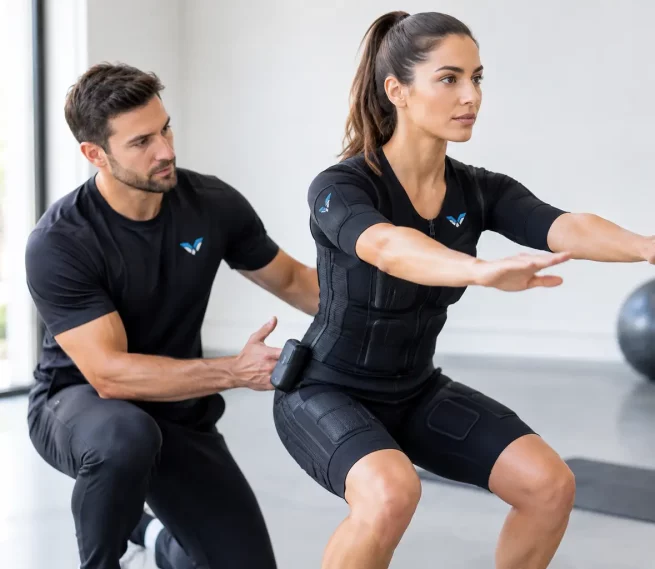
A 20-minute session that fits between the school run, meetings and everything else used to sound like a compromise. Now it is quickly becoming the standard people expect from premium fitness. That is why the future of EMS fitness studios looks so strong. For busy adults who want visible progress, expert guidance and less wasted time, EMS is moving from niche concept to serious training category.
That shift is not happening because people suddenly want gadgets for the sake of it. It is happening because the old model often asks too much time for too little accountability. Many people do not need another crowded gym floor or a programme they will struggle to follow alone. They need precision, support and proof that their effort is working.
Why the future of EMS fitness studios looks different
The next generation of EMS studios will not win on novelty. They will win on outcomes. Clients are getting more selective about where they spend their money, and they are asking sensible questions. Will this help me get stronger? Can it support fat loss? Will it improve my posture, mobility or back pain? Can I stick to it with a full-time job and family life?
Studios that can answer those questions clearly, and back it up with coaching and data, will keep growing. Studios that rely on buzzwords or treat EMS like a one-size-fits-all shortcut will struggle.
This is an important distinction. EMS has real potential, but the experience around it matters just as much as the technology itself. A well-run studio delivers personalised intensity, proper progression and trainer-led support. Without that, the session becomes a gimmick rather than a system.
Coaching will matter more than the kit
One of the biggest changes ahead is that premium EMS studios will look less like technology businesses and more like coaching businesses powered by technology. That is where the strongest results come from.
For a beginner, that might mean confidence and structure. They are not left guessing whether they are doing enough or doing too much. For a runner, golfer or combat athlete, it might mean targeted work around power, core control, recovery or injury prevention. For someone returning from pain or mobility limitations, it means careful progression instead of being thrown into a generic class.
The studios that grow will be the ones where trainers know their clients well. They will understand limitations, lifestyle pressures and realistic goals. They will adjust programmes based on response, not just a fixed timetable. That level of attention is hard to replicate in a traditional gym and it is one of the clearest reasons EMS studio models appeal to busy professionals and parents.
Data will move from nice extra to core service
Clients no longer want vague reassurance. They want measurable progress. That does not mean every person is obsessed with numbers, but most people stay more motivated when they can actually see change.
This is where the future of EMS fitness studios becomes especially exciting. Body composition tracking, performance markers, mobility checks and regular progress reviews will become standard in stronger studio models. Instead of relying on how someone feels on one random Tuesday, studios will be able to show trends over time.
That matters for motivation, but also for smarter coaching. If body fat is dropping while strength is improving, great. If sessions are being completed but mobility is still limited, the plan may need adjusting. If a client feels better in daily life, sleeps better and reports less pain, that should count too.
The best studios will combine hard metrics with real-world wins. Getting into clothes more comfortably, standing taller at work, running without niggles or keeping up with the kids without back pain are not small victories. They are often the reasons people started in the first place.
Recovery and rehabilitation will become a bigger part of the offer
There is still a tendency in fitness marketing to focus only on aesthetics. That will continue to sell, but it will not define the full future of EMS fitness studios. Recovery, pain reduction, mobility support and sustainable performance are becoming much bigger priorities.
This is especially relevant for adults who have spent years sitting at desks, juggling stress and picking up old injuries along the way. They may want to lose fat and tone up, but they also want to move better, feel stronger and stop carrying everyday discomfort.
EMS is well placed here when it is delivered properly. It can support muscle activation, posture work and low-impact strength training in a way that suits people who are not ready for high-volume conventional training. That does not mean it replaces every other method. It means it offers an efficient and often more approachable route into consistent movement.
Studios that combine EMS with mobility work, recovery guidance and sensible lifestyle support will be far more valuable than those selling quick fixes. Real clients are not one-dimensional. Their training should not be either.
The premium boutique model is likely to expand
Big-box gyms compete on access and price. Boutique EMS studios compete on attention, efficiency and results. That position is likely to become even stronger over the next few years.
As consumers become more selective, many will happily pay for less time if the experience feels tailored and the outcomes are clear. A short, coached session in a focused studio can make more sense than paying for a gym membership they barely use.
That does not mean EMS studios are for everyone. Some people love long gym sessions, group training or lifting independently, and that is absolutely fine. But for the person who values structure and wants every session to count, the premium boutique model solves a real problem.
In areas such as Peterborough and Upminster, where people are balancing work, commuting, family and health goals, this model speaks directly to real life. Convenience matters, but so does trust. Clients want to know the person guiding them understands what they are doing.
Education will separate serious studios from hype
As the category grows, so will the noise around it. Some operators will oversell. Others will undersell because they do not know how to explain the service properly. The studios that stand out will be the ones that educate clearly.
That means being honest about what EMS can do and where it works best. It can be highly effective for strength, muscle tone, body composition support, posture, mobility and time-efficient training. It can be useful for people who need more guidance and lower impact options. But results still depend on consistency, effort, nutrition, recovery and programme quality.
Clients respect that kind of honesty. In fact, it builds more confidence than exaggerated promises ever will. People do not need fantasy. They need a plan they can believe in and follow.
Community will still matter, even in a tech-led service
There is a myth that high-tech fitness has to feel cold. In reality, the best studios create the opposite effect. Because sessions are personal and frequent, relationships tend to be stronger. Trainers know when a client is tired, when they need pushing and when they need reassurance.
That human side will matter even more in future. People stay where they feel seen. They stay where progress is noticed and celebrated. They stay where the environment helps them keep promises to themselves.
At E-Pulse Studio, that coaching-led approach is exactly what gives EMS its edge. The technology is powerful, but the difference is in how it is used – with care, precision and a proper understanding of each client’s goal.
So where is this heading?
The most successful EMS studios will not be trying to replace every form of fitness. They will be getting very good at solving specific problems: lack of time, lack of structure, slow progress, recurring pain, poor posture and inconsistent motivation. That is a strong place to be.
We are likely to see more personalised programming, better tracking, stronger recovery support and higher expectations around coaching standards. We are also likely to see clients become more informed, which is a good thing for the industry. Better questions lead to better services.
For anyone wondering whether EMS is just a trend, the smarter question is this: does it fit the way people actually live now? For a growing number of adults, the answer is yes. They want efficient training, expert support and results they can see and feel. Studios that deliver that with honesty and consistency have a very bright future.
If you are choosing how to train in the years ahead, look for the place that treats your time as seriously as your goals. That is where progress tends to happen.
 8min
8min