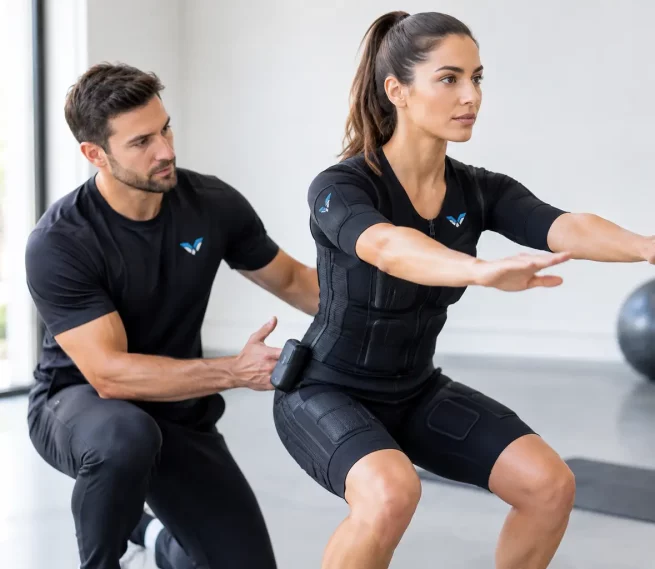
You do not lose stamina all at once. It usually shows up in small ways first – feeling flat halfway through a run, struggling to keep pace in circuits, getting out of breath on stairs, or fading by late afternoon when your day is still nowhere near finished. If you are looking at how to boost stamina with EMS, the real question is not whether it can help. It is how to use it properly so your energy, endurance and performance improve in a way that actually lasts.
EMS training is often associated with strength, toning and time efficiency, and for good reason. A short, coached session can recruit a huge amount of muscle tissue in very little time. But stamina is not only about strong muscles. It is about how well your body sustains effort, recovers between bouts, and keeps moving well when fatigue starts to build. That is where EMS becomes especially useful when it is programmed with purpose.
What stamina really means in training
A lot of people say they want more stamina when they mean slightly different things. Some want better cardio fitness so they can run, cycle or play sport without blowing up early. Some want muscular endurance so they can keep producing force without their legs, glutes or core giving up. Others simply want enough day-to-day energy to get through work, parenting and training without feeling wiped out.
In practice, stamina sits at the intersection of several things: cardiovascular efficiency, muscle endurance, posture, breathing control, recovery and movement quality. If one of those is lagging, your performance drops. You might have the motivation to push harder, but if your core switches off, your running form falls apart. If your posterior chain is weak, you waste energy. If your recovery is poor, each session starts from a lower baseline.
That is why random hard workouts often leave people frustrated. More effort is not always the answer. Better recruitment, better structure and better recovery usually move the needle faster.
How to boost stamina with EMS in a smart way
EMS works by sending electrical impulses to muscles during exercise, helping them contract more intensely and more completely than many people achieve in standard training. In a coached environment, that means you are not just moving through exercises. You are teaching the body to activate key muscle groups under load and under fatigue.
For stamina, that matters because inefficient movement is expensive. The more your body compensates, the faster you tire. When EMS improves activation through the glutes, core, back and legs, the whole system starts working better together. You are not simply trying to survive a session. You are building a stronger engine and a more reliable frame around it.
There is also a practical advantage for busy adults. If your week is packed with work, school runs, meetings or travel, long endurance sessions are often the first thing to disappear. EMS gives you a way to train at a high level in less time, which makes consistency far more realistic. And consistency is what stamina responds to.
Why EMS can improve endurance, not just strength
People sometimes assume EMS is only for muscle tone or rehab support. In reality, it can support endurance performance because stamina relies heavily on muscular efficiency. If your muscles can produce and repeat work more effectively, the cardiovascular side of the equation becomes easier to manage.
A stronger core can help you maintain posture for longer. Better leg recruitment can improve power output without your stride breaking down. More stable hips can reduce wasted movement. Better back activation can help with breathing mechanics and fatigue resistance. None of that replaces sport-specific cardio, but it improves the quality of the body doing the cardio.
This is where coaching matters. EMS on its own is not a magic switch. The gains come from selecting the right exercise patterns, the right intensity and the right progression. Someone training for a 10K, someone rebuilding fitness after back pain, and someone wanting more energy for everyday life should not all be doing exactly the same thing.
The best way to structure EMS for stamina gains
If your goal is endurance, your sessions need to reflect that. Going as hard as possible every time can feel productive, but it often leads to poor recovery and inconsistent progress. The better route is targeted progression.
Most people do well with one or two EMS sessions per week alongside walking, low to moderate intensity cardio, and enough recovery to absorb the work. In the early stages, the biggest wins usually come from improved activation, posture and movement control. That alone can make you feel less tired during normal training.
As your base improves, sessions can become more demanding. Longer work periods, tighter rest windows, integrated compound movements and more sport-specific patterns all help build stamina. If you are a runner, that may mean focusing on glute drive, trunk stability and fatigue resistance through the legs. If you are returning from injury, it may mean rebuilding confidence and capacity without overloading joints.
There is always a trade-off. Higher intensity can improve fitness, but only if you recover from it. If every session leaves you drained for three days, your weekly output drops. Good stamina training should challenge you, not derail you.
Recovery is part of the stamina equation
This is the part many people skip because it is less exciting than the workout itself. But if you want to boost stamina with EMS, recovery is not optional. It is part of the system.
Muscles adapt between sessions, not during them. Sleep, hydration, protein intake, stress management and sensible session spacing all affect how quickly your body builds capacity. If your lifestyle is high stress and low sleep, your stamina ceiling will be lower no matter how motivated you are.
That is also why people often get better results in a coached studio setting. You are not left guessing whether you are doing too much, too little or the wrong type of work. The programme can be adjusted around your actual week, your energy levels and your goal. For a busy professional or parent, that level of personalisation often makes the difference between sticking with it and falling off after two weeks.
Who tends to respond best to EMS for stamina?
The short answer is that a wide range of people can benefit, but the reason differs. Beginners often see quick progress because they finally have structure, accountability and proper muscle engagement. They stop wasting effort and start building fitness in a more organised way.
People with previous injuries or ongoing aches can also benefit when poor movement patterns have been limiting endurance. If your lower back tightens up every time you try to increase training volume, or your posture collapses under fatigue, EMS can help strengthen the support system around those weak points.
More advanced clients tend to use EMS as a performance tool. It helps reinforce recruitment, improve force production and support conditioning without relying on hours of extra gym work. That can be especially useful if your main sport already demands a lot of time and impact.
The main exception is expectation. If someone wants better stamina but refuses to walk more, sleep better, eat properly or train consistently, results will be limited. EMS is powerful, but it still works best as part of a complete plan.
Common mistakes that slow progress
The first mistake is treating EMS as a shortcut instead of a training method. It is efficient, yes, but efficiency only matters if the training is specific and repeatable.
The second is chasing intensity instead of adaptation. Feeling smashed after a session is not the same as getting fitter. Progress usually looks more like better exercise quality, steadier breathing, improved recovery, and stronger output over time.
The third is ignoring the basics outside the studio. If you are sedentary all day and expect two sessions a week to carry everything, your stamina will improve more slowly. Daily movement still matters.
Finally, many people underestimate the value of measurable tracking. Body composition, movement quality, session performance and fitness markers all tell a clearer story than mood alone. On weeks when motivation dips, seeing objective progress helps you keep going.
What good stamina progress should feel like
Not dramatic. Not cinematic. Just steadily better.
You recover faster between efforts. Your breathing settles more quickly. You hold form for longer. The last part of a workout stops feeling like survival. Everyday tasks feel easier. You notice you are less stiff, more upright and less wiped out by the end of the day.
That is often how real progress shows up first. Then the bigger milestones follow – better running times, stronger circuits, longer sessions, improved body composition and more confidence in what your body can do.
For clients training in a premium coaching environment such as E-Pulse Studio, that process tends to move faster because every session is guided, adjusted and measured. You are not trying to figure it out alone. You are training with intent.
If stamina is the missing piece in your fitness, do not assume you need to spend more hours grinding through cardio. Often, you need a body that works better under demand. EMS can help build that – stronger muscles, better movement, smarter recovery and a level of consistency that fits real life. Start there, stay patient, and let the results build week by week.
 8min
8min