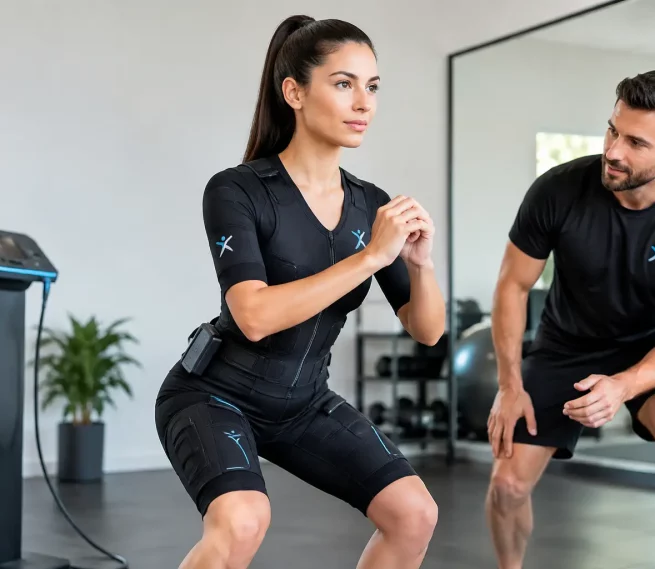
You do not need another workout plan that looks great on paper and falls apart by Thursday. For busy professionals, parents and anyone juggling work, family and a body that does not always play nicely, personal training with EMS can be a very different proposition. It is short, focused, coached and built around one big question: how do we get meaningful results without asking for hours you do not have?
That question is exactly why EMS training has moved beyond being a fitness trend. When used properly, in a one-to-one setting with an experienced trainer, it can help people get stronger, improve posture, support fat loss, increase stamina and train around limitations that make conventional gym sessions harder to stick with. It is not magic, and it is not for every goal in every situation, but for the right person it can be one of the most efficient training formats available.
What personal training with EMS actually means
EMS stands for Electro Muscle Stimulation. During a session, you wear specialist equipment that delivers controlled electrical impulses to your muscles while you perform guided exercises with a trainer. Those impulses encourage more muscle fibres to contract during each movement, which is why the work can feel much more intense than it looks from the outside.
The key phrase here is guided exercises with a trainer. Personal training with EMS is not about standing still and hoping a machine does the work for you. It is coached training. Your trainer adjusts the intensity, monitors your technique, matches the session to your goals and works around any injuries, weaknesses or movement restrictions.
That coaching element matters. EMS is powerful, but it is the combination of technology and proper programming that makes it useful. A strong session should feel personal, not generic. If your goal is body transformation, the session should be shaped differently than if your priority is back pain, mobility or sport performance.
Why it appeals to people who are short on time
The biggest reason many people choose EMS is simple: time. A traditional gym routine can easily eat up several hours a week once you factor in travelling, changing, warming up, training and trying to work out what to do next. A focused EMS session is much shorter, yet still highly demanding.
For someone who has started and stopped multiple fitness routines, that efficiency is not just convenient. It can be the difference between consistency and another false start. A 30-minute coached session feels manageable even in a packed week. And manageable is what gets repeated.
This is often where clients notice the biggest shift. They stop thinking, “I need to find more time to train,” and start thinking, “I can actually keep this up.” That change in behaviour is a huge part of why results happen.
What results can you realistically expect?
A good EMS programme should never promise nonsense. Results depend on your starting point, your consistency, your nutrition, your recovery and the quality of the coaching. That said, many people do notice meaningful changes relatively quickly.
Strength is one of the most common wins. Because EMS recruits muscles intensely, clients often feel stronger and more connected to their bodies within a few weeks. Posture can also improve, particularly for people who spend long days at a desk and have developed weak glutes, tight hips or a constantly grumbling lower back.
Body composition changes are possible too, especially when training is paired with sensible nutrition and clear progression. People often report firmer muscle tone, better core engagement and clothes fitting differently before the scales tell the full story. Stamina and VO2 max can improve as part of a broader programme, particularly when sessions are structured to challenge both muscular endurance and cardiovascular demand.
For clients coming in with pain or mobility issues, the outcome might be less about visible transformation at first and more about quality of life. Moving more freely, standing taller, having less discomfort through the day, or returning to exercise after a long break can be just as significant.
Who gets the most from personal training with EMS?
This style of training tends to suit people who value structure, accountability and efficiency. Busy professionals often love it because the sessions are short and the coaching removes guesswork. Parents appreciate that they can train properly without losing half the day. Beginners benefit from close support and a clear plan, especially if a normal gym feels intimidating or directionless.
It also suits clients who have hit a plateau. If you have been doing the same gym routine for months and your progress has gone flat, a different stimulus can help. Athletes and recreational sportspeople sometimes use EMS to support performance, improve muscle recruitment and strengthen areas that affect their running, golf swing or power output.
Then there is the group that often gets overlooked by mainstream fitness: people with aches, stiffness or recurring pain. For them, the right session can offer a controlled, low-impact way to rebuild strength and confidence. That does not mean EMS replaces rehab or clinical advice where needed. It means it can be a very effective part of the plan when used intelligently.
Where the trade-offs are
Let us be straight about it. Personal training with EMS is efficient, but it is intense. Even a short session can feel challenging, especially at the start. If you are expecting an easy option because the workout is brief, you may be surprised.
It is also not a total substitute for every kind of fitness. If your goal is to run a faster 10k, play 90 minutes of football or improve your technique in Olympic lifting, EMS can support those aims, but it should sit alongside sport-specific work rather than replace it entirely. The same goes for general activity. Walking, mobility work, sleep and nutrition still count. A 30-minute session does not give anyone a free pass to ignore the rest.
There is also a quality gap in the market. Not all EMS training is delivered to the same standard. The difference between a rushed, one-size-fits-all session and a properly coached programme is massive. Good trainers assess, adapt and progress. They do not just clip you into equipment and count down the clock.
What a good EMS session should feel like
A proper session should feel challenging but controlled. Your trainer should explain what is happening, check how the intensity feels and make adjustments based on your feedback. You should know why you are doing each movement and how it connects to your goals.
The best sessions are precise. If your aim is fat loss and muscle tone, the trainer might build in a rhythm that keeps the heart rate up while targeting major muscle groups. If your focus is posture and pain reduction, the session may prioritise core stability, glute activation and movement quality. If you are training for sport, the work may be shaped around power, coordination and weak-point development.
Progress tracking also matters. Without it, everything becomes guesswork. This is where body scanning, performance markers and regular coaching conversations help. Clients stay motivated when they can actually see change, whether that is improved body composition, better movement, less pain or stronger output in training.
Why the personal part matters more than the technology
The technology gets attention, but the real value is in the personal training. Machines do not build accountability. Machines do not spot movement compensations. Machines do not know when you need pushing and when you need scaling back.
An experienced coach does.
That is why premium EMS studios tend to get better outcomes than a self-service approach. The session is not just about effort. It is about accuracy. A well-planned programme meets you where you are and moves you forward safely.
For many clients, that support is the reason they finally stay consistent. They are not trying to motivate themselves in a crowded gym after a draining workday. They have an appointment, a coach, a plan and a clear sense of progress. That setup reduces friction, and less friction usually means better adherence.
Is personal training with EMS worth it?
If you want a cheap gym membership and enjoy training on your own for hours, probably not. If you are looking for a highly efficient, coach-led approach that can help you build strength, improve body composition and train with purpose in less time, it can be absolutely worth it.
The best fit is usually someone who wants more than random exercise. They want expertise, accountability and measurable progress. They want training that respects their schedule but still asks something of them. They want sessions that feel purposeful from the first minute.
That is why so many clients who were once inconsistent end up sticking with it. They finally find a format that matches real life rather than fighting against it. And when training starts fitting your life, results become much easier to build.
If you are considering personal training with EMS, think less about whether it is trendy and more about whether it suits the way you actually live. For plenty of people, especially those balancing work, family and old niggles that never quite disappear, that answer is a confident yes. If that sounds like you, a coached EMS session could be the smartest place to start.
 7min
7min