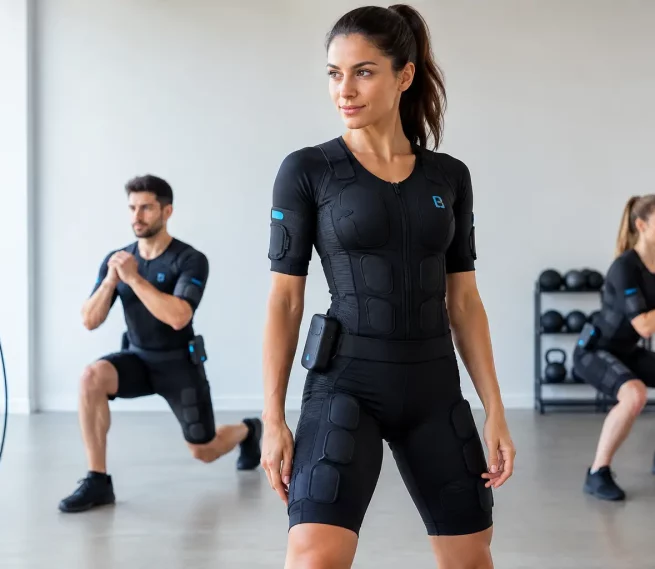
Some changes are obvious when your clothes fit better. Others are easy to miss, even when you are training hard. That is where body scan before and after tracking becomes genuinely useful. It gives you a clearer view of what is changing beneath the surface, so you are not left guessing whether your plan is working.
For busy adults, that matters. If you are fitting training around work, family and everything else on your plate, you want proof that your effort is moving you forward. A proper body scan does more than produce a nice-looking image. It helps you measure shape, posture and body composition in a way bathroom scales simply cannot.
What body scan before and after tracking actually shows
When people hear “before and after”, they often think only about photos. Photos can be powerful, but they are also affected by lighting, posture, clothing and angles. Body scan before and after tracking adds a more objective layer. Instead of relying on how you look on one good day, it records measurable changes over time.
That usually includes body fat levels, lean mass, circumference measurements and overall body symmetry. Depending on the system, it can also highlight posture changes and show where reductions or gains are happening across the body. This is especially helpful if your goal is not just weight loss, but body recomposition – dropping fat while building or preserving muscle.
That distinction matters more than most people realise. Two people can weigh exactly the same, but look and perform very differently because of how their body is made up. If you only track total weight, you can miss progress that is actually worth celebrating.
Why scales often tell the wrong story
A standard scale gives you one number. It cannot tell you whether that number changed because of water retention, muscle gain, fat loss or even the time of day. That is why so many people feel frustrated after a good week of training. They are doing the work, eating better, feeling stronger, and then the scale barely moves.
In some cases, the scale may go up while body shape improves. That can happen when someone builds lean tissue, improves posture and reduces body fat at the same time. Without deeper tracking, it is easy to assume the plan is failing when it is actually doing exactly what it should.
This is one of the strongest arguments for body scan before and after tracking. It shows whether your body is becoming stronger, leaner and better balanced, even if your headline weight does not shift dramatically.
Body scan before and after tracking for realistic progress
The best progress is not random. It is measured, reviewed and adjusted. Body scan before and after tracking supports that process because it turns vague goals into something you can actually monitor.
If your aim is fat loss, you can see whether body fat is coming down. If your focus is toning, you can track whether lean mass is improving. If you want better posture or reduced lower back discomfort, scan data can help reveal alignment changes that support what you are already feeling.
This is particularly valuable for people who have stopped and started fitness in the past. One of the biggest reasons people lose momentum is that they cannot see enough progress to stay motivated. When you have clear markers in front of you, motivation becomes less emotional and more evidence-based. You are not hoping something is happening. You can see it.
What makes a body scan useful rather than gimmicky
Not every form of tracking is equally helpful. A good body scan should be part of a broader coaching process, not a novelty used once and forgotten about. The scan itself gives data, but the real value comes from how that data is interpreted and applied.
For example, a scan might show that fat loss is happening steadily, but muscle development is slower than expected. That could point to a recovery issue, insufficient resistance stimulus, poor protein intake or simply inconsistent sessions. Equally, if measurements are changing in the right places but posture remains poor, mobility and movement quality may need more attention.
This is where expert guidance matters. Data without coaching can confuse people. Coaching turns data into action.
How often should you do before and after body scans?
More often is not always better. Daily scans would create noise rather than clarity, because the body fluctuates naturally through hydration, digestion and hormonal changes. For most people, scanning every few weeks gives a much more useful picture.
That allows enough time for genuine adaptation to take place. Fat loss, muscle gain, improved posture and shape changes do not happen overnight, even with a strong programme. What you want is a fair comparison between one meaningful point and the next.
Consistency is important here. Try to scan under similar conditions each time – similar time of day, similar hydration, and similar clothing if applicable. That keeps the comparison cleaner and makes the results more trustworthy.
Who benefits most from body scan tracking?
Almost anyone can benefit, but it is especially valuable for people with specific goals and limited time. If you are a working professional trying to get results without spending hours in the gym, tracking helps confirm whether your shorter, focused sessions are delivering. If you are a parent juggling everyone else’s schedule, seeing measurable progress can be the difference between sticking with the plan and giving up too soon.
It is also useful for clients returning from injury, managing pain or working on mobility. In those cases, success is not always dramatic weight loss. It may be improved alignment, better muscle balance or physical changes that support easier movement. Those wins deserve to be measured as well.
For more advanced clients, body scans can help fine-tune performance goals. Runners, golfers and combat athletes often need more than a generic fitness check-in. They want to know whether training is improving the physical qualities that support their sport.
What results can you realistically expect?
That depends on your starting point, your consistency and the quality of your programme. Someone who is new to structured training may see visible changes fairly quickly. Someone already active may progress more gradually, but with more targeted refinements.
The key point is that good tracking helps you spot the right kind of progress. In the early stages, posture and muscle engagement may improve before major fat loss is visible. In other cases, body shape changes may appear around the waist, hips or upper body even when weight remains fairly stable.
This is why dramatic promises can be misleading. Fast results are possible, but sustainable results usually come from a combination of smart training, recovery, nutrition and accountability. A scan does not create progress on its own. It reveals whether your current approach is earning it.
Why before and after images still matter
There is still a place for photos. In fact, the strongest progress stories often combine visual changes with scan data. A photo can capture confidence, posture and shape in a very human way. The scan adds the measurable detail behind that story.
Together, they are powerful. One shows what you can see. The other shows what you can prove.
That combination is often what keeps clients engaged. It is easier to stay committed when you can look at your results from more than one angle. You are not relying on mood, memory or wishful thinking.
The real benefit is better decision-making
The biggest advantage of body scan before and after tracking is not just motivation. It is better decisions. If your results are strong, you know to keep going. If progress slows, you can make a precise adjustment instead of changing everything out of frustration.
That could mean increasing training intensity, tightening up recovery, improving food quality or simply giving the process more time. The point is that you respond based on evidence, not emotion.
At E-Pulse Studio, that is exactly where advanced tracking earns its place. It supports a coaching-led approach where every session has purpose and every result has context. For clients who want visible, measurable progress without wasting time, that matters.
If you are serious about changing your body, guessing is the slowest route. Track what is happening, understand what it means, and let the evidence keep you moving when motivation has an off day.
 7min
7min