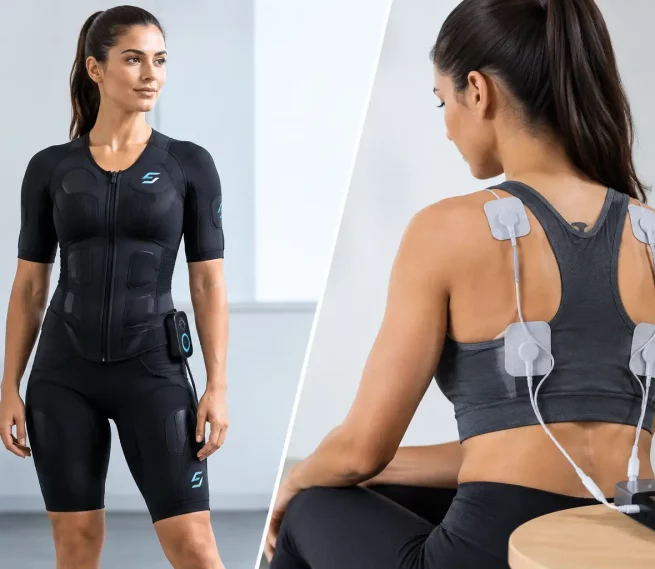
A golf swing can look smooth and effortless, but your body knows better. Rotational power, balance, hip mobility, core control and shoulder stability all need to work together if you want consistent shots and fewer niggles after a round. That is why ems training for golfers is getting real attention – not as a gimmick, but as a focused way to build the physical qualities the game actually demands.
For many golfers, the challenge is not knowing they should train. It is finding a method that fits around work, family and the rest of life, while still producing measurable results. If you are playing with a stiff lower back, losing distance off the tee or fading late in the round, a smarter training approach can make a noticeable difference.
Why golfers benefit from targeted strength work
Golf is often underestimated as a physical sport. You are not sprinting for 90 minutes, but you are asking your body to repeat a fast, coordinated movement under load, often hundreds of times between practice and play. Small restrictions in movement can change your swing path. Weakness in the trunk or glutes can reduce power transfer. Poor posture can make both accuracy and recovery worse.
This is where structured training matters. A stronger body gives you a better base to swing from. Better mobility helps you move through the backswing and follow-through without compensation. Improved muscular endurance helps you stay sharp on the back nine rather than grinding through the final holes.
The problem is that many golfers either do nothing, or they follow generic gym routines that do not match the demands of the game. Hours on random machines are not the answer. Golfers need efficient training that supports rotation, posture, stability and controlled force production.
What is EMS training for golfers?
EMS training for golfers uses electro muscle stimulation alongside guided movement and coaching. During an EMS session, impulses stimulate the muscles while you perform carefully selected exercises. That means more muscle fibres are recruited in a short space of time, with the session led by a trainer rather than left to guesswork.
At a practical level, this can be especially useful for busy adults who want more from less time. A short, coach-led EMS session can target core strength, glute activation, postural muscles and lower-body stability without the wear and tear of long gym sessions.
That does not mean EMS replaces every other form of golf fitness. It depends on your goals. If you are a competitive player, you may still benefit from skill practice, walking fitness, mobility work and traditional strength training at certain points in the year. But for golfers who want an efficient route to better physical support for their game, EMS can be a strong fit.
How EMS supports the golf swing
The best golf swings are not built on arms alone. They rely on force travelling from the ground, through the legs and hips, across the trunk and out through the club. Any weak link in that chain can cost you both power and control.
Core strength and rotational control
A powerful swing needs more than a six-pack. Golfers need deep core strength to resist unwanted movement, transfer force and stay balanced through rotation. EMS can help train those muscles effectively, especially when sessions are programmed with anti-rotation, controlled trunk movement and postural work in mind.
For golfers who feel unstable at impact or struggle to maintain shape through the swing, this is often where progress starts.
Glute strength and lower-body drive
Glutes are a major engine in golf performance. They support pelvic control, help generate force and reduce the habit of overloading the lower back. Weak glutes can lead to poor sequencing and less efficient power output.
EMS sessions can place real emphasis on glute recruitment and lower-body strength, which matters not just for distance but for repeatable movement. That is particularly useful for golfers who sit at a desk all day and arrive at the course already switched off through the hips.
Posture and shoulder support
Many golfers carry tension through the neck and shoulders while lacking strength through the upper back. That combination can affect both swing mechanics and day-to-day comfort. Better postural strength supports cleaner movement and may help reduce the stiffness that builds up after practice, travel or long rounds.
With proper coaching, EMS can target the postural muscles that are often neglected, helping golfers stand better, rotate more freely and feel more supported through the upper body.
The mobility question
One of the biggest myths in golf fitness is that every issue is a mobility issue. Sometimes you do need more range through the hips, thoracic spine or shoulders. But sometimes the body limits movement because it does not feel strong or stable enough to control it.
That is why strength and mobility should be trained together. EMS can support this well when sessions include controlled movement patterns rather than static effort alone. Better muscular activation often improves how the body moves, not just how hard it works.
For golfers with tight hips, a stiff back or reduced rotation, the right programme can help. But there is always a coaching element here. If pain is involved, or if a restriction has been present for a long time, training should be adjusted carefully rather than pushed aggressively.
Can EMS help with golf-related aches and pains?
It can help, but this is where honesty matters. EMS is not a magic fix for every painful back, shoulder or knee. Golf-related discomfort can come from technique, overuse, poor recovery, lack of strength or a genuine injury. What EMS can do is strengthen the body around problem areas, improve posture, support movement quality and help reduce the physical weaknesses that often feed recurring pain.
For example, golfers with persistent lower-back tightness often benefit from better core support, stronger glutes and improved pelvic control. Golfers with upper-body tension may need postural work and better scapular stability. These are exactly the areas where a personalised EMS programme can be useful.
The key word is personalised. If the session is generic, the result will be generic too.
Why time-poor golfers tend to stick with it
A lot of golfers know they should train, but they do not stick to it because the process feels too time-heavy. Driving to the gym, warming up, waiting for equipment and trying to piece together a useful session is not realistic for everyone. That is especially true for working professionals and busy parents who already have enough demands competing for their week.
EMS changes that conversation because the training is short, supervised and focused. You are not wandering around a gym floor trying to stay motivated. You are coached through a session designed to get a result.
That consistency matters. The best programme is the one you can actually maintain. A brilliant twelve-week strength plan on paper is useless if life gets in the way after week two.
What results can golfers realistically expect?
Most golfers are not looking to become bodybuilders. They want practical outcomes – more clubhead speed, better stability, less stiffness, improved posture and enough physical resilience to play and practise without feeling beaten up.
With well-structured EMS training, golfers may notice stronger posture at address, more control through rotation and better endurance during a round. Some also report improved confidence in their body, which matters more than people think. If you trust your movement, you tend to commit to the swing more freely.
Results still depend on the full picture. Frequency, coaching quality, your starting point and how you recover all play a part. If your mobility is severely restricted or your swing mechanics are the main issue, training alone will not solve everything. But when the body becomes stronger, more stable and better conditioned, technical work often becomes easier too.
Is EMS right for every golfer?
Not every golfer needs the same plan. A low-handicap player chasing extra distance may use EMS differently from a beginner who mainly wants to move better and stop aggravating an old back problem. Age, training history and injury background all matter.
For some, EMS works best as the main strength method because it is efficient and manageable. For others, it is an excellent addition to golf coaching, mobility work and occasional gym training. The point is not to force everyone into one model. The point is to build a programme that matches the person in front of you.
That is why coaching-led studios tend to get better outcomes than self-directed approaches. Good trainers do not just switch on the machine and hope for the best. They assess how you move, identify weak points and progress the sessions with a clear purpose.
At E-Pulse Studio, that personal approach is a big part of why golfers and other performance-focused clients keep seeing progress. When training is guided, measured and adapted properly, the gains are easier to feel and easier to sustain.
If your golf game feels held back by stiffness, poor endurance or a body that is not keeping up with your intentions, there is real value in training smarter rather than simply training more. The right support can help you swing with more confidence, move with less restriction and enjoy the game without paying for it the next day.
 8min
8min