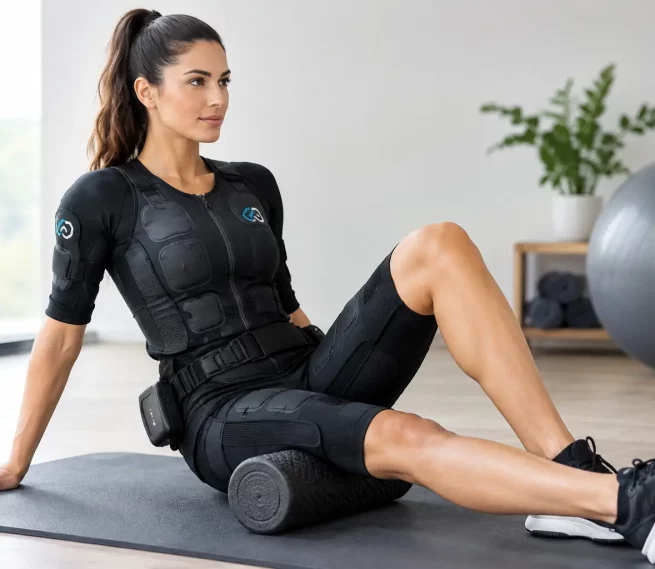
Your calendar is full by 8am, lunch is usually a meeting, and by the time the day ends, the idea of spending another hour in a gym feels unrealistic. That is exactly why EMS training for busy professionals has become such a practical option. It gives you a focused, coached session that fits into real life, not the fantasy version where you always have spare evenings and endless energy.
For many working adults, the problem is not motivation. It is friction. The commute, the changing, the waiting for equipment, the long sessions, and the inconsistency that follows when work gets hectic. A training plan only works if you can actually stick to it. That is where EMS stands out.
Why EMS training for busy professionals makes sense
EMS stands for Electro Muscle Stimulation. During a session, low-frequency electrical impulses activate your muscles while you perform guided exercises with a trainer. The result is a high-efficiency workout that recruits multiple muscle groups in a short space of time.
That matters when your week is built around deadlines, school runs, client calls, and travel. Instead of trying to carve out three or four long gym visits, you can complete a much shorter session with real intent behind it. For professionals who are tired of stop-start routines, that shift is often the difference between talking about training and actually doing it.
The appeal is not just speed. It is structure. You arrive, your trainer leads the session, the intensity is adjusted for you, and every minute has a purpose. There is very little wasted time, which is exactly what busy people need.
What you actually get from an EMS session
A lot of people first hear about EMS and assume it is a shortcut or a passive workout. It is neither. A proper EMS session is active, coached and demanding in its own way. The technology increases muscle activation, but the session still depends on how well the programme is delivered and how appropriate it is for your goals.
For a busy professional, the biggest win is efficiency. You can train strength, muscular endurance, posture and core engagement in one session without needing to move from machine to machine. If you spend most of your day at a desk, that can be especially valuable. Tight hips, rounded shoulders, poor glute activation and lower back discomfort are common in office-based lifestyles. A well-run EMS programme can help address those issues while still pushing body composition and performance goals.
Clients often tell us they feel the difference in everyday life before they see it visually. Climbing stairs feels easier. Carrying bags is less of a chore. Sitting upright for longer no longer feels like effort. Then the visible changes start to show as consistency builds.
The real advantage is consistency, not novelty
There is always a temptation in fitness to chase what is new. Busy adults are especially vulnerable to this because when time is short, every method promises more than it delivers. The reason EMS has staying power is not because it feels futuristic. It is because it solves the practical problem that ruins most fitness plans.
If your training requires huge time blocks, your work diary will beat it. If your plan relies on self-motivation after a ten-hour day, fatigue will beat it. If your progress is vague, you will eventually question whether it is worth the effort. EMS removes much of that uncertainty by giving you a compact, trainer-led format with measurable intent.
That does not mean it is magic. Results still depend on regular attendance, sensible nutrition, sleep, and the right coaching. But for people who have spent years struggling to maintain a routine, the reduced time commitment can make consistency far more realistic.
Who EMS works best for
EMS can work well for a wide range of adults, but it is particularly suited to professionals who want results without building their week around the gym. If your schedule changes often, if you travel for work, or if family commitments regularly push exercise down the list, a shorter, structured model is easier to keep going.
It is also a strong fit for people who want support rather than guesswork. Some clients are beginners who feel uncomfortable in a traditional gym and do better with one-to-one guidance. Others are already active but want a more targeted approach for strength, fat loss, posture or sport performance.
There is also the recovery and mobility side. For adults managing old injuries, back pain, stiffness or reduced movement quality, training needs to be smart, not just intense. That is where coached EMS sessions can be useful. The programme can be adapted to what your body needs rather than forcing you into a generic class.
What results can busy professionals realistically expect?
The honest answer is that it depends on your starting point, your goals and how consistent you are. Someone returning to exercise after years of inactivity may notice posture, energy and muscle tone improvements fairly quickly. Someone already fit may use EMS to sharpen performance, support recovery or improve specific weaknesses.
What matters is that the results are measurable. Strength gains, improved muscle tone, better movement quality and changes in body composition are all common goals. For some clients, the biggest victory is pain reduction and being able to train without aggravating old problems. For others, it is finally seeing progress despite a demanding workload.
This is why a coaching-led approach matters so much. A premium EMS studio does more than run the equipment. It assesses where you are, tracks progress and adjusts the programme as your body changes. That level of precision is often what busy professionals have been missing.
EMS training for busy professionals versus the gym
Traditional gyms still work well for plenty of people. If you enjoy long sessions, know how to programme effectively and have the time to recover properly, a gym may suit you. But many professionals do not need more options. They need a method that removes barriers.
With EMS, the main benefit is density. You get a concentrated session with trainer attention throughout. There is no wondering what to do next, no drifting through half a workout, and no stretching a 30-minute intention into a 90-minute visit.
There are trade-offs, of course. If you love lifting heavy several times a week or you are training for a highly specific strength sport, EMS may work better as a complement than a full replacement. Likewise, if your main goal is marathon conditioning, you will still need sport-specific work alongside it. The best approach depends on what outcome you care about most.
For the average busy professional, though, the question is simpler. Are you more likely to stay consistent with a shorter coached session or with a plan that regularly gets bumped by work? The answer is usually obvious.
Why coaching matters more than the technology
The suit gets attention. The coaching gets results.
That is worth saying clearly because people often focus on the equipment and forget the human side. The quality of the trainer, the personalisation of the session and the accuracy of progression are what turn EMS from a gimmick into a serious training method.
A strong coach will know when to push intensity and when to prioritise control, posture or recovery. They will spot movement patterns you do not notice, help you train around limitations and keep standards high even when your week has been chaotic. For busy adults, that accountability is powerful. It stops training becoming another task you postpone.
Studios such as E-Pulse Studio build around that coaching model because results rarely come from technology alone. They come from having a clear plan, proper support and enough consistency for the plan to work.
How to make EMS fit into a demanding week
The best fitness plan is the one that survives your busiest month, not your quietest one. That means being realistic from the start. If your schedule is packed, trying to promise yourself five workouts a week usually ends badly. A short, regular appointment in the diary is far more effective than a perfect plan you never follow.
Many professionals do well by treating training like any other non-negotiable meeting. Book it, protect it, and avoid making the decision again every day. That removes the mental load. You do not need to find motivation at 7pm. You simply show up.
It also helps to think beyond aesthetics. Looking better is a valid goal, but busy clients often stay consistent because they feel better. Less back tension in the office. More energy in the afternoon. Better movement when picking up children or playing sport at the weekend. These are real quality-of-life outcomes, and they matter.
Is EMS worth it if your time is limited?
If you are the kind of person who keeps restarting the gym, cutting sessions short or losing momentum every time work ramps up, EMS is well worth considering. Not because it lets you avoid effort, but because it makes effort easier to sustain.
Time-efficient training only matters if it still delivers. Done properly, EMS can help you build strength, improve posture, support fat loss goals and move better without demanding huge chunks of your week. For busy professionals, that is not a luxury. It is often the missing piece.
A good training method should fit your life well enough that you can keep going long after the initial burst of motivation fades. When your schedule is full, efficiency is not a bonus. It is the reason progress becomes possible at all.
 7min
7min