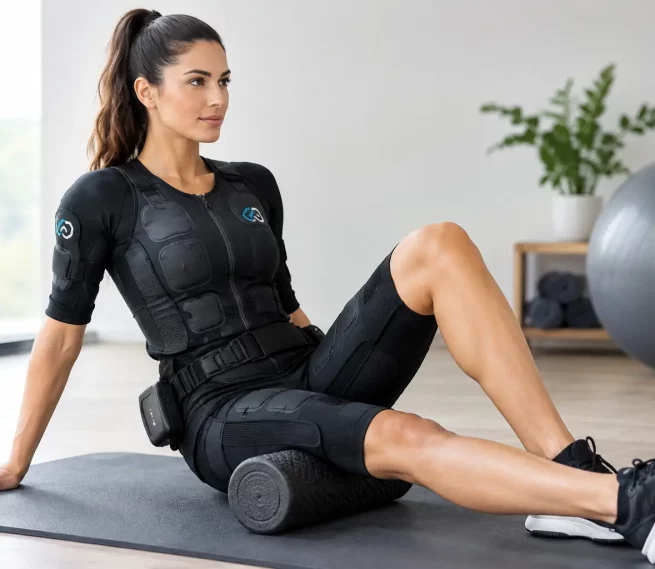
Back pain rarely arrives at a convenient moment. It shows up when you are lifting the weekly shop, sitting through another long workday, or trying to get back into exercise after months of putting yourself last. That is exactly why EMS training for back pain gets so much attention – it offers a guided, time-efficient way to strengthen the muscles that support your spine without spending hours in a gym.
The key word here is guided. Back pain is not one single problem. For some people, it is linked to weak glutes, poor posture and a deconditioned core. For others, it is aggravated by stress, stiffness, old injuries or too much time sitting down. EMS can be highly effective in the right setting, but it is not a magic fix and it is not the answer to every kind of pain.
How EMS training for back pain works
EMS stands for electro-muscle stimulation. During a session, a specialist suit or pads deliver low-frequency electrical impulses to targeted muscle groups while you perform controlled movements. Those impulses encourage deeper muscle activation than many people achieve on their own, especially if they have spent years moving around pain or struggling to engage the right areas.
For back pain, that matters. The lower back does not work alone. Spinal support depends on a coordinated system that includes the abdominals, glutes, pelvic stabilisers and postural muscles through the upper back. If those muscles are weak, underactive or poorly coordinated, the lower back often takes more load than it should.
A well-structured EMS session can help retrain that system. Rather than hammering the back directly, the aim is usually to improve full-body support, posture and movement quality. That is one reason many clients report that everyday activities feel easier before they even notice aesthetic changes.
Why people with back pain often struggle with normal exercise
One of the biggest frustrations with back pain is that the exercises you know you should do can feel like the very thing you want to avoid. Traditional gym sessions may involve too much volume, poor technique, long periods of standing about between sets, or exercises that place load through the spine before the body is ready.
Busy professionals and parents often face another issue – inconsistency. If you only manage a session once every couple of weeks, progress is slow and pain patterns tend to hang around. Short, coached EMS sessions can work well because they remove a lot of the guesswork. You are supervised, the intensity can be adjusted, and the training dose is efficient enough to fit into a packed week.
That efficiency is not just convenient. It can be the difference between doing something consistently and doing nothing at all.
What benefits can you realistically expect?
For the right person, EMS can support reduced muscular tension, better posture, improved trunk stability and greater confidence in movement. These are often the changes that make the biggest day-to-day difference. You bend down without bracing for discomfort. You sit longer with less stiffness. You stop feeling like your back is the weak link in everything.
There is also a psychological benefit that should not be dismissed. Pain often makes people hesitant. They stop training properly, become less active and gradually lose strength. A coached EMS environment can rebuild trust in movement. That matters because confidence and consistency often go hand in hand with pain reduction.
At E-Pulse Studio, this is where personal coaching makes the difference. The technology matters, but the outcome depends on how well the session is tailored to the individual in front of you – their pain history, movement quality, goals and starting point.
Still, realistic expectations are important. If your back pain is linked to a serious disc issue, nerve compression, inflammatory condition or an undiagnosed medical problem, EMS should never be treated as a substitute for proper clinical assessment. Good training can help a lot, but it still has to sit in the right lane.
Who is most likely to benefit?
EMS tends to suit people whose back pain is related to weakness, poor posture, sedentary routines, muscular imbalance or inconsistent exercise habits. That includes office-based workers, drivers, busy parents, people returning to fitness after time off, and anyone who wants a lower-impact route into strength training.
It can also be a useful option for those who have tried general gym workouts and found that they either overdo it or avoid the key exercises because they are not confident with technique. The coaching element reduces that barrier. Instead of wandering around a gym hoping the session helps, you work through a clear plan with close support.
For active people, the benefit may be different. Runners, golfers and combat athletes often use EMS not because they are inactive, but because they want better core control, stronger posterior chain engagement and more resilience through the trunk. In these cases, back pain may be less about inactivity and more about load management and movement efficiency.
When EMS may not be the right choice
This is where honesty matters. EMS is not suitable for everyone, and any studio claiming otherwise is overselling it.
If you have acute unexplained back pain, severe shooting pain, significant numbness, loss of bladder or bowel control, or symptoms that are worsening quickly, medical advice comes first. The same applies if you have certain implanted medical devices or other contraindications that make EMS inappropriate.
There are also cases where the issue is not a lack of muscle activation but too much tension, poor breathing mechanics or a body that is already in protective overdrive. In that situation, aggressive training is unlikely to help. The right answer may be a calmer, more progressive approach combining mobility work, breathing, posture correction and carefully managed strengthening.
That does not mean EMS is off the table forever. It means timing and programming matter.
What a good EMS session for back pain should look like
A proper EMS approach for back pain should never feel random. It should begin with questions about your history, your triggers, your lifestyle and what movements make things better or worse. From there, the coach should assess how you move, how well you stabilise and where the obvious compensations are.
The session itself should focus on quality, not bravado. Controlled squats, hinge patterns, rotational stability, glute activation and postural work often make more sense than trying to train at maximum intensity from day one. Stronger is not always better if your body is moving badly.
Intensity should be progressive. A good coach will not try to impress you with how hard the contractions feel. They will use the level that helps you recruit muscles effectively while maintaining good form and confidence. That is a much smarter route to long-term improvement.
How long does it take to notice a difference?
It depends on the cause of your back pain, how long it has been there and how consistent you are. Some people notice a difference in posture, stiffness or muscular support within a few sessions. Others need longer, especially if the pain pattern has been building for years.
What usually speeds things up is combining training with a few simple daily changes. Breaking up long periods of sitting, walking more, improving sleep, and learning how to brace and move better all reinforce what happens in the studio. No one gets lasting results from one 20-minute session a week if the rest of the week is spent folded over a laptop and ignoring recovery.
The encouraging part is that progress is often measurable. Better movement quality, improved muscle tone, stronger postural endurance and reduced discomfort during daily tasks are all meaningful signs that the body is adapting in the right direction.
The biggest mistake people make
They wait until the pain is unbearable, then expect one solution to sort everything out.
Back pain responds best to consistency, coaching and a plan that addresses the real cause rather than just the symptom. EMS can be a very effective part of that plan because it helps people train efficiently, recruit key muscles and build strength without the chaos of a typical unsupervised gym session. But the real win comes from sticking with it long enough to change how your body supports you every day.
If your back pain has been holding you back, the smartest next step is not to push through blindly or give up on training altogether. It is to choose a method that meets you where you are, then build from there with expert guidance and a bit of patience.
 7min
7min